Institute of Data Analytics and Information Systems
Our vision is to become a leading knowledge centre in the field of data science, theoretical and applied mathematics, business informatics and statistics in Hungary and an outstanding knowledge centre in the region.
News and events
Mathematics Enrichment Lecture Series: May 13, 2026; Topic: The Concept of Infinity and Its Role in Mathematics
The Department of Mathematics is launching an enrichment lecture series for interested students. The aim of the series is to bring mathematics closer to students by presenting topics and application areas that complement and enrich the material learned within the framework of university education. We want these lectures to provide an opportunity for students to get to know the speakers beyond the given topic in an informal atmosphere, initiating thought-provoking conversations. We trust that these exchanges can serve as starting points for future joint research, theses, and TDK (Scientific Students’ Associations) papers. Because mathematics belongs to everyone!
The following lectures in the series are organized jointly by the Department of Mathematics and the SPM and GEM student organizations. Further lectures are being organized, and we are also open to new topic proposals.
Professional Lead: Anna Radványi, Assistant Professor (anna.radvanyi@uni-corvinus.hu)
You can register at the following links until midnight on the day before the lecture:
13th May: https://forms.gle/Zp3HbLx3rh878eDi6
Please note that the language of the talks will be Hungarian!
Program:
March 5, 17:20–18:50, C107
Gergely Kiss, Associate Professor: Impartial Games
In game theory, impartial games are combinatorial games where players have the same options from any given position. Players (usually two) take turns; the game is finite and ends without a draw. The lecture explores the basic concepts of impartial combinatorial games and the essence of solving Nim (nim-sum/XOR, winning strategies). We will reach the recursive definition of the Sprague–Grundy function and the Sprague–Grundy theorem, which describes the disjoint sum of games using the nim-sum. We will look at what this method provides for certain impartial games.
March 19, 17:20–18:50, C202
Dezső Bednay, Assistant Professor: Intransitive Random Variables
We will examine whether the numbers on three dice can be filled such that the dice “beat each other” in a cycle—meaning the first die has a higher value than the second with a probability greater than 1/2, the second beats the third with a probability greater than 1/2, and the third beats the first. This problem appears in many places, such as voting theory, and many directions for its generalization can be investigated.
April 28, 17:20–18:50, C IX.
Zsigmond Tarcsay, Associate Professor: Metric Spaces and Their Applications
We tend to associate distance (consciously or subconsciously) with various objects in the world, expressing how “far” they are from each other. For example, having three aces in your hand is closer to a poker [hand] than if you had all different cards. A metric space is an abstract but very intuitive concept in mathematics that axiomatizes this abstract notion of distance, making it manageable in an exact way. The aim of my lecture is to briefly introduce the audience to the theory of metric spaces and present some of its wide-ranging applications.
May 13, 17:20-18:50, C 103
Zsigmond Tarcsay, Associate Professor: The Concept of Infinity and Its Role in Mathematics
From a philosophical point of view, the concept of infinity is one of the most difficult questions to grasp, raising deep issues about the nature of existence and infinite processes. In mathematics, however, infinity—while by no means trivial—can be handled in a precise way. One of the most surprising insights is that infinity is not a single, uniform concept: there exist infinitely many different “sizes” of infinity—and in a certain sense, even “more than that.”
In the lecture, we will examine questions such as how infinite sets can be compared and why some infinities can be “larger” than others. We will also touch upon other fascinating and often surprising aspects of infinity, such as the role of the axiom of choice. The goal is to present, in an accessible way, how a philosophically elusive concept becomes one of the richest and most structured theories in mathematics.
Our colleague, Zsigmond Tarcsay, won the András Gács Prize
Zsigmond Tarcsay, a lecturer and researcher at ELTE and Corvinus University, has been awarded this prestigious professional recognition.
The András Gács Prize was presented this year in the Ceremonial Hall of ELTE’s Faculty of Law. From among the nominees, the professional committee found two outstanding educators worthy of receiving the prize this time.
Zsigmond Tarcsay carries out his teaching work with exemplary preparedness and dedication. Over the course of his career, he has taught more than 30 different mathematics courses at various levels at ELTE, the Budapest University of Technology and Economics (BME), and Corvinus University. His students have included mathematicians, mathematics teachers, physicists, environmental science students, and more recently, data science students as well as students in quantitative economics and finance. He is also responsible for all functional analysis courses in ELTE’s mathematics program. His scientific achievements are marked by nearly 50 publications in international journals. His work has been recognized with, among others, the Géza Grünwald Memorial Medal and the János Bolyai Research Scholarship of the Hungarian Academy of Sciences. In addition to his research, he is also active in the popularization of science.
The András Gács Prize was established in 2017 by the family with the aim of recognizing young mathematics instructors in higher education who are outstanding in their field and who motivate many students. The prize is named after András Gács (1969–2009), a mathematician who, in addition to his research achievements, inspired students with his versatility, openness, and sense of humor.
Institute Research Seminar – Attila Tasnádi: “Do performances of violin virtuosi fade over time? A response using the Nash collective utility function.”
Dear Colleagues,
We are pleased to announce that our Institute Research Seminar Series continues.
The next speaker in the series will be Attila Tasnádi, who will present his recent research related to his newly published paper “Do performances of violin virtuosi fade over time? A response using the Nash collective utility function.” (Do performances of violin virtuosi fade over time? A response using the Nash collective utility function – ScienceDirect)
Date and time: Wednesday, 25 March, 14:00–15:00
Venue: Building C, Room 101
In his talk, Attila will address the question of whether artistic performance improves across generations, as observed in many professional fields such as sports and science. Drawing on data from the era of audio and video recordings, his study analyzes the enduring appeal of violin virtuosi by using YouTube view counts and several aggregation methods.
We warmly invite all interested colleagues to join us.
Prof. Takashi Sano’s (Yamagata University, Japan) lecture: “Loewner and Kraus matrices”
The Department of Mathematics in our Institute is hosting a new seminar series titled Applied Analysis Seminar, which will be held roughly
every two weeks on Tuesday from 2 pm. We will cover topics on mathematical analysis and its various applications. Our first seminar will
also be a Corvinus Research Seminar and will be held next Tuesday, 17th March,
from 2 pm to roughly 3 pm in the Sóház building, S.A.EA2.
Our first speaker is Prof. Takashi Sano from Yamagata University in Japan.
Title of his talk: Loewner and Kraus matrices
Abstract: “We would like to talk about (our) results on monotone/convex matrix functions: examples, characterizations, eigenvalues of
Loewner/Kraus matrices of power functions, and so on.”
This will also be a Corvinus Research Seminar, so we also encourage students to attend the event.
Application for the business informatics PhD programme
The official application period for the 2026 #Doctoral_Programmes at Corvinus University of Budapest has begun. This is an invitation for candidates seeking academic immersion, an international research career, and the expertise to solve complex global challenges at the highest level.
As the only university in #Hungary to hold both #AACSB and #AMBA accreditations in the field of social sciences, Corvinus offers a prestigious platform for doctoral candidates to conduct impactful research.
Key highlights for 2026:
🎓 A monthly HUF 320,000 #scholarship allows for a full focus on research excellence.
Learn more about our Business Informatics Doctoral Programmes at the following link and apply now: https://www.uni-corvinus.hu/post/landing-page/phd/gazdasaginformatika/?lang=en
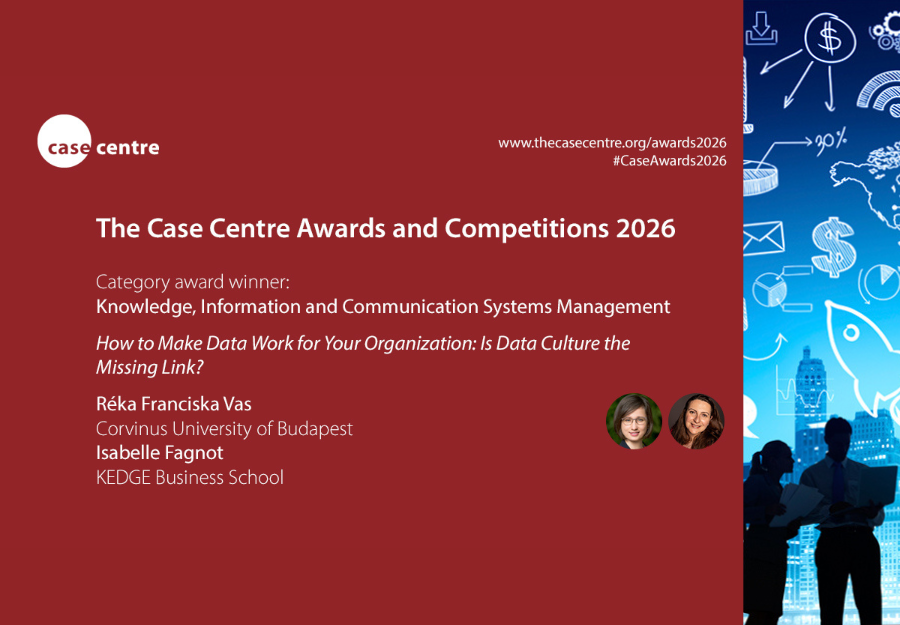
Corvinus University’s first win at The Case Centre Awards and Competition
At The Case Centre’s 36th global Awards and Competitions, Réka Franciska Vas, Associate Professor from Corvinus University of Budapest, was announced as a joint winner alongside Isabelle Fagnot from KEDGE Business School.
The Case Centre Awards and Competitions recognise outstanding case writers and teachers from across the globe and celebrate worldwide excellence in case writing and teaching. The 36th Awards reflect the state of today’s rapidly changing global environment and the critical role of the case method in helping future leaders grapple with real-world complexity.
The case method is a teaching approach in which students learn by analysing real-world scenarios. This year’s winning cases bring the challenges shaping business decision-making directly into the classroom, from geopolitical instability and technological rivalry to sustainability and long-term resilience.
Vas and Fagnot’s winning case for Knowledge, Information and Communications Systems Management was How to Make Data Work for Your Organization: Is Data Culture the Missing Link?
This case focuses on conflicting data on student enrolment figures presented in the annual report of a fictional higher education institution. The case explores a challenge that most higher education institutions genuinely experience in their day-to-day operations. It is based on a real-life situation and addresses a problem with no simple or obvious solution. Rather than offering ready-made answers, the case helps initiate structured thinking, outlines possible directions, and supports institutions in making meaningful progress toward truly data-driven operations.
Vas and Fagnot said: “The case has proven to be highly adaptable and versatile in teaching. It can be used not only to explore the foundations of data-driven culture but also to highlight aspects of responsible decision-making. In all teaching contexts, it has encouraged students to think critically, creatively, and outside the box. We are particularly grateful for the opportunity to contribute to the ongoing dialogue around data-driven transformation in higher education, and we hope this case continues to inspire thoughtful discussion and reflective learning across diverse institutional settings.”
The authors said, one of the main challenges was that, while the problem itself is universal, it manifests differently across institutions. This required them to design a case that is both concrete and relatable, yet flexible enough to resonate with a wide range of organisational contexts. Another challenge was guiding case solvers toward the right way of thinking without prescribing solutions – encouraging the development of the appropriate mindset rather than delivering definitive answers.
Vicky Lester, Chief Executive Officer of The Case Centre, commented:
“These awards showcase how the case method continues to bring the real world into the classroom, helping future leaders navigate complexity and make informed decisions in an ever-changing environment. From geopolitical uncertainty and sustainability challenges to the rise of artificial intelligence, this year’s winning cases reflect the issues shaping business today.”
This marks Corvinus University’s first success at these awards and competitions.
Corvinus Team at the CaseIT 2025 International MIS Case Competition
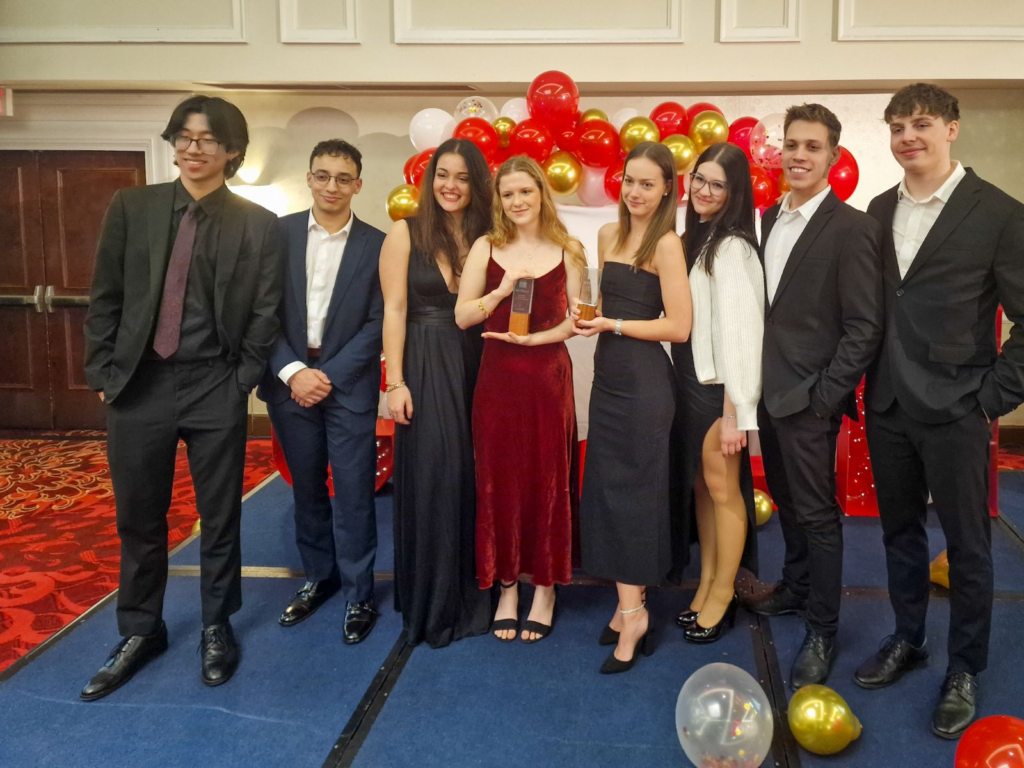
The Corvinus team secured 3rd place at the CaseIT 2025 International MIS Case Competition in Vancouver. The team, Sapphire Consulting—comprising Janka Tiszlavicz, Tímea Kiss, Máté Czifra, and Máté Czifra (not a typo!)—are all 3rd-year BSc students and can be seen in the picture above.
The competition consisted of two rounds, each with a separate case. The Corvinus team won their division in the first round, advanced to the semifinals and finals with the second case, and ultimately finished in third place.
- The first case focused on Ednius, a Simon Fraser University spinoff startup that provides AI-powered feedback and grading support for university professors in short open-answer questions.
- The second case tackled the digital transformation of the local public transport company TransLink, focusing on data collection, digital twins, and AI solutions.
The competition was won by the team of the University of Manchester.
The students were part of the Cases on Business-IT Management course, a Digital Business specialisation course within the Business and Management programme, and a core elective for the Business Informatics and Data Science programmes. After winning our local competition, the team earned the right to represent Corvinus at CaseIT, where we have been invited since 2012. Rooted in the local competition, we also send a team to the CoMIS competition, to Minneapolis every year, in similar business-IT topic. The Corvinus preparation team included Krisztián Varga, Márta Aranyossy, and Peter Feher, supported by former international case competition alumni.
Congratulations to the team and their mentors!
Winners of the Corvinus 2024 Awards
Corvinus hosted its traditional awards ceremony On 7 November, during which the University’s most excellent colleagues with outstanding performance received institutional recognition.We are proud of the colleagues from our institute who were among the winners this year:
- Szabina Fodor, Associate Professor, Institute of Data Analytics and Information Systems – Lecturer of the Year
- László Lőrincz, Associate Professor, CIAS – Institute of Data Analytics and Information Systems – Corvinus Medal.
- Corvinus Institute for Advanced Studies / ANETI Lab – Research Group of the Year. Some of the colleagues, Balázs Lengyel – Research professor, Gergő Pintér – Research Fellow, László Lőrincz – Associate professor belong to our Institute as a part-time colleague.
Congratulation!
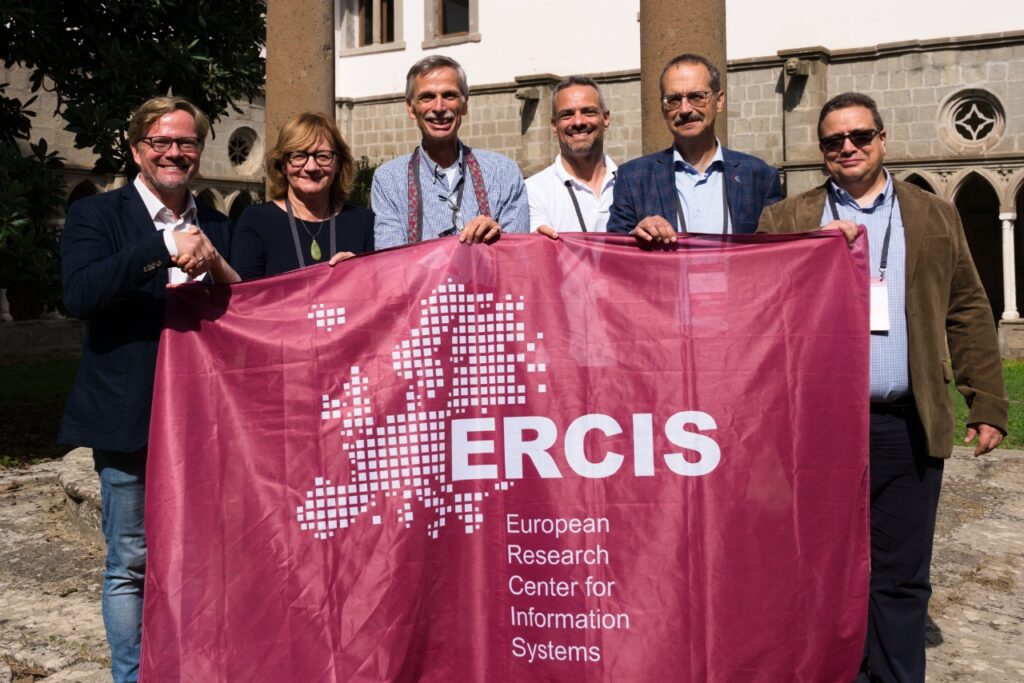
ERCIS (European Research Center for Information Systems) membership
In 2024 we joined the ERCIS (European Research Center for Information Systems) international research network. The annual research report is available here (our institute can be found on page 64): https://www.ercis.org/wp-content/uploads/2024/12/ercis_annual_report.pdf

Call for papers – 14th IEEE International Conference on Cognitive InfoCommunications
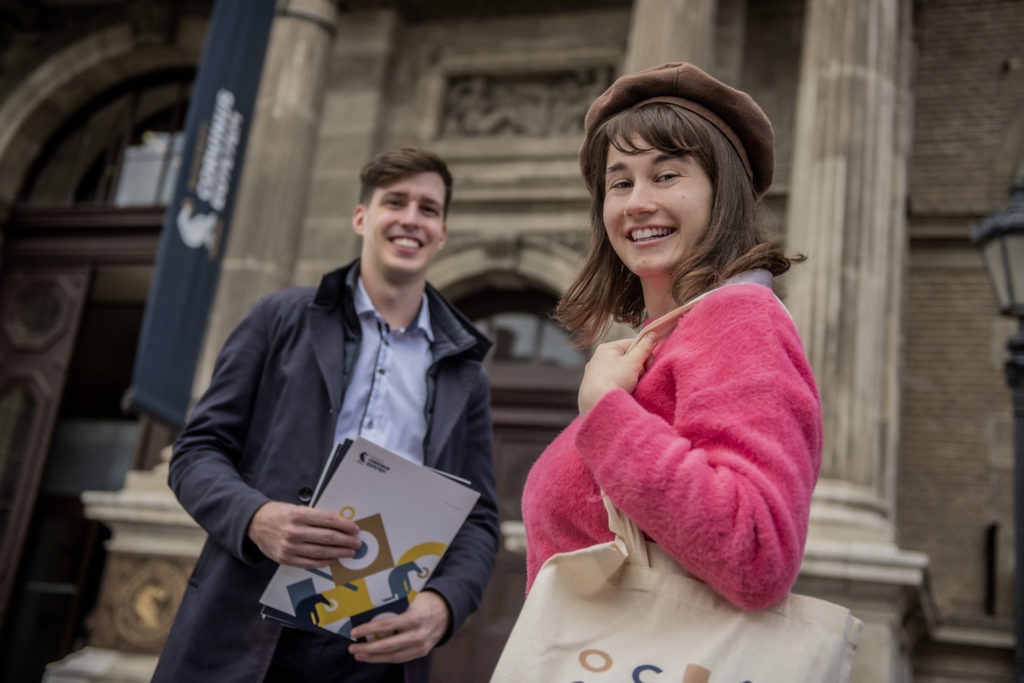
Data Visualisation Competition for University Students
Departments of the Institute of Data Analytics and Information Systems




Research centres of the Institute:
- Corvinus FinTech Center, which aims to unite and develop university education, research, community and innovation in the field of financial technology and digital transformation
- Economic and Social Statistics Analysis Centre – the research group operates as an independent unit, primarily based in the Department of Statistics. Its mission is to analyse practical problems that can be analysed using the tools of economic and social statistics, and to integrate the results into the teaching of economic statistics and modelling subjects.
- SAP Next-Gen Lab – an innovation community that connects companies, students, start-ups, academic thinkers, researchers, entrepreneurs, building on the functionality of the SAP digital innovation system, which incorporates the latest technologies. The network will provide university partners with access to the latest technologies in areas such as IoT, machine learning, analytics, big data, design thinking, blockchain, data intelligence, among others.
The Institute acts as a knowledge bridge between business, economics, and technology, with a community of lecturers and researchers providing a theoretical, methodological, and technological background in mathematics, statistics, and informatics for both education and research in economics, business, and social sciences.