• Students
    • Prospective Students
      • How to apply?
    • Current Students
  • Bachelor programmes
  • Master programmes
    • MA in International Economy and Business
      • Prospective Students
      • Current Students
    • MA in Public Policy and Management
    • International MA in Economy, State and Society IMESS
    • European Master's in Public Administration EMPA
    • MCP in International Financial Management
    • MCP in Economic and Public Policy
  • News & Events
    • News at the Faculty
    • News at the University
    • News at Budapest
About Us
Hungary and Budapest
International Programmes
Double Degree Programmes
Exchange Programmes
Courses
Staff Exchange
Faculty staff
Departments
Life at the Faculty
SCHOLARSHIPS
Practical Information
Official documents
Contact Us
FAQ
Közgazdaság- tudományi Kar, Corvinus University of Budapest

Promote Your Page Too

Hungary

The area of Hungary is barely 100,000 square km with 10 million inhabitants, whose language is spoken nowhere else in the world. Despite or due to this uniqueness, the Hungarian people have been living in the centre of Europe for over 1,100 years.

The natural, cultural and historical riches to be experienced in Hungary are reflected in its high concentration of UNESCO World Heritage Sites, many of which can be found in the capital.

Budapest is a hive of top-class music and art, with one of the world’s best opera houses and a host of museums and galleries. Its festivals of all kind (may they be fine art, music, or gastronomy) take place all through the year.

Lake Balaton, ideal for sailing and sunbathing, is the largest lake in Central Europe. Nearby is the famous spa town of Hévíz where you can enjoy the pleasure of bathing in a natural thermal lake even in the depths of winter. Hungary’s springs have supported a bathing culture dating back to Roman times. Whether you are after relaxation, refreshment, rejuvenation or recovery, Hungary cannot fail to meet your needs.

If you like to keep active and get back to nature, there are countless marked routes for hiking, cycling or horseback riding, often through stunning scenery.

This country is the birthplace of world-famous inventors, scientists, explorers, composers and sports stars.

In short, this is a place of variety, colour and passion.

Budapest

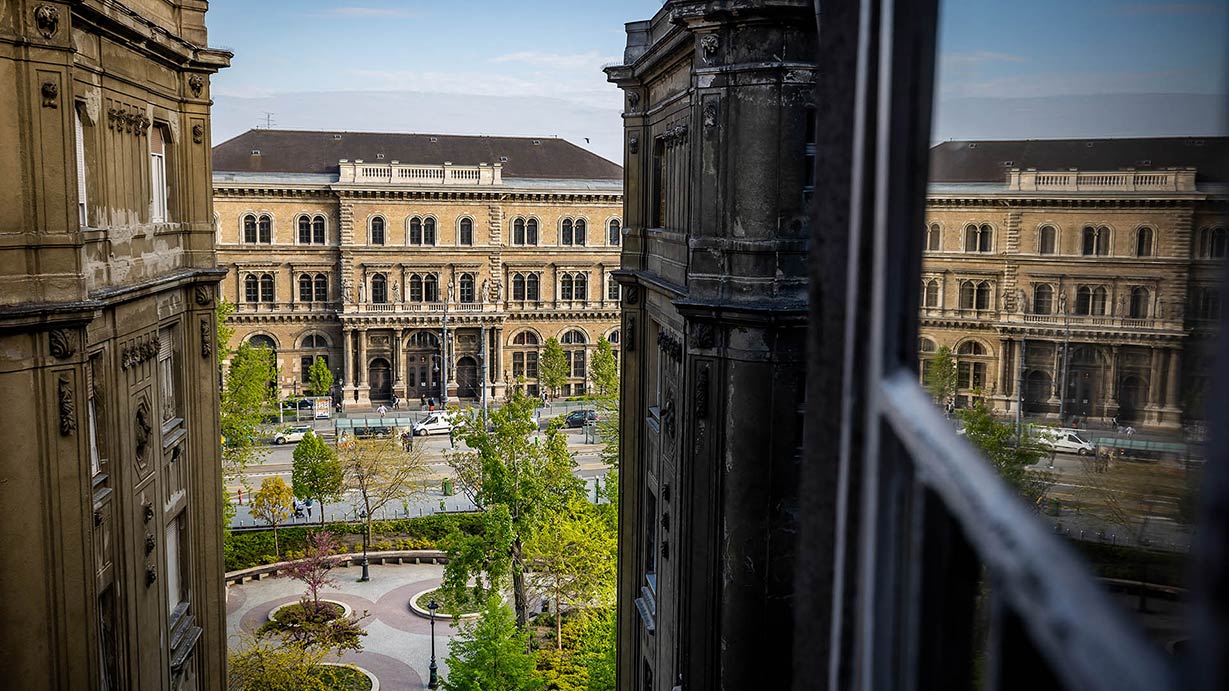
Budapest, the capital city of Hungary, was created when the historic towns of Buda, Pest and Óbuda were unified in 1873, although the area had been inhabited from early times.

Budapest is bisected by the River Danube, covering an area of 200 square km and divided into 23 administrative districts. The city, as much a natural geographical centre as it is the country’s transport hub, is home today to a population of 1.8 million people.

Lovers of culture are spoilt for choice with 237 monuments, 223 museums and galleries, 35 theatres, 90 cinemas, 2 opera houses and 12 concert halls. Around 200 excursion destinations offer a wide variety of things to do.

Its monuments include 2,000-year-old Roman amphitheatres, 400-year-old Turkish baths and unique Hungarian Art Nouveau buildings from the 19th century. The cityscape owes its uniform appearance to the elegant mansions erected in the Eclectic style in the early 20th century. Under its hills, there is a system of caves with thermal waters gushing from 80 thermal springs, which supply 12 spas with 70 million litres of water daily.

For more information about Hungary, please visit the following websites:

- http://en.wikipedia.org/wiki/Hungary

- http://www.hungary.com/

- http://www.lonelyplanet.com/hungary

- http://visitbudapest.travel/

Last modified:  04.01.2011