





Jump to main content

Corvinus TDK

Become a researcher yourself!

Welcome

Here we publish important and useful information about the TDK and the OTDK –  in the form of news, announcements and calls. We also recommend the Corvinus TDK Facebook page, to help you follow the information needed for the preparation and the successful participation. 

As in previous years, we will organise an AUTUMN ROUND for the TDK in 2026. It is worth starting your research well in advance. We ask authors submitting TDK to discuss the topic of their paper with their supervisor as soon as possible!

Current competition

Registration process

  • As in previous semesters, there is no advance registration in the autumn semester of 2026. Authors taking part in the TDK only need to register on the TDK platform when uploading their final paper, by midnight (23:59) on 2 November 2026 (Monday) at the latest.
  • It is not yet possible to register for the Corvinus (institutional) TDK of the 2026 autumn semester. As soon as the platform opens, we will announce it here on the website and through various university media channels (newsletter, email, Facebook).
  • You will be able to access the TDK platform by clicking the “TDK Platform” button above. There, authors can register, upload their papers and view their reviewers’ evaluations.
  • Registration of a TDK paper takes place through the TDK platform.
  • Registering and uploading the TDK paper takes only a few minutes, but let’s not leave it until the last moment!
  • Please register using Windows or Android rather than Mac/iOS! From an Apple device or iPhone, registration is only possible through the Firefox (Mozilla) browser.
  • For papers with multiple authors, only one of the authors should register and upload the paper!
  • Agree on the three proposed sections in advance with your supervisor! The final allocation of sections may differ from these; it is determined independently by the ETDT on professional and organisational grounds, taking into account the recommendations of supervisors and students.
  • Registration includes writing an abstract of at least 500 and at most 2,500 characters, in the same language as the TDK paper.
  • It is worth preparing the abstract in advance, so that you only need to copy it in when registering.
  • The abstract is also evaluated by the reviewers. If the abstract is not filled in properly (e.g. it contains placeholder dots, Lorem Ipsum or other non-professional text), the paper registration is invalid and may be disqualified from the competition.
  • Registration and uploading the TDK paper are two separate steps. During registration you first have to fill in a registration form; the TDK paper cannot be uploaded at this stage. After registration is completed, you need to log in again, and in the table that appears you can upload the paper file by clicking on the title of your paper.
  • The TDK paper can only be uploaded in .pdf format.
  • Only a single file can be uploaded (if there are appendices, they must be included in the same .pdf file).
  • The maximum file size is 20 MB.

Students with active student status at other universities (“external students”) may also take part in the Student Research Conference (TDK) of Corvinus University. To be able to log in to the TDK system on Corvinus University’s Moodle platform, they need to request an ID. To do so, before registering, they must send the 10 data items listed below by email to etdt@uni-corvinus.hu by midnight on 28 October 2026 (Wednesday) at the latest:

  • student’s name
  • name of the Corvinus college for advanced studies of which they are a member (if applicable)
  • 11-digit education ID
  • name of the higher education
  • institution where they currently
  • hold student status
  • number of active semesters
  • name of the programme
  • type of programme (BSc / BA / MSc / MA / Undivided)
  • email
  • phone number

Information and preparatory sessions, presentations

The presentation from the autumn 2026 information session (7 October 2026) is available for download at the link below:

The presentation from the autumn 2026 preparatory lecture (12 October 2026) is available for download at the link below (for Corvinus students):

Other important dates

Registration deadline

2 November 2026, 23:59

Oral round

30 November – 4 December 2026

Award ceremony

15 December 2026 – TBD

Why take part in the TDK?

Develop your research and presentation skills, and gain recognition at one of the most prestigious competitions at Corvinus and in the country.

  • Independent research with supervisor support
  • Professional feedback you can build on in the future
  • An advantage for master’s and doctoral programmes, scholarships and job applications
  • The road to the OTDK — measure yourself against the country’s best students

The TDK process

Corvinus University of Budapest

1. Choosing a topic

  • Choosing supervisors
  • Choosing sections
Corvinus University of Budapest

2. Writing the paper

  • Writing individually or in a team
  • Formal requirements, AI and plagiarism policy
Corvinus University of Budapest

3. Registration process

  • Participant and paper registration
  • Individual / multi-author / external registration cases
Corvinus University of Budapest

4. Oral round

  • Written round results
  • Oral round preparation, competition
Corvinus University of Budapest

5. Results, award ceremony

  • Final results, student and teacher awards
  • Award ceremony
Corvinus University of Budapest

6. OTDK 2027

  • National round, every two years
  • Application and participation in the competition

Preparation

The ideal TDK writing strategy begins right after successful admission, since it is worth consciously developing the skills that are indispensable for scientific thinking. We bring curiosity about all kinds of problems with us from childhood; the question is whether we can raise it to a higher, scientific level. Although there is no paved road to a successful TDK, we have put together the most important steps that are key from the very beginning up to the Pro Scientia Gold Medal.

[Table of the content is in Hungarian and will be updated to English soon.]

TDK téma és mentor kereséseKutatási téma keresése, egyéni érdeklődés vagy a kutatócsoportok ajánlásai alapján, ideálisan a leadás előtt 4–6 hónappalTémavezetők
Kutatócsoportok
Kapcsolódás műhelyekhez
Releváns kurzusok felvételeTémaspecifikus, a tudományos gondolkodást erősítő kurzusok felvételeTémaspecifikus kurzusok
Módszertani kurzusok
Összetett problémamegoldási, elemzési, módszertani, szintetizálási, prezentációs készségfejlesztés
TDK írásaTDK írása egyénileg vagy csapatbanTDK felkészítők
Témavezetők
Összetett problémamegoldási, elemzési, módszertani, szintetizálási, prezentációs készségfejlesztés
TDK részvételRészvétel az intézményi (egyetemi) TDK-n, több éven keresztül, akár évente több dolgozattalTDK felkészítők
Intézményi TDK szervezése
TDK I–III. hely
OTDK-ra jelölés
Best Paper díj
„Közgáz Diáktudós” kötetben megjelenési lehetőség
Publikáció TDK-bólJó minőségű TDK-kból magyar és idegen nyelvű publikációk önállóan vagy témavezetővel közösenTémavezetői támogatásCorvinus Kutatási Kiválósági Díj (CKK)
Best Hungarian publication based on a Scientific Students’ Associations Conference (TDK) paper
Best English publication based on a Scientific Students’ Associations Conference (TDK) paper
OTDK részvételOTDK-ra jelölt dolgozatokOTDK-ra felkészítők (pl. prezentációs kurzus, tudományterületi tájékoztatók)
Témavezetői támogatás
OTDK I–III. hely
Különdíj
PSAT Reménység Kitűző (OTDK-n legkiemelkedőbb teljesítményt nyújtónak)
Pro Scientia Aranyérem pályázatOTDK évében, OTDT Szakbizottság dönt: Ha van legalább egy OTDK I. helyezés (de a nagy verseny miatt jobb, ha több van) és magasan jegyzett lapokban publikálETDT elnöke jelöl
PSA tájékoztató
PSA Aranyérem

What is plagiarism?

  • Presenting another person’s work, intellectual product or property in your own paper without proper source attribution
  • Plagiarism is not a formal or content error that costs a few points, but a moral offence that results in automatic disqualification from the competition.
  • A TDK paper or any other scientific work must be your own intellectual contribution; even references with proper source attribution must not dominate the text
  • Plagiarism does not only mean taking over a single complete work; taking over even a few paragraphs of text without proper source attribution also counts as plagiarism.
  • Plagiarism typically occurs in the case of improper verbatim copying, but it can also occur when a longer text is only slightly reworded
  • A Hungarian word-for-word translation of a foreign-language text counts as verbatim copying, and the source must be indicated accordingly
  • Unfortunately, not knowing the referencing rules does not exempt the plagiariser from responsibility

Before uploading, you also have the opportunity to check your TDK paper for plagiarism with an Urkund check: CLICK HERE


Does it count as plagiarism if a journal article is later prepared on the basis of the TDK paper?

  • The priority in time of the TDK paper is important; in this case, the article must refer to the TDK as a precursor
  • If the article had already been submitted at the time of writing the TDK paper and its publication is in progress, this must be mentioned in the TDK paper (if the authors of the article differ from the authors of the TDK paper, the contributions must in any case be indicated, and it must be made clear that the TDK paper is the own work of the author(s) named there)
  • Professional and ethical guidelines (OTDK Economics Professional Committee, 2018)

In which cases do we quote texts verbatim?

  • If, for the sake of the content, it is essential that every word of the text matches the original exactly, e.g. in the case of legislation
  • If the wording itself can be regarded as the intellectual product of the original source, e.g. in the case of a beautifully phrased artistic or literary text
  • If we do not identify with the text because of its content or form, and deliberately attribute it to the original source, e.g. in the case of a debatable text

How do we mark a verbatim quotation?

  • Text taken over verbatim must be placed in “quotation marks”
  • At the end of the quotation or the quoted sentence, the source must be given with the page number, a correct example being: (SMITH, A. 2020 p. 12.)
  • It is not mandatory, but verbatim quotations are often set in “italics” to separate them from your own text

How long can a verbatim quotation be?

  • In the paragraphs of the main text, avoid verbatim quotations longer than 2–3 sentences
  • A verbatim quoted whole paragraph is best set apart from your own text in block-quote format: indent the text by 1 cm on both the left and the right, reduce the font size to 10 pt, and leave one blank line before and after the paragraph
  • Longer verbatim quotations occur only rarely, e.g. in the case of legislation; these are customarily placed in an appendix

What does a formally correct reference usually look like?

  • For source attribution we use in-text parenthetical references, in which the author’s name and the year of publication of the cited work are placed in parentheses
  • A parenthetical reference does not have to be placed at the end of a paragraph; it can come at the end of any sentence, and occasionally even in the middle of a sentence
  • It is important to note that references can take several forms; the key is to be consistent with yourself throughout the text
  • Every source cited in the text must appear in the reference list, and every item in the reference list must appear in an in-text parenthetical reference
  • A form commonly used in academic writing is the author’s surname followed by the initial of the first name, then the year: (KOVÁCS Á. 2009)
  • For foreign authors, a comma is placed after the surname: (SMITH, A. 2006)
  • For sources with two authors, both authors’ names are shown, separated by a dash longer than a hyphen (Word shortcut: CTRL –): (WHITE, J. – BLACK, S. 2005)
  • For more than two authors, only the first author’s name is shown, followed by et al.: (NAGY Z. et al. 2006)
  • Several sources can be cited for one idea; within the parentheses, multiple sources can be listed separated by semicolons, with the sources ordered primarily chronologically and, for the same year, alphabetically by author name: (WHITE, J. – BLACK, S. 2005; NAGY Z. et al. 2006; SMITH, A. 2006)
  • If you cite a source that itself refers to an earlier source, both sources are given in the in-text parenthetical reference, but only the later one, which you read directly, is listed in the reference list: (WHITE, J. – BLACK, S. 2005 cited in: KOVÁCS Á. 2009)
  • If several sources by the same author from the same year are cited, they are distinguished by lowercase letters after the year, with the letter order determined alphabetically by the titles of the cited works, and of course also at the corresponding items in the reference list so that they can be identified: (KOVÁCS Á. 2009a) and (KOVÁCS Á. 2009b)
  • If the year is not known, write n. d. (which stands for “no date”) in place of the year after the author’s name: (KLEIN, M. n. d.)
  • For edited works, after the author’s name write, according to the language of publication, szerk., ed., eds. (for multiple editors) or Hrsg.
  • For a book chapter, cite the author of the given chapter rather than the editor or author of the containing volume.

Guidelines on the responsible use of artificial intelligence

Presentation from a previous information session – Spring 2025

Recordings of previous preparatory events – Spring 2024
(Hungarian-language videos, viewable only with Corvinus University access)

Preparatory sessions

Useful information

Student Research Conference paper as a thesis? Here’s how it works at Corvinus

If you took part in the Corvinus Student Research Conference (TDK) and earned a nomination to the National Student Research Conference (OTDK, the national round of the competition), you can request that your TDK paper be accepted as your thesis. This exempts you from the thesis defence at the final examination. You can use this option only once: the exemption can be applied at the final examination in the same semester as the TDK or in any of the following three semesters.

Below is the timeline for the autumn semester 2026–2027 TDK and the final examinations of the 2026/2027 academic year:

  • Before 23:59 on Monday, 2 November 2026: Submit your TDK paper
  • Contact your programme director from the start of your TDK project (or at the latest after you have been successfully nominated for the OTDK) and agree on the conditions for the paper and its acceptance
  • During the thesis submission period for your final examination: Start the regular thesis acceptance request in Neptun, then submit your thesis:
    • early December final examination (where available): 26 October – Friday, 6 November 2026, 12:00
    • January final examination: 23 November – Friday, 4 December 2026, 12:00
    • June final examination: 3 May – Friday, 14 May 2027, 12:00

The exact deadline for starting the thesis acceptance request is set out in the Student Thesis Guide for the given semester.

  • 30 November – 4 December 2026: Take part in the TDK oral round (results and OTDK nominations are announced here)
    • The award ceremony and closing reception will take place on Tuesday, 15 December 2026
  • If you performed successfully and earned an OTDK nomination: Submit the request “F301-SZD Request for accepting a TDK paper as a thesis” in Neptun.
    • The exact name of the request and its deadline are set out in the Student Thesis Guide for the given semester. If possible, submit the request before submitting your thesis; if you learn about your OTDK nomination after submitting your thesis, you can still submit the request afterwards. Your programme director will assess the request and notify you of the decision in a Neptun message within five days.
  • If accepted: You are exempt from the thesis defence at the final examination. You must still complete the other parts of the final examination (complex exam, portfolio-based oral exam) and apply for the final examination separately.

Good to know:

  • If you have already submitted your thesis, a positive decision on your F301-SZD request automatically means that your previously submitted thesis is withdrawn.

Taking your final examination later?

  • If you plan to take your final examination in a later semester, you can still request exemption from the thesis defence based on your TDK paper, provided that it falls within three semesters after the semester of the TDK. The process is similar in that semester: contact your programme director and submit the F301-SZD request from the beginning of the semester (or at the latest by the stated deadlines).

Official information and deadlines:

  • Study and Examination Regulations (TVSZ), Section 80 (7)–(11) (the version in force from 22 June 2026 is available at this link)
  • Student Thesis Guide (the version for the current semester is available at this link)
  • Academic calendar for 2026/2027

If you have any further questions, please contact the University Council of Student Research Societies (ETDT) at etdt@uni-corvinus.hu.

TDK award and attendance certificates are issued at the end of the competition season.

Collecting the award certificate

  • Award certificates can be collected at the closing gala or in person at the mailroom in E31 within two months of the announcement of the results of the competition season
  • The award certificate is issued only for 1st–3rd place finishers; a certificate issued this way can be regarded as an official university confirmation
  • Award certificates can also be collected in person at a later date, following prior arrangement, at the ETDT Office in E199; if needed, please write to etdt@uni-corvinus.hu
Issuing certificate of attendance
  • For students who took part in the written and oral rounds with a successful paper, we can issue a certificate of attendance on request
  • Certificates are issued individually to those who have sent their request by clicking the “Hungarian-language certificate of attendance” or “English-language certificate of attendance” button, choosing the language that suits them. The issued certificates will be sent to you by email. If you have any further questions, feel free to contact us at etdt@uni-corvinus.hu.

For further questions, please see the Regulations and documents menu item.

For specific questions, please contact the staff at the ETDT office.  

Email: etdt@uni-corvinus.hu
Office hours by prior appointment only – Office E199

What is the TDK?

The Student Research Conference (TDK) creates a public forum for students’ research work of a scientific standard that goes beyond the curriculum. Its aim is to promote the authors’ scientific and professional development and to develop scientific thinking and debating style.

Supervisors help with the preparation of the papers. And, as at scientific conferences, students present their papers in thematic sections. The papers and presentations are evaluated by a professional jury on the basis of the expectations and norms applicable to scientific publications.

How the TDK works

The Student Research Conference (TDK) creates a public forum for students’ research work of a scientific standard that goes beyond the curriculum. Its aim is to promote the authors’ scientific and professional development and to develop scientific thinking and debating style. Supervisors help with the preparation of the papers. And, as at scientific conferences, students present their papers in thematic sections. The papers and presentations are evaluated by a professional jury on the basis of the expectations and norms applicable to scientific publications.

Modelled on the National Association for Student Research (OTDT), the University Council of Student Research Societies (ETDT) and the student research society councils for the three academic fields (TTDTs) were also established at Corvinus University.

University Council of Student Research Societies (ETDT)

The ETDT is the body of Corvinus University of Budapest that acts independently in matters related to the institutional and national Student Research Conferences (TDK and OTDK), and it:

  • prepares the TDK competition call;
  • prepares and oversees the TDK and its related events;
  • decides on student and teacher comments, requests and complaints arising during the organisation of the TDK;
  • maintains contact with the National Association for Student Research (OTDT), and encourages and coordinates the participation of the University’s students in the National Student Research Conference (OTDK)

The voting members of the ETDT are: the Chair of the ETDT, the Chairs of the 3 disciplinary councils of student research societies, the Secretary of the ETDT, the 3 TTDTs Secretaries, the head of the TDTTs, the Student Government (HÖK) representative responsible for research, 2 representatives of university colleges for advanced studies, and one representative of the other accredited university student organisations. The TDK administrative assistant (TDK Office) is a permanent invitee. The work of the ETDT is supported by an Advisory Board.

At Corvinus University, the TDK has traditionally been organised by faculty-level and, later, field-of-science-level officers. Parallel to the establishment of the ETDT, the former faculty TDK officers formed faculty councils of student research societies (KTDT), whose name changed to disciplinary councils of student research societies (TTDT) when the faculties were abolished. Corvinus University has three disciplinary councils of student research societies (TTDT); the TTDT officers of each field of science, who are also the delegated members of the ETDT, since 1 July 2021, are:

  • Business Administration and Management: Ariel Mitev (Chair), Milán Csaba Badics (Secretary)
  • Economics: Anita Csesznák (Chair), Barna Bakó (Secretary)
  • Social Sciences: László Jeney (Chair), Viktória Endrődi-Kovács (Secretary)

What is the OTDK?

A talent development initiative that has been running for more than 70 years, and the national competition is held every 2 years.

Next competition period: in 2027

Aktuális hírek

Corvinus University of Budapest

Corvinus TDK Spring 2026 Season Marks Another Year of Strong Participation

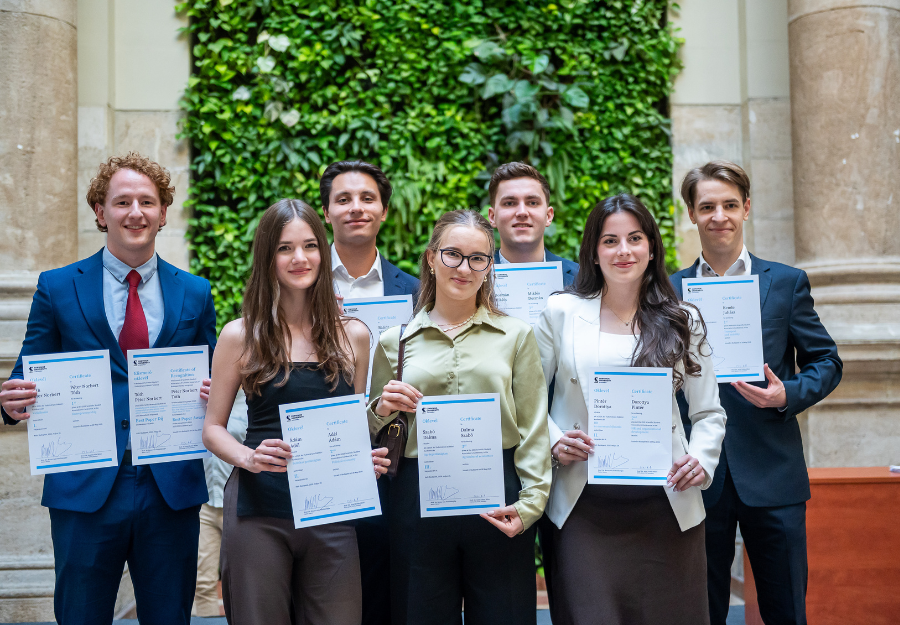
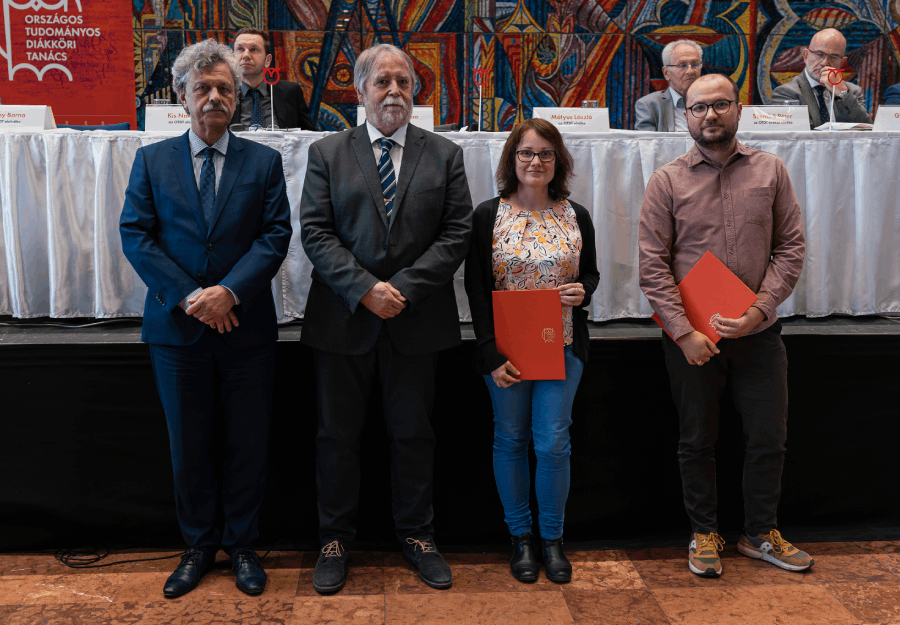
The Spring 2026 season of the Scientific Students’ Associations Conference (TDK), organised by the Scientific Students’ Associations Council (ETDT) of Corvinus University of Budapest, concluded with a ceremonial gala event on 28 May 2026. Students, supervisors and members of the university’s research community gathered to celebrate the academic achievements of the semester and to present the annual Best Paper Awards and TDK Publication Excellence Awards

Results

Award winners

Student award winners

  • Best Paper Award
  • ERS Award
  • Publication Excellence Award
  • Student Research Excellence Award
  • Pro Scientia Gold Medal

Teacher award winners

  • Best Paper Award
  • Excellent Mentor Award
  • Master Teacher Gold Medal

Student awards for outstanding performance in student research work. In 2018, the University Council of Student Research Societies (ETDT) decided to establish the Student Research Excellence Award and the Best Paper Award to recognise outstanding achievements in student research work. The awards are presented by the Chair of the ETDT and the Rector or Vice-Rector of Corvinus University of Budapest.

In 1988, the National Association for Student Research (OTDT) established the Pro Scientia Gold Medal to foster the creativity of university and college students, deepen their expertise, and give better appreciation and recognition to talent and individual achievement. Since its establishment, the medal has been presented every time by the President of the OTDT jointly with the President of the Hungarian Academy of Sciences (MTA) to the young people honoured, traditionally in the Ceremonial Hall of the Hungarian Academy of Sciences.

Congratulations to all award winners!

Best Paper Award

  • Bendicskó Lilla
  • Drabancz Áron
  • Kapronczay Mór
  • Paulik Júlia
  • Simity Milán
  • Ternován Bernadett
  • Varga Virág
  • Zsíros Bernadett
  • Cserni Tamás
  • El-Meouch Nedim Márton
  • Koleticsné Lükő Annaróza
  • Pandula Bettina
  • Sölch Tamás György
  • Teszárik Eszter
  • Vései Viktor
  • Báder Nikolett
  • Czapp Nikolett
  • Dobránszky Blanka Nóra
  • Edőcsény Klára Ilona
  • Gera Anna
  • Kalmár Bendegúz
  • Pap Áron
  • Rigó Donát Kristóf
  • Béni Alexandra
  • Csontos Tamás Tibor
  • Domokos Csenge Virág
  • Fehér Dávid
  • Hartvig Áron Dénes
  • Nagy Péter Artúr
  • Papik Réka
  • Víg Ádám
  • Biró Dániel
  • Deme Gábor
  • Horváth Evelin
  • Maró Zalán Márk
  • Reizinger Kristóf
  • Szammer Anett
  • Szücs Zoltán
  • Tajti Anna
  • Zanaty Krisztina
  • Horváth Anna
  • Kalácska Eszter
  • Paulovics Péter
  • Balázs Ákos
  • Csaba Enikő
  • Fehérné Szabó Lujza
  • Granát Marcell
  • Horváth Evelin
  • Ondrik Szonja
  • Szabó Ákos
  • Szabó Dorottya
  • Bognár Bálint György
  • Csábráki Dávid
  • Ghyczy András
  • Hadászi Szabolcs
  • Nguyen Thi Phuong Thao
  • Ratkóczy Dániel
  • Almási Liza
  • Bederfi Zita
  • Durkó Ruben
  • Gerő Anna
  • Jurai Boglárka
  • Ótott-Kovács Gábor
  • Somosi Fanna
  • Zsigó Zsanett
  • Balázs Ákos
  • Bukur Tamás
  • Gendur Nóra
  • Jászai Tamás
  • Lellei Luca
  • Paulovics Péter
  • Szilárd Pálma
  • Babotán Márk László
  • Gőz Anett
  • Lapis Áron
  • Molnár Balázs
  • Obsuszt Anna
  • Tóth Zsófia
  • Varga Dóra Eszter
  • Varga Virág Judit
  • Gárdi Réka Lorin
  • Kutrovich Bence Csaba
  • Mohácsi Ármin
  • Nagy Márton
  • Paulovics Péter
  • Bubelényi Alexandra
  • Egri Máté
  • Fröhlich Dóra Anna
  • Kártyás Sebestyén
  • Kovács Márton Attila
  • Németh Evelin
  • Orbán Gábor
  • Tarlacz Dorottya Liza
  • Dienes Ádám Sándor
  • Fata Flóra
  • Horváth Balázs
  • Kostyal Dániel Stephen
  • Nagy Zsombor

Student Research Excellence Award

  • Drabancz Áron
  • El-Meouch Nedim Márton
  • Kapronczay Mór
  • Csoma Attila
  • Vancsa Miklós Milán
  • Welsz Edit
  • Boldvai-Pethes Laura
  • Bilicz Hanga Lilla
  • Biró Dániel
  • Claro Dániel
  • Hartvig Áron Dénes
  • Horváth Balázs István
  • Pásztor Szabolcs
  • Ruzsonyi Csenge
  • Sölch Tamás György
  • Teszárik Eszter
  • Bánóczi Anna
  • Horváth Zsófia
  • Klauda Zalán
  • Maró Zalán Márk
  • Stump Árpád
  • Szepesi Nóra Judit
  • Szőnyi Eszter Veronika
  • Szücs Zoltán
  • Bodor Eszter Zsuzsanna
  • Bánóczi Anna
  • Babotán Márk László
  • Csepregi Dániel
  • Heilmann István József
  • Jakó Fanni
  • Klauda Zalán
  • Szabó Ákos
  • Bíró János
  • Kovács Dóra
  • Kulhavi Nikoletta Márta
  • Lipcsei Bence
  • Rákos András Dominik
  • Szebik Borbála
  • Szécsi Dominika
  • Tordai Dániel
  • Deme Gábor

Pro Scientia Gold Medal (PSA)

  • Ambrus Lakatos Lóránd
  • Fazekas Gergely
  • Balázs Zoltán
  • Hamecz István
  • Kalocsai Péter
  • Bodnár Viktória
  • Eső Ernő Péter
  • Hanich András
  • Darvas Zsolt
  • Letenyei László
  • Paizs László
  • Radnai Márton
  • Zöld Eszter
  • Horváth Csaba
  • Janky Béla
  • Szatmári Alexandra
  • Pandurics Anett
  • Vedres Balázs
  • Csukás Csongor
  • Imrek Viktor
  • Nádasdy Bence
  • Kiss Norbert Tamás
  • Homolya Dániel
  • Medve-Bálint Gergő
  • Soós Róbert Attila
  • Drabancz Áron István
  • El-Meouch Nedim Márton
  • Bánóczi Anna
  • Hartvig Áron Dénes
  • Kulhavi Nikoletta Márta
  • Maró Gréta
  • Taxner Tünde
  • Till Gábor
  • Török Petra Eszter

Instructor awards for outstanding performance in student research work. In 2018, the University Council of Student Research Societies (ETDT) decided to establish the Best Paper Award and the Excellent Mentor Award to recognise outstanding performance in student research work. The awards are presented by the Chair of the ETDT together with the Rector or a Vice-Rector of Corvinus University of Budapest.

In 1988, the National Association for Student Research (OTDT) established the Master Teacher Gold Medal to honour and recognise instructors who lead the way in developing the talent of university and college students. Since its foundation, the medal has always been presented to the awarded instructors by the President of the OTDT together with the President of the Hungarian Academy of Sciences, traditionally in the Great Hall of the Hungarian Academy of Sciences.

Congratulations to all award winners!

Best Paper Award

  • Badics Milán Csaba
  • Keszey Tamara
  • Markos-Kujbus Éva
  • Michalkó Gábor
  • Németh András Áron
  • Rencz Fanni
  • Török Áron
  • Varga Erzsébet Teréz
  • Banai Ádám
  • Ladó Judit Mária
  • Mészáros Tamás
  • Mitev Ariel
  • Pogány Ágnes
  • Sziva Ivett
  • Varga Ágnes
  • Vincze János
  • Fehér Péter
  • Majtényi Márton
  • Badics Milán Csaba
  • Baksa Máté
  • Endrődi-Kovács Viktória
  • Losonczi Dávid
  • Neszveda Gábor
  • Sziklai Balázs Róbert
  • Varga Ágnes
  • Zsembery Levente Ferenc
  • Bakonyi Zoltán
  • Benczes Réka Ágnes
  • Harangozó Gábor
  • Madari Zoltán
  • Rencz Fanni
  • Badics Milán Csaba
  • El-Meouch Nedim Márton
  • Mihalkovné Szakács Katalin
  • Sebestyén Géza
  • Szabó Zsolt Roland
  • Török Áron
  • Varga Ágnes
  • Veszelszki Ágnes
  • Drótos György
  • Keszey Tamara
  • Papp Zsófia
  • Bakó Barna
  • Fülöp Zoltán
  • Mitev Ariel Zoltán
  • Neszveda Gábor
  • Pelle Veronika
  • Szalma Ivett
  • Varga Ágnes
  • Veszelszki Ágnes
  • Brodszky Valentin Péter
  • Kocsis Tamás
  • Mizik Tamás
  • Nováki Anna
  • Rajnai Gergely
  • Ásványi Katalin
  • Bakó Barna
  • Eisenberg-Nagy Marianna
  • Havril Ágnes
  • Madari Zoltán
  • Matolay Réka
  • Varga Ágnes
  • Vaskövi Ágnes
  • Badics Milán
  • Baksa Máté
  • Harsányi Dóra
  • Benczes Réka Ágnes
  • Eisenberg-Nagy Marianna
  • Horváth Dóra
  • Madari Zoltán
  • Medve-Bálint Gergő
  • Molnár Endre Mihály
  • Stocker Miklós György
  • Száz János
  • Bozóki Sándor
  • Harmat Vanda Daniella
  • Kovács László
  • Máté Tünde
  • Moksony Ferenc
  • Pistrui Bence László
  • Szánthó Péter István
  • Tordai Csongor
  • Badics Milán Csaba
  • Csapody Bence
  • Kovács László
  • Pintér Nimród
  • Reguly Ágoston
  • Szabó Lilla Petronella
  • Varga Ágnes
  • Varga Ákos
  • Badics Milán Csaba
  • Cserdi Zsófia Hajnalka
  • Mike Nimród
  • Pistrui Bence László

Excellent Mentor Award

  • Bakó Barna
  • Ferenci Tamás
  • Jenes Barbara
  • Michalkó Gábor
  • Neulinger Ágnes
  • Szántay Antal Péter
  • Török Gábor
  • Vas Réka Franciska
  • Buzder-Lantos Gábor
  • Jászberényi Melinda
  • Matolay Réka
  • Nagy Beáta
  • Bozóki Sándor
  • Gyulavári Tamás
  • Jeney László
  • Kállay László
  • Mitev Ariel Zoltán
  • Sass Judit
  • Török Áron
  • Vincze János
  • Endrődi-Kovács Viktória
  • Harangozó Gábor
  • Juhász Péter
  • László Norbert
  • Agárdi Irma
  • Csóka Péter
  • Jámbor Attila
  • Kiss János
  • Láng Blanka
  • Losonci Dávid
  • Neszveda Gábor
  • Sebestyén Géza
  • Ásványi Katalin
  • Csubák Tibor Krisztián
  • Bakonyi Zoltán
  • Csordás Tamás Viktor
  • Kenesei Zsófia
  • Keszey Tamara
  • Kozma Miklós
  • Pelle Veronika
  • Rencz Fanni
  • Veszelszki Ágnes
  • Berde Éva
  • Havran Zsolt
  • Chikán Attila
  • Drótos György
  • Farkas Eszter
  • Felsmann Balázs
  • Kemenszky Ágnes
  • Kiss Kornélia
  • Pálvölgyi Dénes
  • Sugár András

Master Teacher Gold Medal

  • Andorka Rudolf a)
  • Chikán Attila a)
  • Jandala Csilla b)
  • Kiss Tamás b)
  • Máriás Antal c)

MKM Kitüntetés

  • a) Kiváló Munkáért
  • b) Miniszteri Dicséret
  • c) Szocialista Kultúráért
  • Dobák Miklós – Témavezető Mester
  • Kerekes Sándor – TDK Szervezői Munkáért
  • Chikán Attila – Témavezető Mester
  • Gyimesi Sándor – Témavezető Mester
  • Szlávikné Hajba Éva – Témavezető Mester
  • Hoffmann Istvánné
  • Hrubos Ildikó
  • Nováky Erzsébet
  • Máthé Gábor
  • Szántó Zoltán
  • Csépainé Széll Pálma
  • Fekete András
  • Bakacsi Gyula
  • Pénzes Béla
  • Rezessyné Szabó Judit
  • Szlávikné Hajba Éva
  • Nguyen Duc Quang
  • Török Gábor
  • Balla Csaba
  • Palkovics László
  • Pedrye Andrzej
  • Friedrich László Ferenc
  • Hegedűs Attila
  • Hoschke Ágoston
  • Wimmer Ágnes
  • Hofmeister-Tóth Ágnes
  • Michalkó Gábor
  • Nagy Beáta
  • Jenes Barbara
  • Mitev Ariel Zoltán
  • Vicsek Lilla Mária

TDK news

Latest news

Corvinus University of Budapest

Corvinus TDK Spring 2026 Season Marks Another Year of Strong Participation

The Spring 2026 season of the Scientific Students’ Associations Conference (TDK), organised by the Scientific Students’ Associations Council (ETDT) of Corvinus University of Budapest, concluded with a ceremonial gala event on 28 May 2026. Students, supervisors and members of the university’s research community gathered to celebrate the academic achievements of the semester and to present the annual Best Paper Awards and TDK Publication Excellence Awards

TDK stories

Publications and media appearances

In 2010 we launched the TDK Library – Közgáz Diáktudós book series, which offers insight into the student research (TDK) work carried out at the faculties of Corvinus University of Budapest. In our volumes we publish writings by the best students, intended for a wider audience and based on their TDK papers. More than fifteen volumes have appeared in the series so far (ISSN: 2063-7667); its series editors are Ágnes Wimmer, Péter Juhász, Tamás Csordás and Ariel Mitev, lecturers of the BCE Faculty of Business Administration.

The most recent volume of the series ‘Rendszerek, döntéshozatal, befogadás’ (Systems, Decision-Making, Inclusion), contains, in addition to studies based on the works that placed at the 2023 TDK conference, the list of all award-winning papers of the year, as well as the list of Közgáz Diáktudós publications issued between 2010 and 2025.

The volumes are available in the repository of the BCE Library.

Grant information

NTP-HHTDK-24-0051 grant and the related events successfully delivered

  • Organisation of the Institutional Student Research Conference
  • Organisation of the “Publication and Research Methodology Preparatory” course for students
  • TDK Information Day and promotional events
  • Professional talks and workshops
  • Organisation of the Student Conference as the closing event of the project

Funding: HUF 2,000,000
Project period: 1 July 2024 – 31 August 2025


NTP-HHTDK-23-0024 grant

Funding: HUF 2,450,000
Project period: 1 July 2023 – 31 August 2024


Award certificate

Award certificates can be collected at the closing gala or in person at the mailroom in E31 within two months of the announcement of the results of the competition season.
Award certificates are issued only for 1st–3rd place finishers; a certificate issued this way can be regarded as an official university confirmation.

Award certificates can also be collected in person at a later date, following prior arrangement, at the ETDT Office in E199; if needed, please write to etdt@uni-corvinus.hu.

For students who took part in the written and oral rounds with a successful paper, we can issue a certificate of attendance on request.

Certificate of attendance

Certificates of attendance are issued individually to those who have sent their request by clicking the “Certification of attendance in Hungarian” or “Certification of attendance in English” button, choosing the language that suits them. The issued certificates will be sent to you by email. If you have any further questions, feel free to contact us at etdt@uni-corvinus.hu.

Gyakran Ismételt Kérdések

lorem ipsum

lorem ipsum

lorem ipsum

lorem ipsum

lorem ipsum

lorem ipsum

lorem ipsum

lorem ipsum

lorem ipsum

lorem ipsum

Kapcsolat felvételi lehetőségek

ETDT Iroda  
E-mail: etdt@uni-corvinus.hu


Oklevél átvétele: Postázó, E31
Ügyfélfogadás csak előzetes időpont egyeztetést követően – E199-es iroda

Contact information

ETDT Office
Email: etdt@uni-corvinus.hu

Office hours by prior appointment only – Office E199

Copied to clipboard
×