Water That Sustains Us: What Can We Do for Water Retention in Urban Environment?
Author and Photos: Máté Kovács
Vision: An empowering future
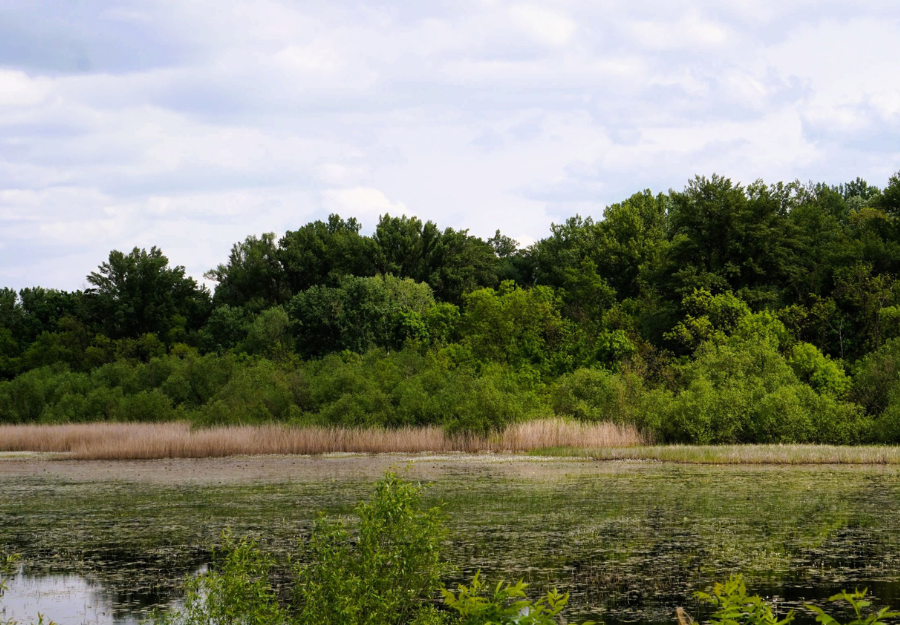
A spring breeze, scented with fresh rain, gently brushes my face as I step out into the streets in the heart of Budapest. The downpour doesn’t cause flooding this time, but it has filled the rain gardens along the street beautifully. Walking along them feels like walking through a real wetland. Of course, the water does not remain visible for long. The dark, humus-rich soil quickly absorbs it, and the retained water is stored between soil particles and within the plants.
It wasn’t always like this. I vividly remember when the street was more of a concrete jungle. Small trees struggled in planter boxes, and an unpleasant sewer smell lingered in the air instead of the soft scent of rain. Extensive planning and the dedicated perseverance of local residents were necessary for Rainforest Street to come into being.
The evocative street name aptly describes this pilot project, which has since been followed by other districts, cities, and even capitals worldwide. No machete is needed to cut through the jungle, but presence and attentiveness are useful companions as we walk through it. At every turn, we encounter remarkable communities: a pond functioning as a wetland habitat, lush rain gardens, and a Miyawaki forest that has quickly grown into a dense, oxygen-rich jungle.
Water is the foundation of both human and more-than-human communities. It brings life together and keeps it in motion. I am on my way to our community’s annual rain celebration on March 22, on World Water Day. We give thanks for the gift of rain and water, and we give something back to nature in return. We plant more and more living beings into freshly soaked soil. We care for them, and they care for us so that our shared future remains habitable for all.
Moderation and Cycles: Urban Steps for Water Retention
Due to climate change, precipitation patterns are becoming increasingly extreme: at times, large amounts of rain fall suddenly, while at other times prolonged drought periods prevail. The rapid drainage of surface water and certain water management practices often do not support water retention in soils and landscapes. Moreover, the degraded condition of soils further complicates sustainable water management.
We already wrote about this topic in September, when the focus was on the relationship between life-giving water and humanity. The themes of the spring semester were selected through a participatory process together with students, inviting representatives of student organizations and colleges for advanced studies working on sustainability. During the brainstorming process, water emerged as the most important issue for students; therefore, and also because of World Water Day on March 22, we chose this topic again for March.
Today, water scarcity poses an increasing challenge not only in agriculture but also in cities. During the 2022 drought, numerous municipalities faced drinking water shortages, and in 2025 water scarcity has again occurred in several locations. The problem primarily affects the Budapest metropolitan area, but other areas are also in trouble. Not only plants that dry out; drinking water supplies are also at risk. Globally, half of the world’s one hundred largest cities struggle with severe water scarcity, according to an article by The Guardian.
Reducing demand is one of the main directions for urban solutions. Water-saving devices, smart meters, and public awareness campaigns aim to lower water consumption. In Hungary, there have been instances where water abstraction had to be restricted at the municipal level: during daytime hours, it was forbidden to irrigate gardens and parks, clean roadways, wash cars, or operate misting gates. In summer heat, daytime irrigation is inefficient anyway, as water evaporates quickly, leaving only a small portion available for plants.
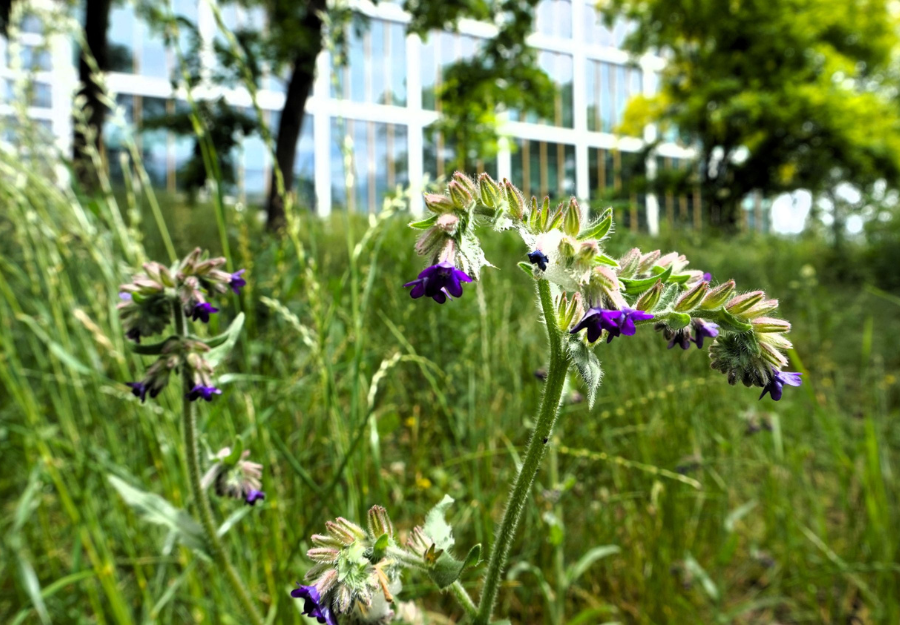
Retaining rainwater locally—through green roofs, rain gardens, and rainwater harvesting systems—can reduce pressure on the water network and improve the urban microclimate. Rain gardens are planted depressions that collect and infiltrate rainwater into the soil, reducing rapid runoff while also providing habitat. In addition, plants transpire water, cool the air, and improve thermal comfort during summer heatwaves. At the Corvinus Gellért Campus, rain gardens and green roofs can also be found, serving as examples of natural water retention and biodiversity support.
The reuse of greywater (such as water from sinks and showers) after treatment for irrigation or toilet flushing can reduce drinking water consumption. Furthermore, modernizing water networks, reducing leakage losses, and introducing digital monitoring systems can result in significant savings. In England and Wales, for example, up to 20 percent of water may be lost due to leakages; a figure authorities aim to halve by 2050.
The “sponge city” concept has also become a popular guiding principle. It is based on enabling urban surfaces to absorb, store, and gradually return rainwater to the natural cycle. The Municipality of Budapest, for example, has developed a comprehensive development strategy published in 2025, and a district of Vienna is also frequently cited in discussions about sponge cities.
Challenges – What Can We Do for Water Retention?
Bring your own reusable water bottle to Corvinus and refill it at one of the filtered water stations! Avoiding PET bottles means less microplastic for you and for our waters. Whenever possible, choose tap water.
Calculate how much water you use in a day (drinking, personal hygiene, laundry, cooking, dishwashing, watering, etc.). Compare this with the Hungarian average (103 liters per person per day). Is there anywhere you could reduce your consumption?
Measure how long you shower. An average shower lasts 8 minutes, using approximately 65–80 liters of water. How much could you save if you reduced your shower to 3–4 minutes?
Use one of the QR codes displayed in the restrooms to report leaks or malfunctioning taps at Corvinus. The operations team will investigate and repair reported issues.
Organize a “water community circle” in your college for advanced studies, student organization, local community, or family. Discuss your relationship with water and what small-scale water retention actions you can take using your own tools and resources.
Check out and download the Beeco Eco Map, where, in addition to public drinking fountains, you can find many other sustainable locations.
On your next walk, observe the city’s relationship with water. How accessible is the Danube riverbank? Where does the water flowing off the rooftops go? What wtaer and wetland habitats make the city more livable?
The next time it rains, instead of reacting negatively, consider how many living beings in the city depend on that water. If you can, pause for a moment, enjoy the scent of rain, and express gratitude for this sustaining precipitation.
Download the playful educational app of our LOESS project on soil health, where you can also find useful materials related to water retention. In the project, Corvinus Science Shop participates as the Hungarian partner.
Observe the condition of the soil near your home. What problems do you see, and how might they affect water infiltration? After registration, you can upload your observations to the LOESS Soil Map problem map.
+1: Join us on Tuesday, 24 March, at 17:20 at the Corvinus Gellért Campus for our World Water Day program. We will first tour the rain gardens and eco-solutions of the Gellért Campus garden, and from 6 PM we will watch and discuss a water-related film togetherű at the first spring session of the Corvinus Eco Film Club. (Event details coming soon.)