“Corvinus-SEED will become the university’s new corporate gateway”
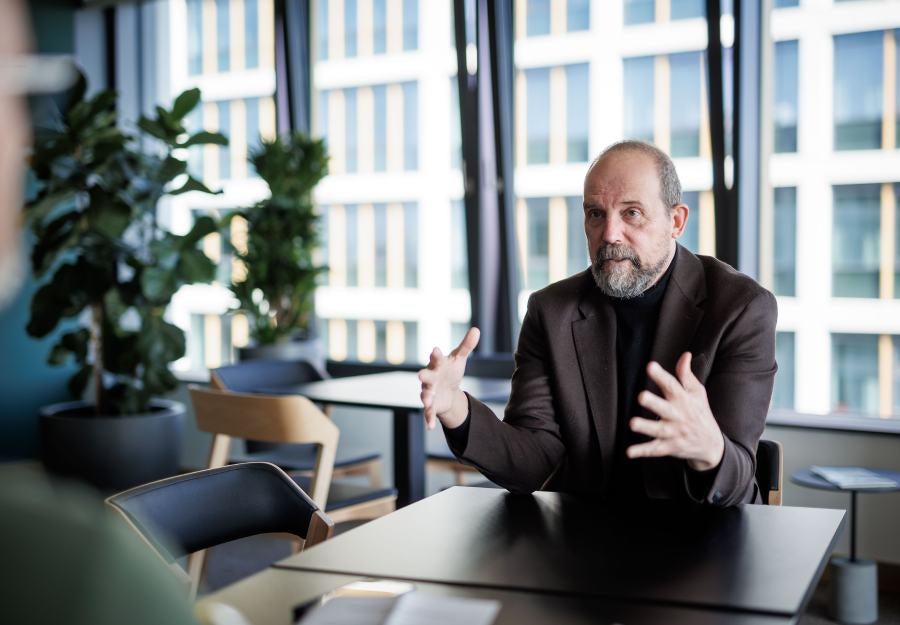
We spoke with the head of the new organisational unit, Corvinus-SEED (Corvinus School for Executive Education and Development), about emerging conceptual perspectives and practical organisational and operational steps.
At the end of January, Rector Bruno van Pottelsberghe and László Eszes, head of SEED, formally announced to the university community and the public that the executive education school would join the Corvinus organisation.
What does this development mean from a market perspective, and how will the establishment of Corvinus-SEED reshape the Hungarian executive education landscape?
For some reason, university-based executive education has not developed in Hungary, even though it has a long tradition and significant weight in neighbouring and Western countries. We do not have anything comparable to Harvard Business School, London Business School, INSEAD, or in the region the WU Executive Academy in Vienna or the IEDC-Bled School of Management in Slovenia. These are all highly prestigious institutions operating as universities or as part of major universities, attracting leaders from entire countries or regions. They are expensive, but they provide outstandingly valuable knowledge. Many executives can attend various training programmes, but only a few have access to Harvard or Bled courses, which further enhances their prestige. This category has not existed in Hungary until now.
The demand, however, has always been there. Twelve years ago, the top executives of MOL and OTP founded SEED to create a place where their companies’ leaders could gain high-level management knowledge.
Previously, some Hungarian executives were sent to training companies, while others were enrolled in programmes at IMD, INSEAD or London Business School. Since SEED was established, more and more leaders have taken part in our programmes, and over 2,500 participants from the region have graduated so far. However, further development requires a university background.
What is the strategic significance of establishing this type of institution specifically at Corvinus?
When I first met Rector Bruno van Pottelsberghe, we immediately recognised the strategic potential of this opportunity. This partnership is a match made in heaven, as SEED needed exactly what Corvinus has, and vice versa.
In its Bridge Strategy, Corvinus has clearly defined its goals, including internationalisation and academic excellence. If we truly aim to build a university of international standing in business and social sciences, then all external feedback received by the university leadership in recent years—across various forums and during accreditation processes—has confirmed the need for executive education.
This element has been missing from the ecosystem of such a university, particularly from the logic of building lifelong relationships with its students. At the institutions mentioned earlier, executive education completes this cycle. A person becomes part of the university community as an undergraduate, then specialises at master’s level. If they wish to deepen their knowledge further, they may pursue postgraduate studies. But by the age of 35 to 40, they are likely to move into some form of leadership position at work. Until now, Corvinus has mainly been able to offer the MBA to professionals at this stage of their career and in this kind of role. For many leaders, however, that would be too great a commitment, even though they would be keen to join shorter, more intensive leadership programmes.
If this element is put in place, the university can invite leaders back for executive education. They may later say that this contributed to their success and even to becoming a CEO. They will be proud of this connection and will want to give back. They will guide their children and colleagues towards Corvinus, recruit interns from the university, and support its programmes—thus completing the full cycle.
SEED’s mission to become a major executive education institution in Central Europe can only be fulfilled as part of a university. Corvinus is Hungary’s leading higher education institution in business and economics, which is why I described our partnership as a match made in heaven.
How will Corvinus-SEED be integrated into the university? What functions will it take on or complement, and how will it reshape the organisational model?
To maximise synergies, the university leadership has decided on important organisational and operational changes: two additional activities will now be incorporated into the Corvinus-SEED unit.
First, the new division will take over Corvinus’s existing non-degree programmes, continuing them under the name Professional Development programmes. These are courses for professionals that do not grant degrees, ranging from AI-related training and coaching programmes to certified accounting, online marketing and digital marketing courses. We have renamed this category “certificate programmes.”
In addition, Corvinus-SEED will take over the management of corporate and institutional relations. Strategic partnerships and the work of the Corporate Relations unit (VIK) will be integrated into this organisational unit, making Corvinus-SEED the university’s new corporate gateway. Through it, Corvinus will offer executive education programmes, business skill development programmes, and strategic partnerships.
This step creates an integrated client and partner base, and combining these three activities within one organisational unit significantly enhances the use of synergies. Organisationally, this means we are responsible for executive education (open and company-specific programmes), professional development for non-managerial experts (also in open and tailored formats), and the management of strategic partnerships. We have been operating in this structure officially since 1 April.
What business potential does this merger hold? How profitable is executive education, and what growth trajectory can be expected?
In recent years, SEED has achieved intensive annual growth of 20–30%. This year, including strategic partnerships, we expect revenue to exceed one billion forints, representing significant growth compared to last year.
We are in a rare “blue ocean” situation, as we need to create a new category in Hungary. Fortunately, client satisfaction is consistently high. At the end of each SEED programme, participants often say that although they have attended many leadership trainings, they did not realise such a level existed.
Although precise figures are unavailable, the Hungarian leadership development market is estimated at between 5 and 10 billion forints. Last year we captured 5–10% of this market, but together we will be capable of much more. While there is still growth potential in Hungary, the real opportunity lies in the region. We are pursuing a southeastward expansion strategy, extending our reach towards Romania and the Western Balkans.
What does this integration mean in practice for the university’s researchers, lecturers, staff, and the wider academic community?
The university’s academic community will play a key role. Corvinus-SEED will be able to offer leadership and broader development programmes that combine unique strengths.
Corvinus has a leading academic community in business education, with strong research and scientific results, as well as extensive corporate connections that provide deep insight into how companies operate and what their future needs will be. This gives the academic community both theoretical and practical knowledge of the future of business.
We are therefore in continuous dialogue with our researchers and lecturers about how their knowledge, research and capacities can be used more effectively in both leadership and non-leadership development programmes.
We have also launched an especially exciting project to develop a new portfolio aimed at non-leaders, called Future Business Skills. Today, all companies are trying to understand what skills will remain uniquely human in the age of artificial intelligence, and which capabilities they need to develop among their employees. This question concerns organisations of all sizes, and our new portfolio will focus specifically on developing these skills, whether a company has a hundred or ten thousand employees.
What specific skills are involved?
We have identified four main areas. The first is digital skills related to artificial intelligence. The second is critical thinking, including advanced decision-making and data-driven decision-making capabilities. The third is human collaboration and communication, as these become increasingly valuable in times of change. The fourth is sustainability, including skills related to cultural diversity and environmental awareness.
A few weeks ago, we received a request from a major bank aiming to develop several thousand employees in skills needed now and in the near future. While the initial demand focused on digital skills, we see that these are closely linked to critical thinking, and that digital transformation cannot be achieved without well-developed human communication skills or a conscious approach to sustainability.
In other words, whichever point we start from within the network of skills, it quickly becomes clear that the others are also necessary. In this complex development task, Corvinus University has a unique advantage, and it is time to make full use of it.

What will be the overarching role of Corvinus-SEED in this newly evolving organisational environment?
Until now, there has been no role within the university that approached its diverse knowledge offering from an integrative perspective and sought to organise its skills development portfolio accordingly. Corvinus-SEED will fulfil this role. It will connect the knowledge of the academic community with corporate and strategic partners, while understanding both sides: what companies need and what the faculty can provide. It will be able to integrate these into new, high-value educational services.