Gedeon Richter (1872–1944)
pharmacist, founder of the Richter company,
Chairman and CEO
Gedeon Richter was born on 23 September 1872 in Ecséd, into a family of landowning grain merchants. After losing his parents at an early age, he was raised by his maternal grandparents.
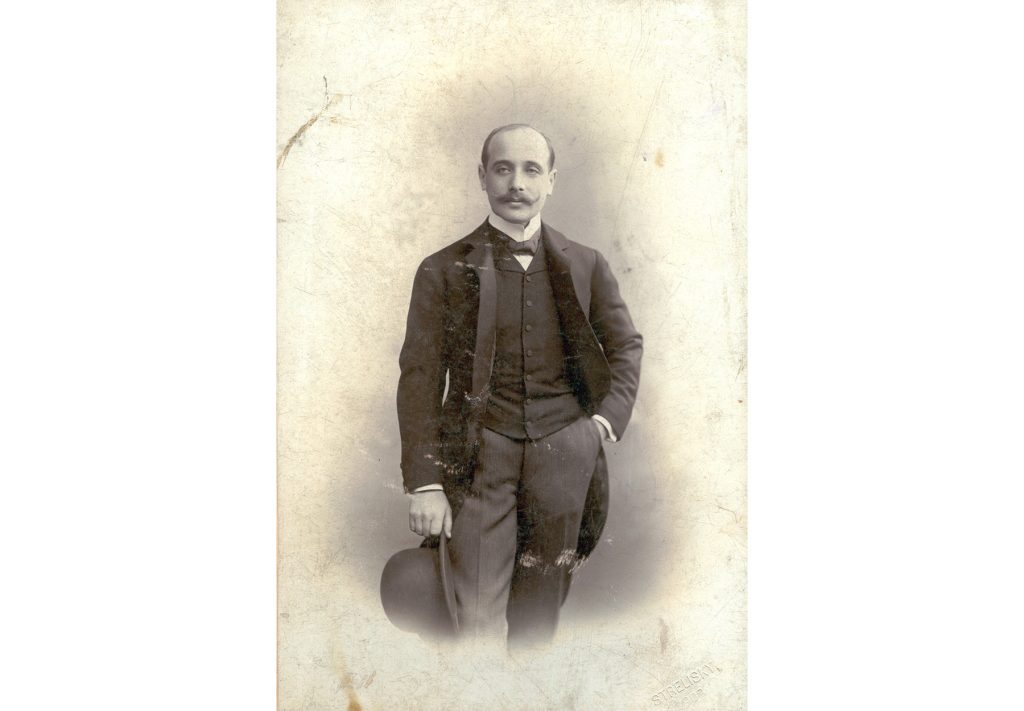
He received his pharmacy degree in 1895, followed by the mandatory two‑year practical training. From 1897 onward, he travelled across Europe to study pharmaceutical practices and emerging methods of drug manufacturing. Richter became an advocate of innovative therapies, particularly the newly developing field of organotherapy — hormone treatments based on extracts of animal glands.
At the end of 1901, using his inheritance, he purchased the Sas Pharmacy in Budapest, which remains in the company’s ownership today. In the pharmacy’s basement he established a laboratory, where he conducted chemical experiments and began producing hormone-based preparations. This laboratory became the centre of his pioneering work in organotherapy.
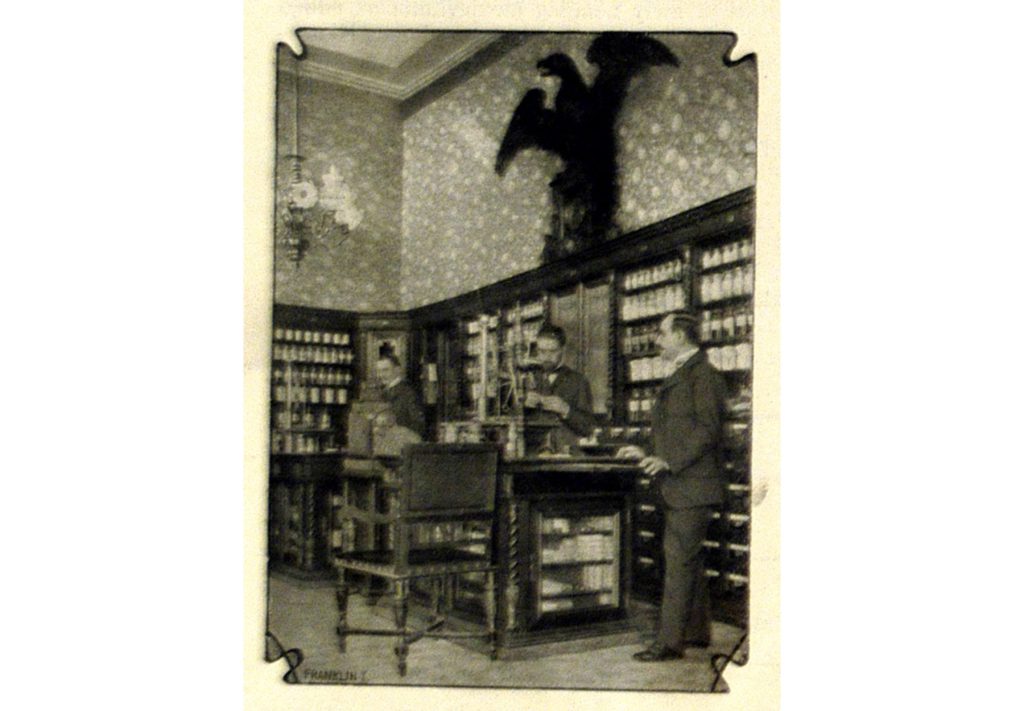
The discovery of adrenaline accelerated developments in the field, and by 1902 Richter had already introduced an adrenaline-containing product with blood pressure–raising and haemostatic effects.
The success of Richter’s products grew rapidly, and the Sas Pharmacy soon proved too small to sustain further expansion. In 1906, Gedeon Richter purchased a plot at 63 Cserkesz Street in Kőbánya, Budapest, where he founded his factory.
The site included a modern pharmaceutical production facility equipped with tableting and packaging rooms as well as laboratories. Compared to the small basement laboratory of the Sas Pharmacy, the new plant represented a significant increase in manufacturing capacity.
Richter recognized early on the potential of exporting pharmaceuticals and made it his life’s mission to build an international presence. The first agency agreement was concluded in 1908 with the Hotz company in Milan, granting exclusive rights to distribute Richter products in Italy.
In 1910, he signed another contract with two Berlin pharmacists, who received exclusive rights to market certain Richter preparations in Germany and the Netherlands. That same year, a Turkish representation was also established.
Every spring, Richter would get into his Lancia and travel across Europe to visit his representatives and business partners — this was his version of an annual holiday.
1911 – The launch of Hyperol. The highly effective disinfectant quickly became successful and widely used; during World War I, Hyperol became part of the standard military equipment.
The Czech chemist Vladimir Stanek discovered how to stabilize the otherwise unstable hydrogen peroxide. Richter immediately recognized the practical significance of this breakthrough, purchased Stanek’s patent, and introduced the product under the brand name Hyperol, in tablet form. Its effect was identical to that of liquid hydrogen peroxide, but it offered major advantages: it was easy to handle and store, did not decompose, and dissolved completely in water. It was widely used in all fields of surgery and later in many branches of medicine. During World War I, it played an important role as a solid, easily manageable disinfectant. Between the two world wars, Hyperol became one of the company’s key export products, with numerous “Hyperol agencies” established worldwide. The company continued producing Hyperol tablets until 1997.
1912 – The introduction of Kalmopyrin. This highly effective painkiller quickly became a successful and popular product, and it continues to be manufactured to this day. At the beginning of the 20th century, Bayer introduced its Aspirin tablet, which, however, did not dissolve in water — making it difficult to administer to children. This inspired Gedeon Richter to eliminate the problem through salt formation. The result was Kalmopyrin, launched in 1912, which soon gained widespread popularity.
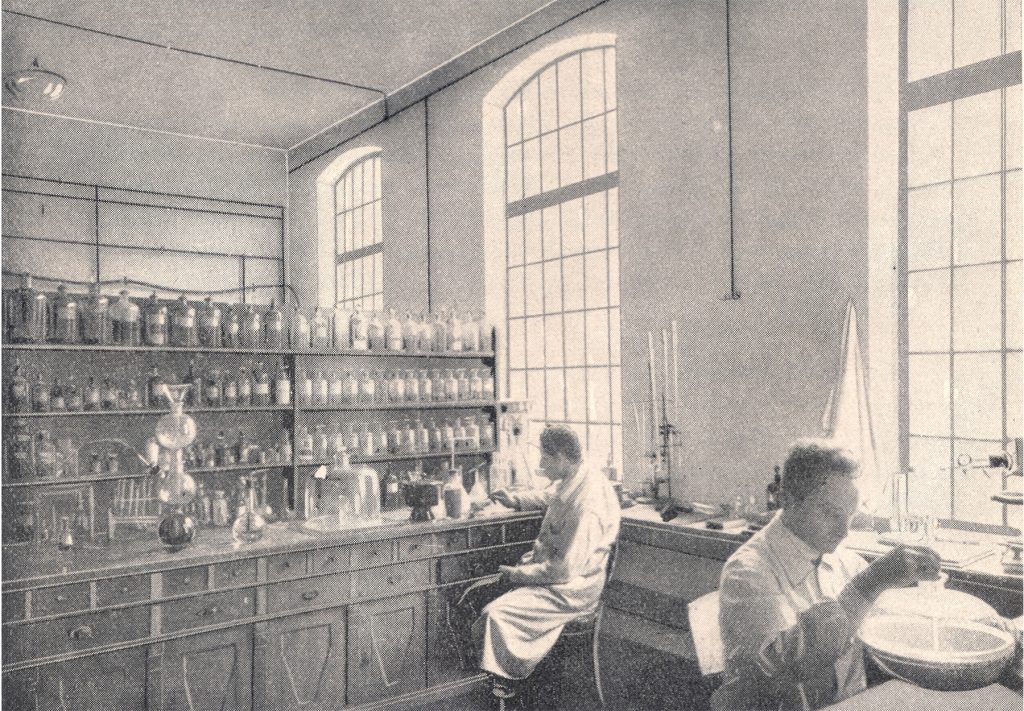
1923 – The company becomes a family-owned joint-stock corporation With a share capital of 50 million korona, the enterprise was reorganized under the name Gedeon Richter Chemical Works. By the second half of the 1920s, the company already marketed around 150 organotherapeutic products. The expertise gained during their development enabled Richter to introduce preparations of internationally competitive quality.
In 1925, the factory established Hungary’s first biological assay laboratory, ensuring that its products met international quality standards.
1926 – The first industrial-scale insulin production in Hungary begins at Richter.
Following the discovery of insulin in 1921, the company produced the hormone continuously between 1926 and 1944. Its manufacture played a decisive role in shaping the production culture and technological advancement of the Richter factory.
1929 – The company wins the Grand Prize at the Barcelona International Exhibition
Richter received the award for developing the Hormogland product line. From the 1920s until the outbreak of the war, the company earned twelve gold medals at international exhibitions. By the 1930s, Richter had built a global commercial and representative network that ensured the distribution of its products in nearly one hundred countries.
1939 – The company is declared a military plant
This period was marked by restricted autonomy and a decline in import and export activities. Despite these limitations, the years 1939–1943 became one of the most dynamic phases in the factory’s development. Yet this progress unfolded under increasingly difficult circumstances, as the outbreak of the war fundamentally reshaped the company’s operations. The stable leadership of previous decades gave way to the constant struggle of adapting to wartime economic conditions.
With the onset of the war, politics entered the life of the factory as well. Following the anti‑Jewish laws and the state‑level abolition of civil equality, Gedeon Richter resigned from his position as chairman of the board, although he was allowed to continue serving as CEO until 1941.
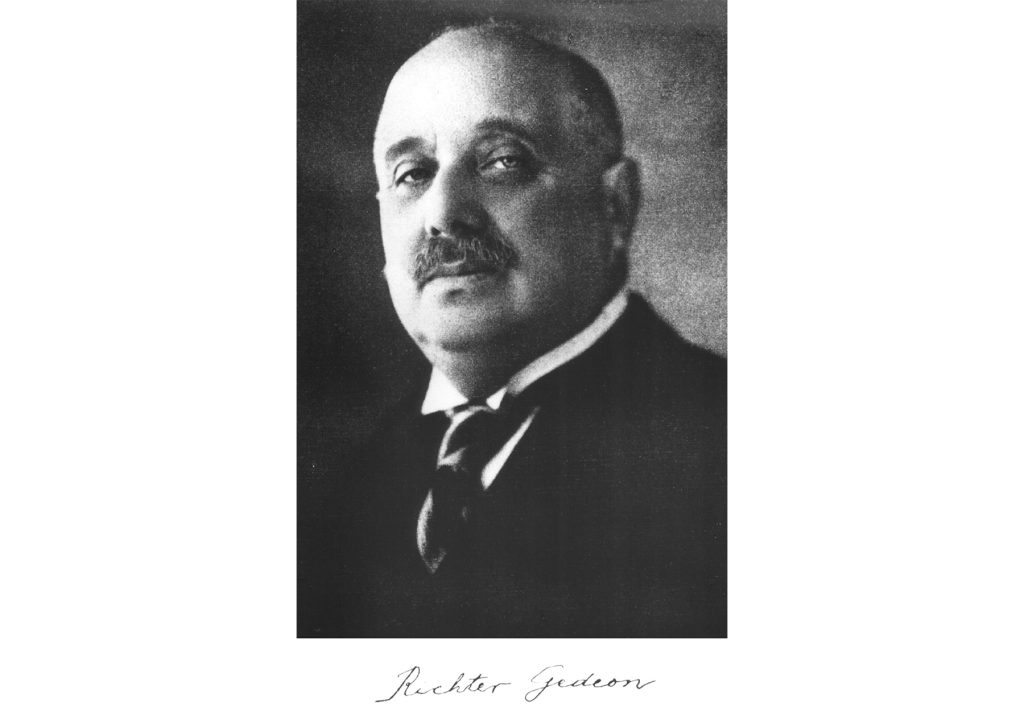
1944 – The death of the founder
In recognition of his achievements, the authorities allowed Gedeon Richter to continue working as a technical consultant, and in August 1944 he was officially exempted from the anti‑Jewish laws. After the German occupation, the company’s board of directors resigned, and professional managers took over leadership.
Despite holding a Swiss passport, Richter refused to leave Hungary. Following the Arrow Cross takeover, he came under Swedish diplomatic protection, yet in late December 1944 he was seized by an Arrow Cross squad along with many others and executed on the banks of the Danube.