Let’s not just visit – let’s leave value behind
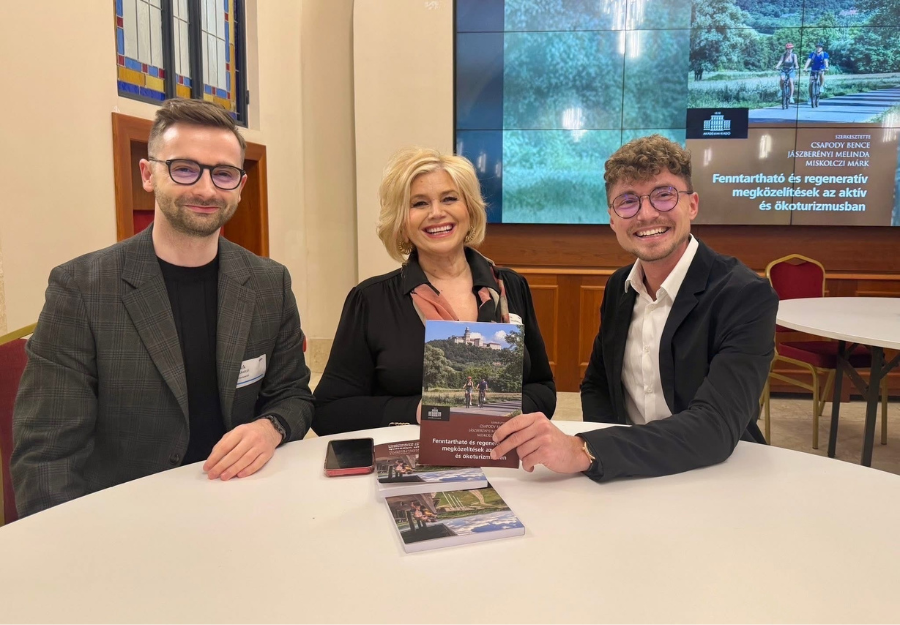
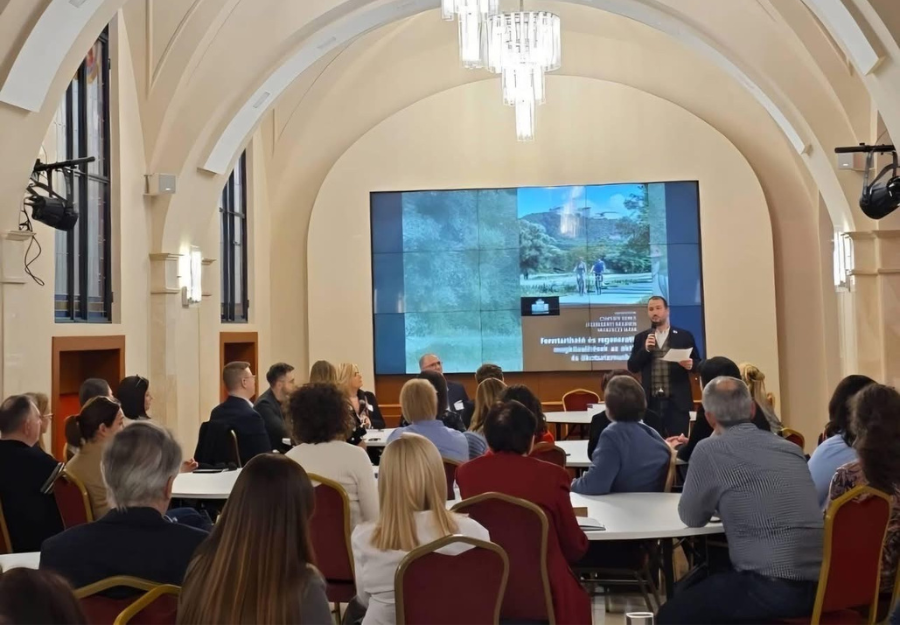
Melinda Jászberényi, Professor and editor of the series (written in Hungarian), stressed that tourism is not merely a practical industry, but also a field grounded in scientifically informed decision making. The volumes in the series are now available at several universities across Hungary via the MeRSZ platform, directly supporting teaching and professional development.
At the event, Mirkó Petényi, Managing Director of the Active Hungary Development Centre, spoke about active tourism as a matter of responsibility as well as movement. Tourism development, he noted, must protect what it seeks to showcase. In this series, the meeting point of industry, research and higher education becomes tangible.
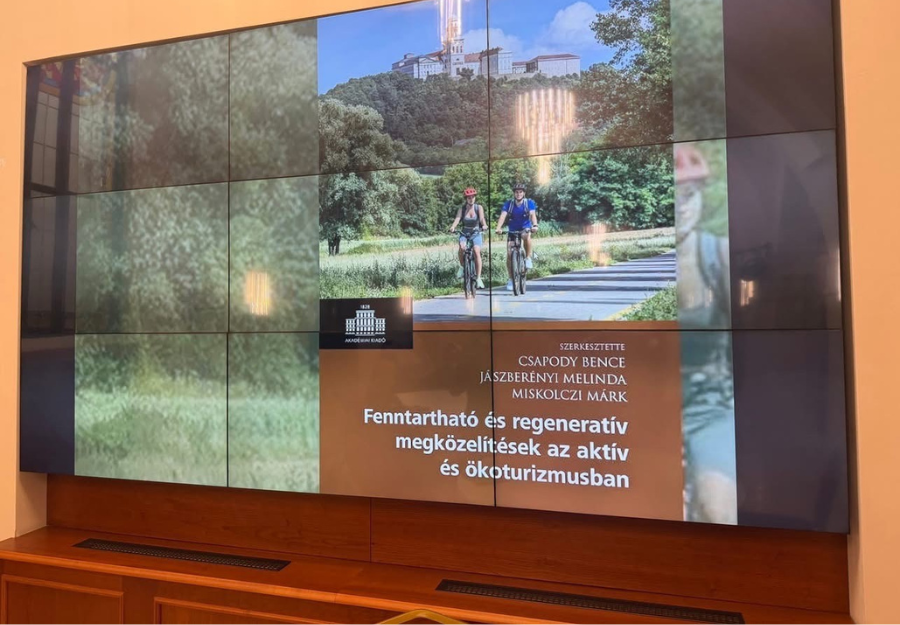
The book cover, featuring cyclists with Pannonhalma in the background, visually reflects how active and cultural tourism can connect and reinforce one another.
Beyond activity: what makes tourism regenerative?
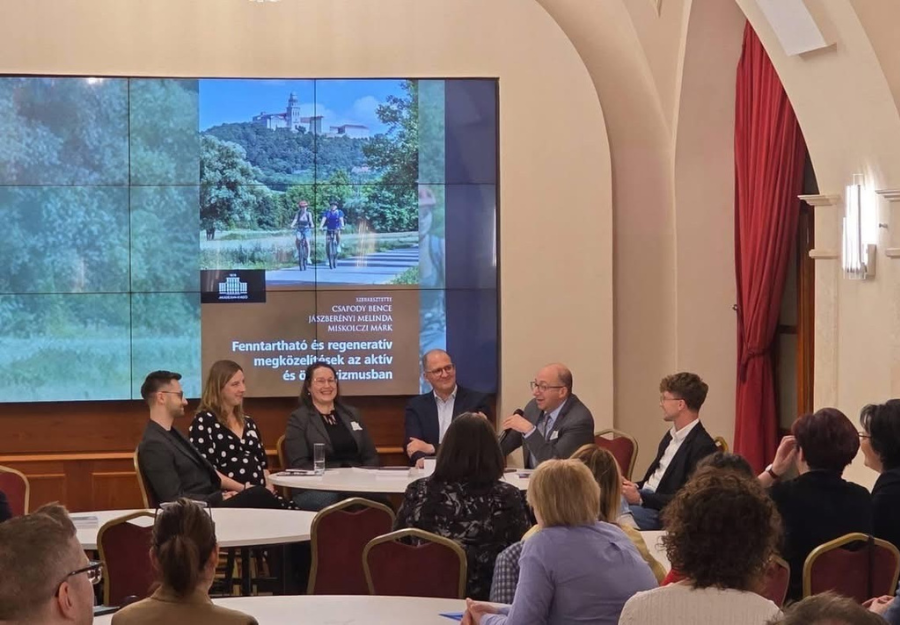
The presentation was followed by a roundtable discussion moderated by Bence Csapody, one of the editors. Editors, authors and reviewers explored new interpretations of active tourism.
Today, active tourism is far more than physical activity. According to Márk Miskolczi, Assistant Professor and contributing author, it becomes truly contemporary when visitors not only take home experiences, but also add value to the ecological and social systems they encounter. This is the essence of regenerative tourism: not simply reducing harm, but improving conditions.
Krisztina Keller, Associate Professor and reviewer of the volume, illustrated the changing concept of tourism through the example of digital nomads. This hypermobile generation of remote workers is forming new relationships with destinations, where community building, longer stays and local integration are increasingly important.
Gábor Michalkó, Professor at the University of Pannonia, recalled earlier professional debates around the definition of active tourism, including whether fishing tourism should be included. There is, however, broad agreement that active experiences contribute to both physical and mental wellbeing.
From mass tourism to “new tourism”
One of the central themes of the discussion was that tourism has reached a turning point. The traditional, consumption-driven model is gradually giving way to a new paradigm that prioritises harm reduction, regeneration and positive socio-economic impact.
Balázs Kovács, Managing Director of GD-Consulting and an international tourism expert, pointed out that while wellness tourism in the 1990s focused primarily on individual wellbeing, regenerative tourism takes a community perspective. What matters is not only what the tourist gains, but also what they leave behind. In Austria, for example, there is growing emphasis on measuring tourism’s impact on residents’ quality of life. The ideal outcome is that local wellbeing improves after visitors depart. Rural tourism, too, can be regenerative: tree planting, litter collection and supporting local initiatives allow visitors to play an active role in creating value.
Pushing boundaries – outward and inward
Active tourism often involves personal growth. A challenging hiking section, a demanding paddle or a long-distance walk can confront us with our own limits. The experience becomes not only physical, but also an inner journey.
More extreme examples were also discussed, such as visits to Brazilian favelas. These raise ethical questions, yet can also create opportunities for visitors to provide direct support to local communities.
Volunteering as part of a holiday?
The discussion concluded with a personal question: how do the experts themselves travel? Some prefer paddling on reed-fringed lakes, others seek the quiet of a meadow in bloom. Krisztina Keller added that she would welcome the chance to include a few days of volunteer work in her own trips.
Perhaps this is what the future of tourism will look like: conscious presence, shared responsibility and a commitment not only to consume places, but to help shape them.
Although conceived as a textbook, the volume reaches far beyond the university context. Whatever we study or wherever we work, we are all tourists at times, and through our choices we all contribute to shaping the future of tourism.
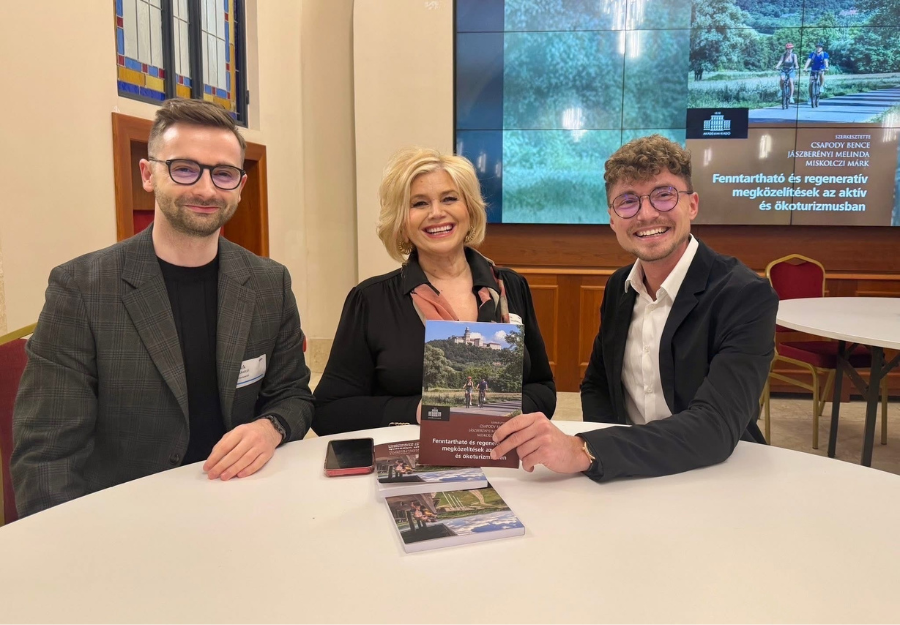
On the cover photo, the editors of the book: Bence Csapody, Melinda Jászberényi and Márk Miskolczi.