Knowledge exists in networks of human connections
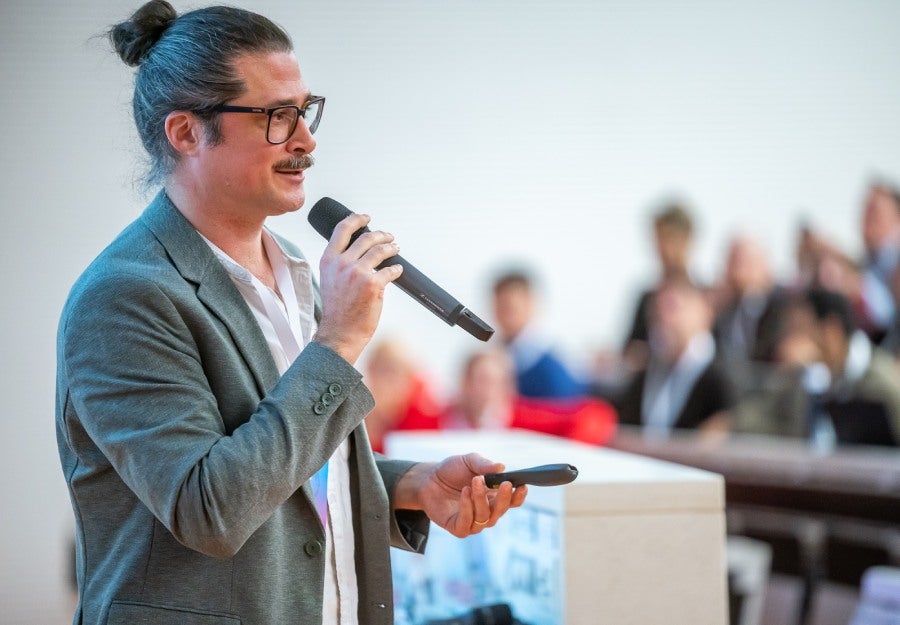
Between 28 and 30 January, GeoInno2026 brought nearly 400 researchers in economics, geography, and innovation to Budapest.
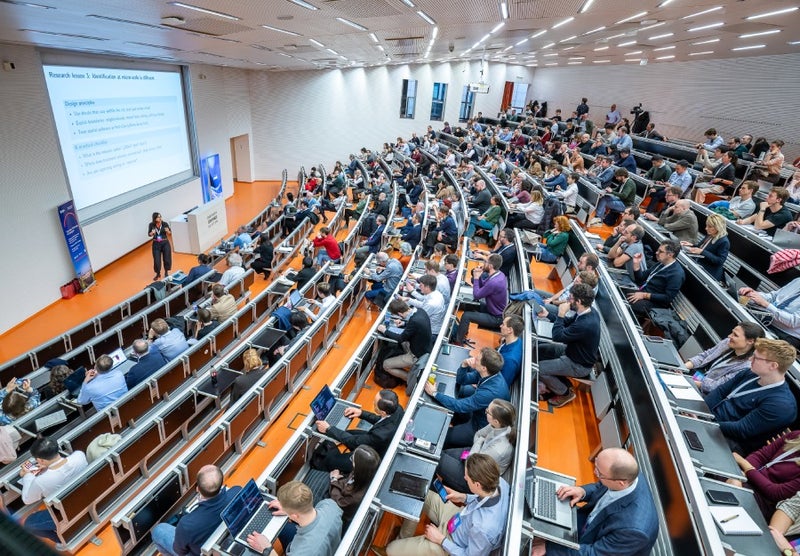
At the end of January, the conference took over Corvinus University’s Andorka Auditorium and several seminar rooms. We have already written about many of the fascinating topics, insights, and dilemmas discussed there. Two weeks after the event, we spoke with Balázs Lengyel, the conference’s academic director and lead organiser, about his professional and personal impressions.
What is the shared interest that connects the GeoInno2026 community?
The Geography of Innovation (GeoInno) is essentially an economic geography conference that focuses on the social dimensions of technological and economic development, with a particular emphasis on geographic factors.
At the heart of the community is the idea that the decisive driver of development is human knowledge, which exists in geographically bounded ecosystems and in networks of human relationships. This is why the economists, management scholars, sociologists, economic historians, and others associated with the GeoInno conference work together to uncover the geographic characteristics and territorial impacts of innovation.
Was there a talk or panel during the three days that you were especially looking forward to as an organiser?
I was really looking forward to Lee Fleming’s (Berkeley) keynote. Lee is a legendary, field-shaping scholar who was among the first to study the role of networks in regional innovation.
Luisa Gagliardi’s (Bocconi) talk was also extremely inspiring for me. She examines where, exactly, innovation is created within cities, which is a genuinely fascinating question.
Together with my co-organisers — Balázs Páger, Veronika Hamar, Zoltán Elekes, László Lőrincz, Zsófia Vas, Ildikó Kelemen, César Hidalgo, Dima Yankova, Orsolya Vásárhelyi — we also highlighted themes that are not only timely from a research perspective, but relevant more broadly as well. These included the role of artificial intelligence in innovation, the harmful effects of innovation, and the EU’s strategic autonomy.
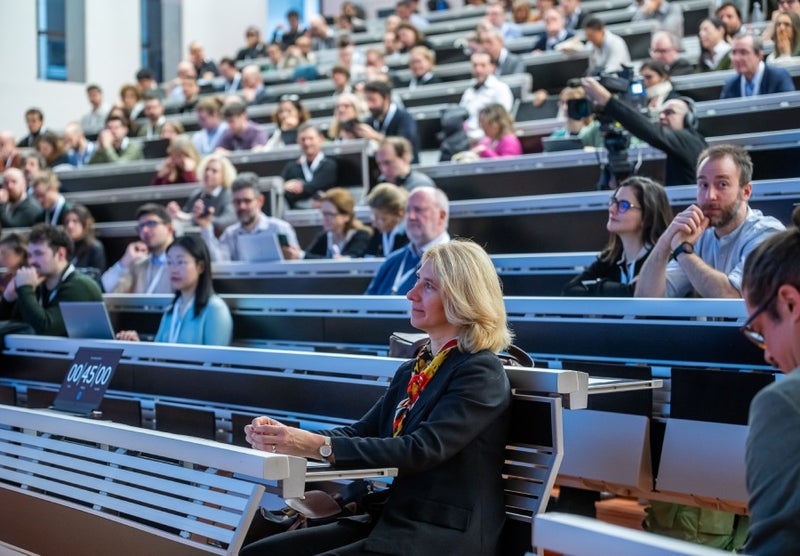
The keynote on the economic impact of sanctions clearly showed how this perspective opens up access to “hot topics”. What other current issues could still hold surprises through this lens?
In her talk, Beata Javorcik (EBRD and Oxford) argued that economists have long overestimated the effects of international sanctions. In her research on sanctions imposed on Russia, she used unique data to show that we need to account for firms’ rational motivations to circumvent sanctions, as well as for the way global supply chains are being reshaped.
I think the question of whether changes in international relations will influence innovation is similarly important. This is particularly true for artificial intelligence, where competition between the US and China is not only limiting international collaboration, but also making global regulation more difficult.
Artificial intelligence has become one of the most prominent innovation topics in recent years, and its labour market effects could affect anyone. As a researcher who also teaches at university, do you think education and training systems can keep up with the changes driven by AI?
Artificial intelligence is launching a new technological wave, and it will be felt in every area of life. Like any general-purpose technology, AI will be crucial to technological and economic development, and I think everyone agrees that university education needs to respond quickly and integrate the effective and ethical use of AI across programmes.
For me, there are still more questions than answers about how exactly we should do this. Several of our new research projects focus on AI-related issues, and within the GeoInno community at Corvinus, Johannes Wachs is the leading expert on the topic.
What are the next steps for GeoInno? When and where will the series of in-person meetings continue?
This was the first time GeoInno has come to Eastern Europe. We are very proud that Corvinus University hosted the 8th edition of the conference. The series will continue in Porto in 2028.
What would you advise students or early-career researchers who have just become interested in the intersection of innovation and economic geography?
For students and researchers who are curious, I recommend the videos of the plenary talks, which are available on the conference website at www.geoinno2026.com.
I would also recommend this year’s Neumann Award winner Edward Glaeser’s talk: he will be coming to Budapest in mid-March at the invitation of Rajk College for Advanced Studies.
Finally, anyone who would like to connect with our research on innovation and networks should reach out to colleagues at ANETI Lab and the Center for Collective Learning at CIAS, or find out more about our Social Data Science master’s programme.
Interviews and media coverage related to the conference:
Telex.hu – Front men, corrupt exporters, lost goods: how Russia circumvents sanctions (in Hungarian)
Economx.hu – Expert to Economx: how AI is reshaping the labour market (in Hungarian)
Bitport – Neither startups nor investors are interested in city name signs (in Hungarian)
FE News – Corvinus University to host international conference on the ‘Geography of Innovation’
A mood video from the three-day conference:
We asked five GeoInno2026 participants with ties to Corvinus to share, in one minute each, what the geography of innovation means to them personally: