The impacts of sanctions, the pathways of AI and the dilemmas of innovation at the year’s coolest conference
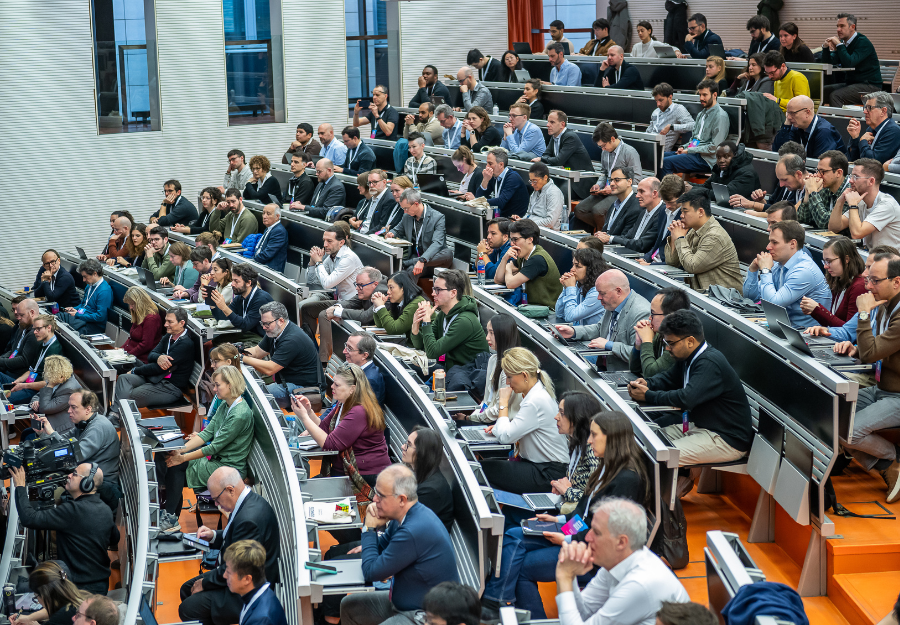
Between 28 and 30 January, Corvinus University of Budapes hosted the international GeoInno2026 conference, the eighth event in the Geography of Innovation conference series and the first to be held in Central and Eastern Europe. Over three days, the conference explored why geography remains a decisive factor even in the age of artificial intelligence and rapid digitalisation: where innovation emerges, how it spreads, who is able to retain the value created, and what side effects appear when technological change reshapes everyday practices.
A shared takeaway from the plenary lectures and panel discussions was that technological transformation is rarely a neat, linear story of progress. Geopolitical shocks rearrange trade relations; small spatial differences within cities determine where opportunities cluster; and the spread of knowledge is anything but automatic. Institutional settings, networks of relationships and corporate decisions all shape what becomes real innovation and what remains an unrealised promise.
The impact of sanctions: beyond blacklists, markets respond too
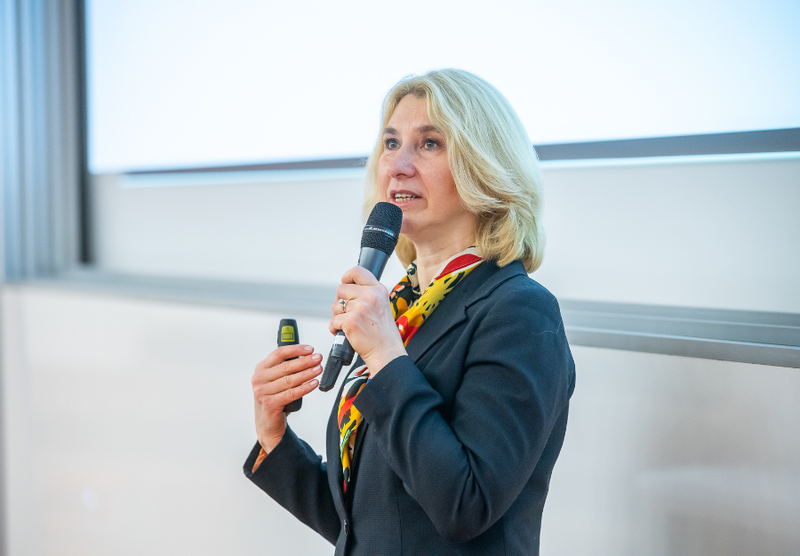
The opening plenary focused on a central question: “Do sanctions work?”, and if so, through which channels do they exert their effects. Beata Javorcik, Chief Economist at the European Bank for Reconstruction and Development and Professor of Economics at the University of Oxford, pointed out that many of the 2022 forecasts about the effects of the Russia–Ukraine war and the sanctions imposed on Russia were often based on an overly simplified cause-and-effect logic: if economic ties are severed, the target country’s economy will quickly and visibly collapse. Reality has proved far more complex.
According to the lecture, sanctions are not only legal restrictions but also powerful economic signals. Alongside official blacklists, the reactions of firms, banks and insurers are at least as important. Reputational risk, fears of secondary sanctions, and tighter financing and insurance conditions often prompt market actors to scale back their activities beyond what regulations strictly require. This effect, operating through private-sector decisions, leaves a measurable mark on trade: the downturn is not limited to prohibited products but reflects a broader climate of uncertainty and risk aversion.
A fall in direct exports is therefore only part of the story. Certain goods and relationships may persist via intermediary countries, while the presence of Western brands and services often declines faster and more deeply than legal rules alone would suggest. The impact of sanctions cannot be inferred from regulatory texts alone; it requires an understanding of market behaviour, constrained financial channels, and the ways these decisions become embedded in supply chains and contractual relations.
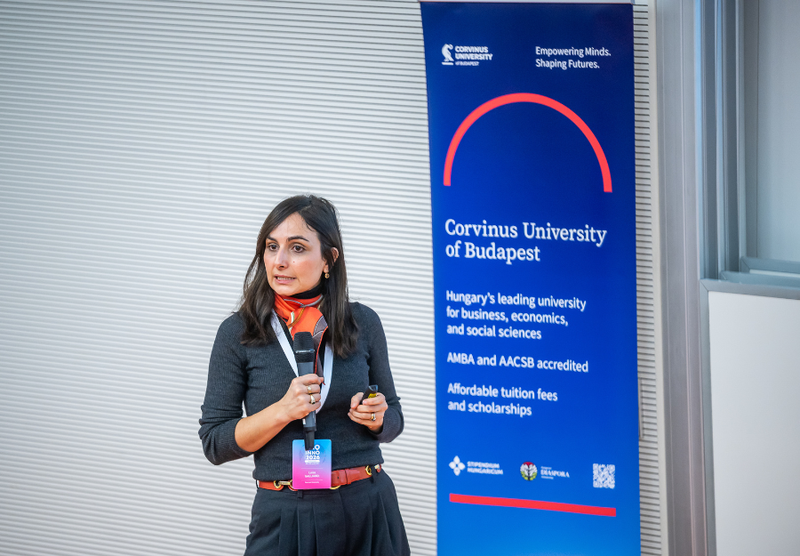
The direct and indirect effects of spatiality were also highlighted by two further plenaries on the second day. Luisa Gagliardi, Associate Professor at Bocconi University, argued that entrepreneurial dynamics are decided not by city-wide averages but by fine-grained spatial units within cities. Street- and neighbourhood-level environments shape who connects with whom, where knowledge and capital come from, and how quickly trust develops. The emergence of such entrepreneurial hotspots comes at a cost, however: changes in the service structure and processes of displacement also influence who is able to enter the market.
Lee Fleming, Professor of Innovation at the University of California, Berkeley, examined how knowledge spreads. He analysed how new knowledge created by one actor reaches others, and under what conditions this stimulates further innovation. His findings showed that the effect is strongly tied to geographical proximity, especially in learning between firms. The conclusion was clear: space is not a backdrop but a core explanatory factor in innovation.

Artificial intelligence and innovation: widespread use, concentrated gains?
On the second day, a panel entitled “AI in innovation” explored whether AI-related innovation is concentrated in a handful of major hubs, or whether its use can generate genuine regional diffusion and local adaptation. The discussion featured Carolina Castaldi, Editor of Economic Geography and Professor at Utrecht University; Yufang Hou, innovation researcher; Péter Ignácz, machine learning expert at KPMG; Johannes Wachs, innovation researcher at Corvinus; Tommaso Ciarli, innovation economist; and Vasco de Oliveira Janeiro, technology strategy expert of the European Institute of Innovation and Technology.
One recurring point was that large language models already offer tangible advantages in ideation and rapid prototyping when used as support tools. At the same time, the risks were emphasised: models can present false statements in a convincing way, so their use is only safe with thorough verification, sound data management and clear lines of responsibility. Corporate adoption tends to be gradual. Tools that improve individual efficiency appear first, followed by changes in workflows and organisational routines, with deeper shifts in business models coming only later.
A key dilemma was that geographical diffusion of use does not necessarily mean that value remains local. While AI as a work tool spreads rapidly, the structure of computing capacity, cloud services and platform providers can easily recentralise a large share of the value created. This led the discussion to the question of building European capabilities: how much coordination is needed, how to avoid parallel investments, and whether it makes sense to rely on a single flagship actor or instead to foster a multi-actor, competitive ecosystem.
The darker sides of innovation: substitution and paths of decline
On the final day, a panel on the downsides of innovation highlighted that adverse consequences are rarely attributable to a single “bad” innovation. More often, problems arise from decision-making processes and the side effects of technological substitution, while regulation frequently struggles to keep pace and reacts only after the fact.

The panel brought together Arianna Martinelli, innovation researcher; Hilary Vipond, economic historian; Jiří Blažek, Professor of Regional Economics; Markus Grillitsch and Johannes Glückler, Professors of Economic Geography.
Using examples from the chemical industry, including the effects of the Stockholm Convention on Persistent Organic Pollutants, Martinelli showed how forced change can sometimes result in only apparent progress, with hazardous properties persisting despite formal restrictions. Drawing on historical cases, Vipond emphasised that the consequences of technological change are shaped jointly by the magnitude of the shocks involved, their spatial distribution and their timing. When these factors align unfavourably, the impact can extend beyond labour markets and trigger institutional responses.
Consistently foregrounding the regional perspective, Blažek warned that innovation paths do not only move upwards. Alongside growth, processes of decline, contraction and exit are also common, reshaping the economic structure of regions at a fundamental level. Grillitsch highlighted the tension between “directed” decisions aligned with sustainability or geopolitical goals and local decision-making. The gains associated with major objectives and the burdens of decisions are often spatially separated, making the social acceptance and fairness of transformations anything but marginal concerns. Using vivid examples, Glückler reviewed the expected and unexpected positive and negative effects of innovation, arguing that innovation is neither good nor bad but often contradictory. He suggested that this can be useful, because public dialogue around such contested innovations can help reduce their unintended consequences.
The closing message of the conference was that innovation is not just a matter of technology. It is an institutional and spatial system in which the quality of early decisions determines how much value remains local, and how much later turns into side effects that can only be addressed at high cost.