Practice-Oriented and Digital Developments Concluded at Corvinus
Corvinus University of Budapest has presented the main results of its four-year project titled “Practice-Oriented and Digital Developments at Corvinus.” The programme, which ended in late June and was financed through the European Union’s Recovery and Resilience Facility, covered digital teaching infrastructure, practice-oriented education and curriculum development linked to sustainability and artificial intelligence.
At the press event held at the Corvinus Faculty Club, Tibor Sopronyi, the university’s chief information officer and the project’s professional lead, Katalin Ásványi, Corvinus’ dean for sustainability, and Csaba Csáki, Corvinus’ dean responsible for artificial intelligence, outlined the programme’s most important outcomes. With support of nearly HUF 1.5bn, the project aimed to create a more modern teaching environment, a stronger digital backbone and new course content across the university.
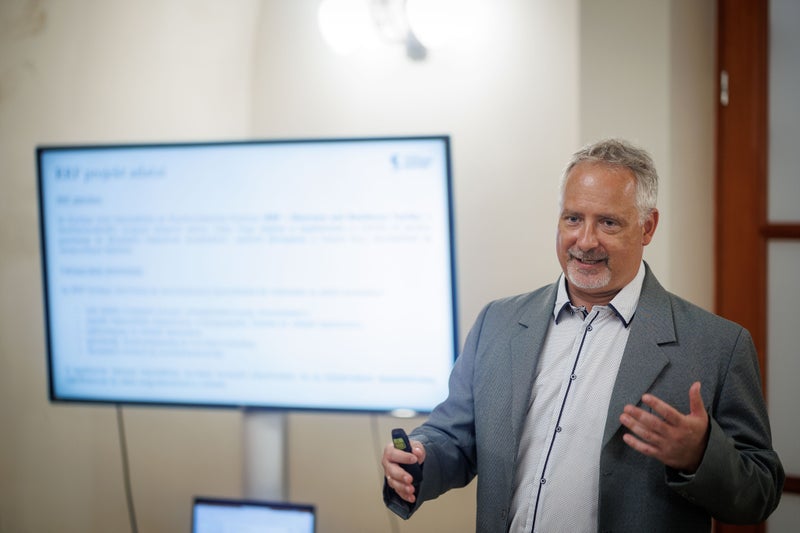
In his presentation, Tibor Sopronyi focused on the IT and educational technology components. He said the project included major network and server upgrades, the modernisation of the university’s wireless network, central active devices and firewall solutions, as well as the procurement of 290 laptops and 300 monitors. Hybrid classrooms were also created, while the Gellért Campus underwent substantial educational technology development, helping make it one of the country’s most advanced teaching sites. A slide presented at the event showed separate project components for Neptun development, IT infrastructure expansion, academic subprojects and general cost items.
According to the summary presented at the event, the funding was used, among other things, to finance the full network and educational technology infrastructure of the Gellért Campus, upgrades to the central network and firewall system, the purchase of servers and workstations, and digital teaching material development alongside practice-oriented course development. The project summary said these investments strengthened both the technical basis of hybrid and closed-system distance education and the infrastructure supporting in-person, practice-based teaching.
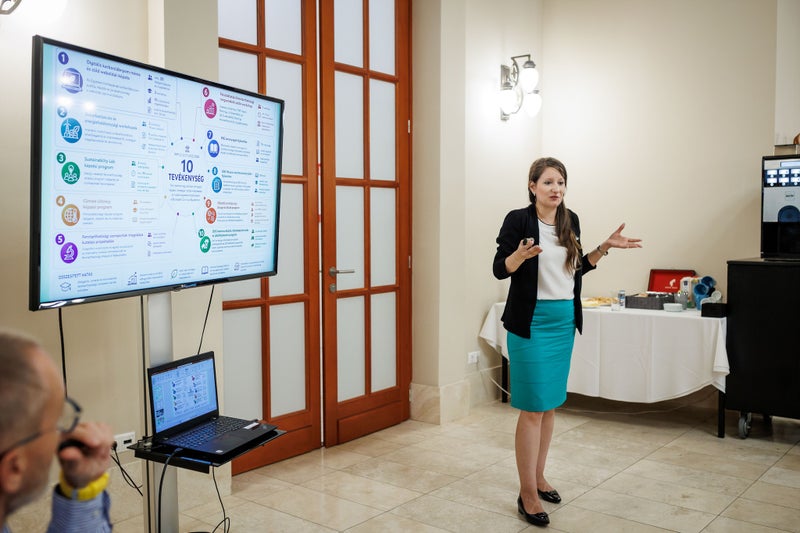
Katalin Ásványi stressed that the programme was not only about equipment purchases, but also about embedding sustainability and social responsibility into education. According to the slide shown at the event, this pillar consisted of ten interconnected activities. These included development related to digital carbon footprint measurement and green website training, decarbonisation and energy-efficiency workshops, the development of the Sustainability Lab modules, the testing of the Climate Literacy training programme, and the integration of sustainability considerations into research projects. The project also included ESG teaching materials, ESG-focused case studies and a separate workshop on higher education sustainability rankings.
The dean for sustainability also said these were not isolated initiatives, but developments that appeared across different parts of university life. The aim was to make sustainability visible not only as a topic, but also as a teaching, research and institutional practice. In that sense, the project created not only new content, but also new forms of competence development within the university community.
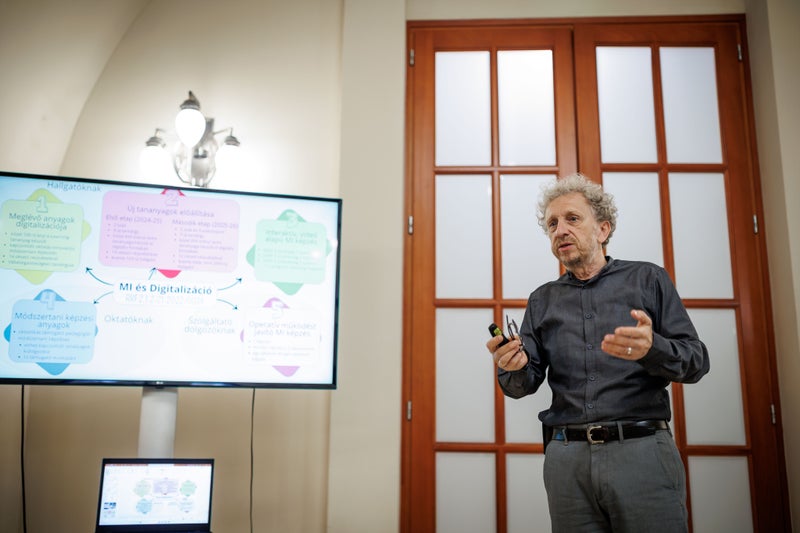
Csaba Csáki presented the results of the AI-related curriculum developments. According to the project summary, the programme also covered the development and delivery of graduate and postgraduate training linked to sustainability, data science and artificial intelligence. Examples of digital curriculum development in AI- and ESG-related subjects included MI in Social Science, AI and Business Applications, First Year Seminar, and Climate Policy and Regional Development MSc. Over the course of the project, the university signed a total of 170 development- and training-related agreements with around 100 faculty members.
The programme that concluded in June therefore served more than one development track at once. It addressed infrastructure, teaching methods and course content in parallel. Based on the presentation at Corvinus, the results of the RRF project may shape in the longer term how digital transformation, practice-oriented education, sustainability and artificial intelligence are connected at the university.