Fierce International Competition in the Social Sciences – Interview with Cambridge Researcher Barnabás Szabó
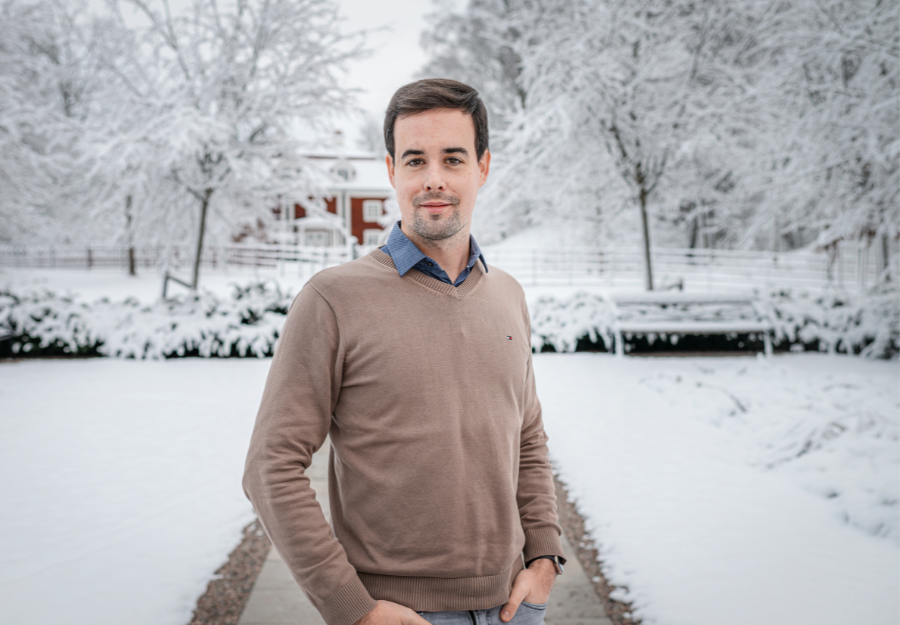
What memories do you have of your university years, and how decisive was your time at Corvinus in launching your academic career?
I studied in the international studies bachelor’s program at Corvinus between 2009 and 2012. At the time, it was one of the hardest programs to get into in Hungary, so I remember being very proud that I was accepted. Like many others, I had a preconceived idea about the degree: I thought it mainly led to careers in foreign affairs or diplomacy. It was during my university years that I realized the program actually provides a very broad foundation in foreign policy, languages, and cultural awareness, which can later open doors in many different directions.
I completed my internship at the Institute for Foreign Affairs, where I discovered that analytical background work suited me best, and that I also enjoyed sharing my opinions with a wider audience as an expert. This was the period when I started orienting myself toward an academic career.
Overall, I have very positive memories of my years at Corvinus. Through the highly diverse curriculum, we were able to gain insight into many different fields, which later allowed us to pursue a wide range of career paths. Looking around today, my former classmates are working in very different sectors and countries.
How did your interest in your current research area develop?
It has always been important to me that the topics I study in depth are relevant to broader public debates, and that my research can provide guidance for decision-makers in the field.
In very broad terms, my research focuses on the formation and disintegration of different European states. More specifically, I am interested in regions that are in some form of intense conflict with the state they belong to, such as Scotland or Catalonia. I study twenty-first-century Scottish, Catalan, and other separatist movements, their constitutional frameworks, and the debates surrounding these independence movements.
To better understand the roots of these conflicts and grievances, I went back 300 years in time. I eventually earned my doctoral degree in comparative history, focusing on the development of the Spanish and British monarchies in the seventeenth and eighteenth centuries.
You are currently a postdoctoral fellow at the University of Cambridge Centre for Geopolitics. How did you receive this opportunity?
I received a two-year fellowship at Cambridge. These opportunities are typically awarded to young researchers who combine approaches from different disciplines in order to better understand current geopolitical challenges.
One of the experimental fields within this area is what we call applied history, where we examine how a better understanding of the past can help us address the challenges of the present and future.
The level of competition for these positions in academia is so intense that luck certainly also played a role in my receiving the fellowship. At the same time, as in every profession, networking is extremely important in social science research as well. In fact, I learned about this fellowship opportunity from a researcher acquaintance and applied at the very last minute.
You mentioned the scale of international competition in your field. Your fellowship will soon come to an end — how do you see the continuation of your career internationally?
Social science research funding is facing serious problems globally. It is rare to find a state system where the field receives adequate and predictable funding.
The outlook in the United Kingdom is not particularly encouraging either. Universities often advertise positions and fellowships under less favorable conditions in order to somewhat reduce the overwhelming number of applicants. I hear from economist colleagues that they sometimes submit as many as a hundred applications a year and only receive responses from a fraction of them.
I am also actively applying for my next fellowship or position, and I can personally feel just how fierce the competition is. Having Cambridge on my CV as a former workplace may sound impressive, but it is by no means a guarantee of securing another fellowship or position.
What advice would you give to a young researcher preparing for an international academic career?
It is worth assessing already during doctoral studies which countries you would like to orient yourself toward, and then building connections with researchers there and becoming involved in their work.
Research systems differ greatly from country to country, so it is important to be aware of specific expectations, for example regarding publications. Anyone who wants to build an international academic career should think at least two steps ahead and shape both their professional network and publication record according to the requirements of their target country.