Support for multi-year parental leave is declining in Central Europe
A Czech–Hungarian research analysed survey data about parental leave from Hungary, Poland and Slovakia from 2012 and 2022, conducted by Hana Třísková (Charles University) and Ivett Szalma, a sociologist at Corvinus University of Budapest.
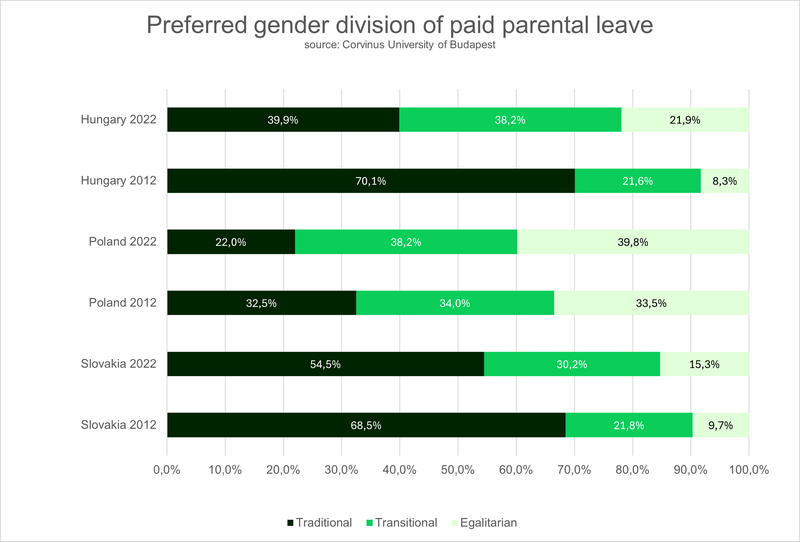
The findings indicate growing, though varying, support across all three countries for a more equal distribution of paid parental leave between genders, alongside a declining preference for the traditional model in which the mother is the sole caregiver. At the same time, significant differences remain between the countries. Support for more equal parental roles is strongest in Poland, while Slovakia continues to show the strongest preference for the traditional model, where the mother stays at home with the child.
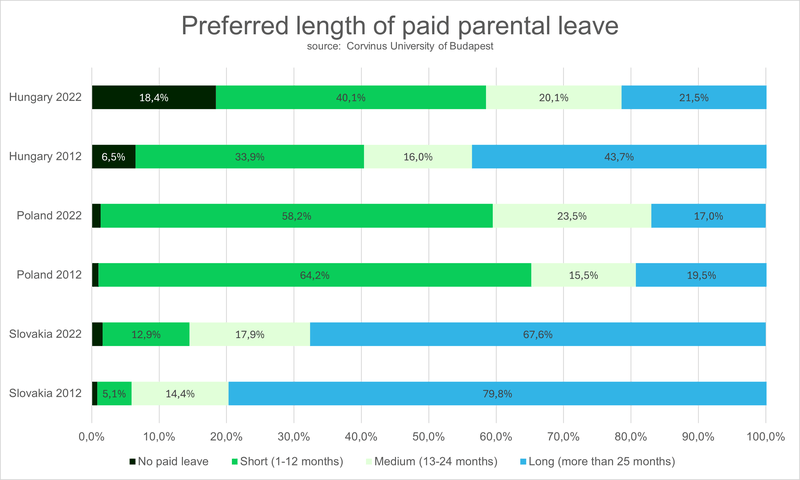
In the research, parental leave length was grouped into three categories: short (1–12 months), medium (13–24 months), and long (more than 25 months). Over the past decade, there has been a notable shift in attitudes across the region. In 2012, nearly half of respondents (49.7%) considered long parental leave of more than two years to be ideal. By 2022, this share had dropped to 37.6%. At the same time, support for shorter leave increased: the proportion of those preferring leave of up to one year rose from 34.6% to 40.3%.
The change is particularly striking in Hungary. In 2012, 43.7% of Hungarian respondents supported long parental leave, but ten years later the most popular option became short leave of up to one year, preferred by 40.1%, while support for long leave fell to 21.5%.
Caring fathers need greater cultural acceptance
Another key finding of the study is the growing social support for fathers’ involvement in childcare. In Hungary, 70% of respondents in 2012 believed that mothers should take the entire leave, but by 2022 this proportion had dropped to 39.9%. Meanwhile, support for equal sharing increased from 8.3% to 21.9%.
“Based on our research, social attitudes are slowly but clearly shifting towards more equal parental roles. Younger and more highly educated groups are particularly open to the idea that childcare should be the responsibility of both parents. It is becoming increasingly natural for fathers to play more than just a secondary role in families during early childhood,” said Ivett Szalma, sociologist at Corvinus.
According to the researchers, several factors lie behind these changes: the gradual spread of egalitarian norms, labour market expectations, the rise of dual-earner family models, and family policy reforms encouraging fathers’ involvement. National trends are consistent with policy contexts: non-transferable father quotas in Poland and support for shared care are associated with more gender-equal preferences, while in Slovakia, policies focusing on mothers continue to reinforce longer leave periods. Hungary occupies an intermediate position in this regard.
The study highlights that effective family policies should include non-transferable father quotas, adequate wage replacement, and increased cultural visibility of caregiving fathers. Legal provisions alone are not sufficient: meaningful change requires the cultural normalisation of fathers’ involvement and flexible leave policies. Without these, policymakers risk entrenching rather than reducing gender inequalities through formal reforms.
The study was recently published in the International Journal of Sociology.