CIAS Inn: Bridging the Digital and the Real. Interview with Dr Christoph Stadtfeld
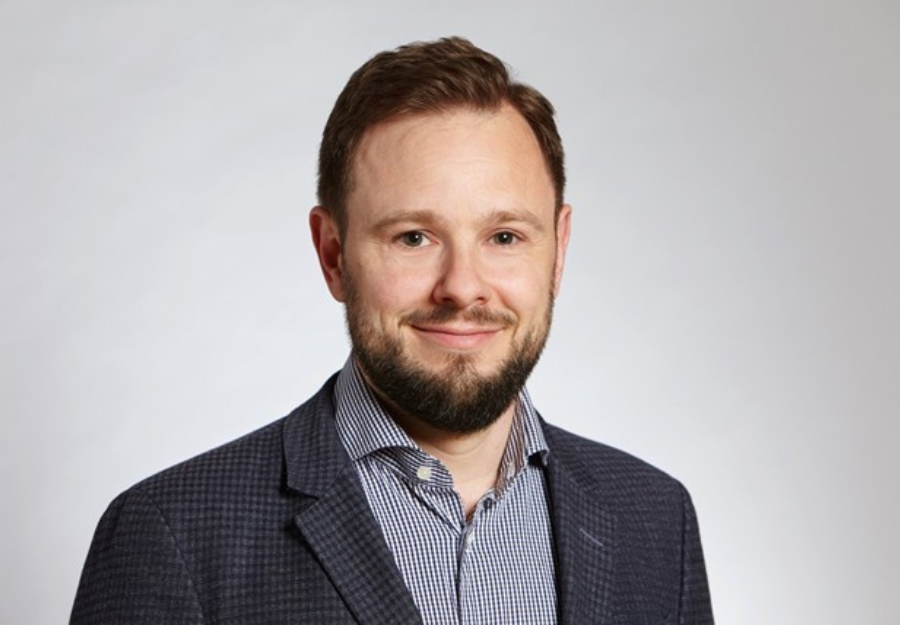
Christoph Stadtfeld, associate professor and co-director of the Social Networks Lab at ETH Zurich, spent five months at the Corvinus Institute for Advanced Studies (CIAS) tackling one of the most pressing methodological challenges in social science: His fellowship project set out to bridge these two worlds, social media and real life — developing research designs and statistical tools that allow scholars to analyse online behaviour and offline social ties together.
It is the first time that Professor Stadtfeld has collaborated with Corvinus University and CIAS. Although he has maintained long-standing professional ties with Hungarian researchers, this five-month fellowship marked a new chapter.
During his stay, which ended in January, he not only focused on his own long-term research project but also initiated new collaborations. A highlight was an international workshop that brought his Zurich-based team to Budapest for an intensive exchange with researchers and students affiliated with the ANETI Lab of Professor Balázs Lengyel. “We did this kind of international Zurich Budapest workshop, where we exchanged ideas, discussed projects, and I think a lot of small and bigger ideas came out of this project,” he recalls. For him, the fellowship served both as a platform for strengthening partnerships and as rare uninterrupted time to think. “It was my sabbatical, so it’s kind of this opportunity to have one semester to focus on bigger research ideas.”
His core research — which is entitled “Social networks in the digital world and real life” — focuses on social networks, both online and offline. As he describes it, there are “kind of two ways of how people have been studying social networks.” One approach analyses digital trace data from platforms, observing who follows whom and how users behave online. The other relies on traditional surveys, asking people about their friendships, colleagues, and important social ties.
“These kind of two research, they run a bit in parallel,” he notes. The reason, in his view, is methodological. “There are just very few statistical tools and methods, and research designs, and ways of how to collect data, that combine those two worlds.” While it is technically easy to download vast amounts of platform data, linking it with in-depth survey responses from the same individuals is far more complex.
Digital traces reveal behaviour but not intention. “Basically what these traces are is just behaviours. So we don’t really know anything about the motivation, the reasoning, and kind of what’s going on in people’s heads.” This is where surveys become indispensable. “The real life art refers to trying to better understand why people do what they do, and what’s their motivation.” His project seeks to demonstrate that these two data sources can be meaningfully integrated.
One strand of his research follows first-year university students as they form new social networks. In one case study, around 150 students were observed, with about 80 granting access to their social media data. Larger datasets include up to 1,000 participants.
The design is elegant: students arrive on campus knowing almost no one. Over time, friendships, study partnerships, and informal hierarchies emerge. “We try to understand how they get there from this first day to, after one year, some of your best friends in life are in this community,” he says.
Initial findings show that online and offline networks differ in structure. Digital platforms tend to exaggerate popularity. “You might wrongly think that there are superstar friendship people when you just look at the online data,” he explains. In contrast, survey-based friendship networks are “a lot more balanced,” with most students maintaining relatively stable numbers of close ties.
The research also examines what these networks mean for individuals. “We’re also trying to understand what it means to be in this network for people,” he says, pointing to links with “your mental health, your well-being your motivation and your academic success.”
Public debate often links social media to fragmentation and polarisation. His findings suggest a more nuanced picture. “Often when we just look at online platforms, it seems that those are highly fragmented and highly polarised,” the researcher observes. Yet survey data paints a different image: many people report more diverse real-life networks than their online feeds suggest.
At the same time, Professor Stadtfeld acknowledges the risks of algorithmic curation. “This contributes to people just perceiving the world in a very skewed way. And I think this is something that is potentially dangerous, and we have to understand this better.”