Champions at the heart of the Olympics: Corvinus Wins the International Olympic Case Study Competition
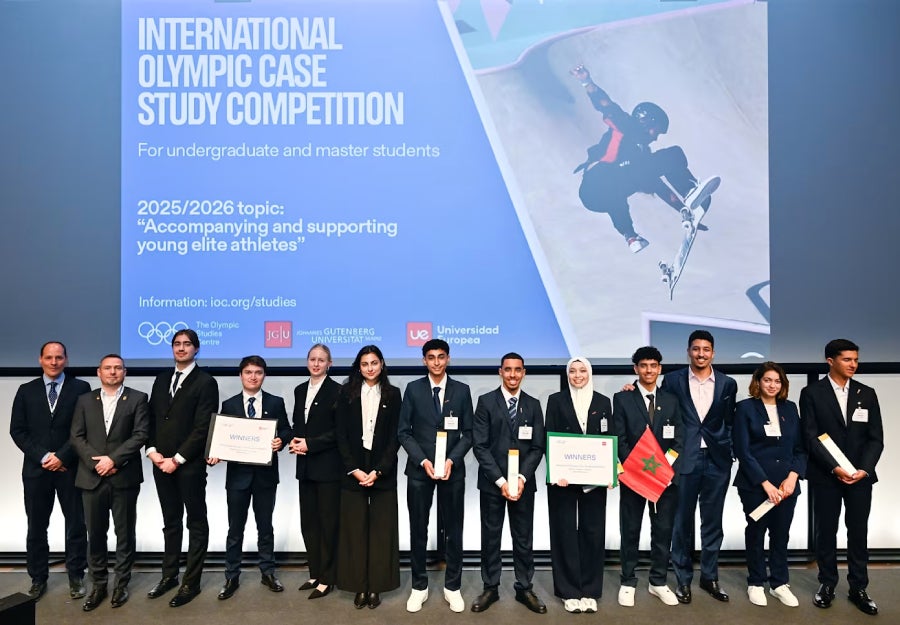
Business and Management students Andrei Krajuhin, Gergely Ganyecz, and Kseniia Pyzhova and International Business student Desislava Dostinova represented Corvinus University of Budapest at the International Olympic Case Study Competition in Lausanne, Switzerland, the home of the International Olympic Committee. Full Professor Miklós Stocker and Associate Professor Zsolt Havran advised the team.
The competition challenged teams to solve real-world problems of the Olympic movement. This year’s topic, “Accompanying and Supporting Young Elite Athletes”, pushed the Corvinus team beyond traditional business case formats. After qualifying at university level, the team won the semi-finals and ultimately the competition ahead of Universidad Europea Madrid (ESP), University of Guelph (CAN), and Syracuse University (USA).
The team previously competed together at the Thammasat Undergraduate Business Challenge in Bangkok, arriving in Lausanne with strong trust and teamwork. Preparation through the CIBS and CBS courses of the Corvinus Case Track provided the analytical foundation, while the IOCSC required a completely new mindset.
“This competition truly made us step out of our comfort zone. We had experience solving for-profit cases, but this was sport management, focusing more on human and social impact than financials.”
— Desislava Dostinova
Competitors worked on a case from the Fédération Internationale de Gymnastique, demanding a new perspective which the team embraced as an opportunity to demonstrate versatility.
“Adapting to a new case format, sports-oriented audience, and subject area pushed us to think differently — and that fresh mindset made the win possible.”
— Kseniia Pyzhova
Team dynamics proved decisive: clear roles, fluid communication, and shared international experience resulted in a cohesive and confident final presentation.
“One of our greatest strengths was the deep mutual trust built through competing together before. Presenting felt natural and became one captivating story.”
— Gergely Ganyecz
Winning in Lausanne — a city synonymous with the Olympic movement — represented both personal and collective achievement, reflecting months of preparation and strong academic mentorship.
“Winning at the heart of the Olympic movement is unforgettable. I’m incredibly proud of what we achieved representing Hungary and Corvinus on the international stage.”
— Andrei Krajuhin
Beyond competition, the IOC Study Centre created a rich educational experience aligned with Olympic values and personal development.
“Our team strongly reflected Olympic values of excellence, respect, and friendship.”
— Prof. Miklós Stocker
The competition will return next academic year with a focus connected to the 2028 Los Angeles Olympic Games.
“The goal of Corvinus University’s Sports Management specialization and the new International Sports Business master’s program is to offer students world-class international opportunities.”
— Associate Professor Zsolt Havran
Congratulations to Andrei Krajuhin, Desislava Dostinova, Gergely Ganyecz, and Kseniia Pyzhova, as well as their advisors Miklós Stocker and Zsolt Havran. Special thanks to all Case Track professors, jury members, and mentors whose support made this achievement possible.
Photo: © IOC / Christophe Moratal