Corvinus wins more than HUF 1 billion in domestic research funding over the past two years
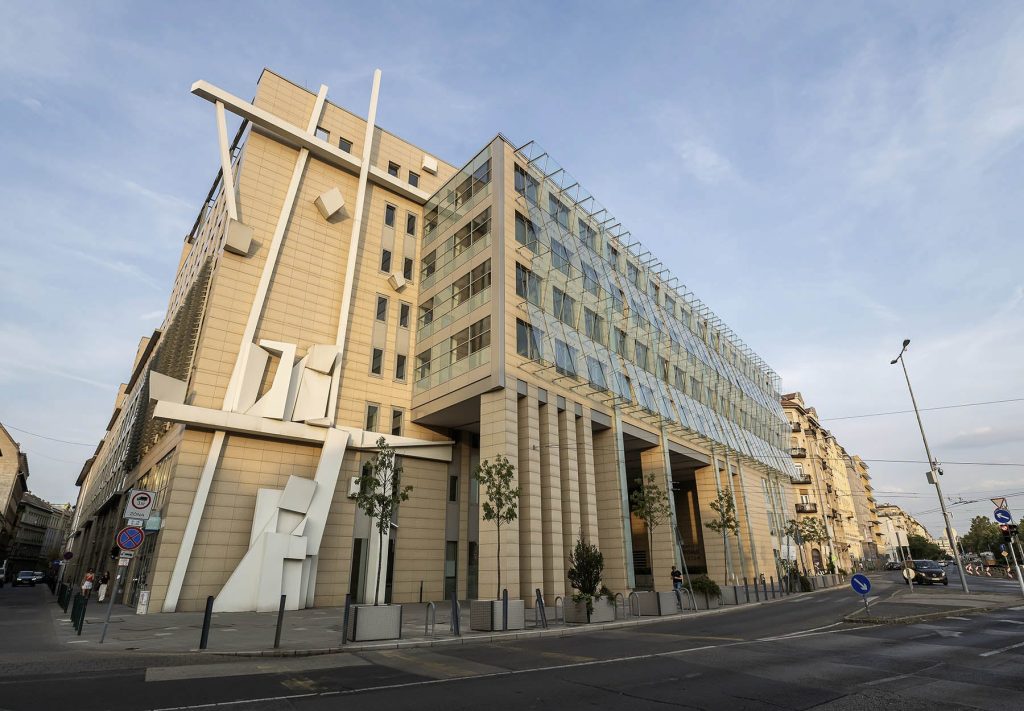
From effective happiness strategies to agile marketing, a total of 11 research projects worth more than HUF 1 billion (cca. 2.8 million EUR) have been launched at Corvinus University of Budapest this year and in 2025 with support from the National Research, Development and Innovation Office’s National Research Excellence Programme (NKKP).
The winning Corvinus projects cover a wide range of fields, from urban transport and the digital economy to wellbeing research. Projects launched last year received around HUF 500 million in funding, while those starting this year are supported with more than HUF 600 million. The research projects typically run for two to four years.
Among this year’s successful applicants, Zombor Berezvai is examining, through the example of Budapest, how shared micromobility tools such as e-scooters and public bike-sharing systems can be integrated more effectively into urban transport, and how car traffic can be reduced. Sándor Juhász is mapping dependency networks between companies, products and regions, with a focus on economic shocks and sustainable development.
The relationship between corporate operations and so-called “liquid consumer behaviour” is the subject of research by Frau Moreno, which will show how companies can retain customers in a constantly changing market through agile marketing. Judit Lilla Keresztúri’s social responsibility project aims to create a metric for social washing, showing the extent to which companies present their corporate social responsibility activities in a more favourable light than reality.
Barnabás Imre Szászi is analysing which happiness strategies work well across different countries and life situations, involving tens of thousands of participants in around 30 countries. Ágnes Zsóka is developing a new framework and digital tools to measure the social impact of higher education.
Last year’s winning projects were similarly diverse
Among the winning projects launched in 2025 is Dániel Hörcher’s research, which explores how transport systems, such as a new metro line or a road pricing scheme, affect urban structure. Dávid István Losonczi is analysing the economic adaptability of Central European manufacturing during the twin digital and green transition.
Marieke Pahlke is using game theory and behavioural economics methods to study how people make decisions based on incomplete or distorted information, for example during financial crises, natural disasters or political campaigns. Miklós Pálfia’s mathematical research is expected to produce new results in the field of nonlinear analysis.
Johannes Wachs is examining the geographical patterns of digital innovation through the example of the software industry, shedding light on how global technology hubs emerge.
A key feature of the NKKP programme is that it supports projects at several levels, from early-career researchers to internationally recognised academics. From Corvinus, five researchers received funding as early-career applicants, while three researchers each won support as experienced researchers and under a scheme designed to prepare applicants for European Research Council, ERC, grants.
Further information about the calls is available on the NKFIH website.