Too Valuable to Waste – Report on Rashid Maqbool’s lecture
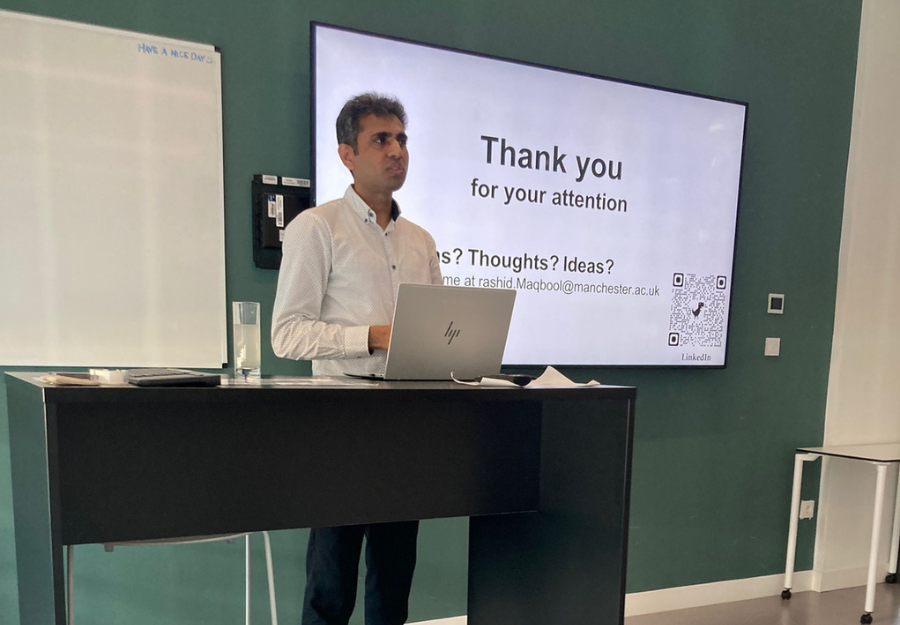
According to the speaker, in the world of sustainability, the noise often outweighs real progress. Many companies announce ambitious environmental goals, yet meaningful change is slow in practice. The field of fit-out – the design and furnishing of interior spaces – illustrates this contradiction particularly well.
Today, interior spaces are often completely redesigned every few years. Walls, finishes and furniture are rapidly replaced, with most of the removed materials ending up in landfill. Not because they have lost their value, but because they were never designed to be reused.
Professor Rashid Maqbool argued that sustainability only becomes meaningful when it can be measured. This is precisely the role of the data-driven RESET system: it assesses the embodied carbon of materials, their potential for reuse, and their impact on human health. In this way, sustainability becomes not a promise, but a measurable performance.
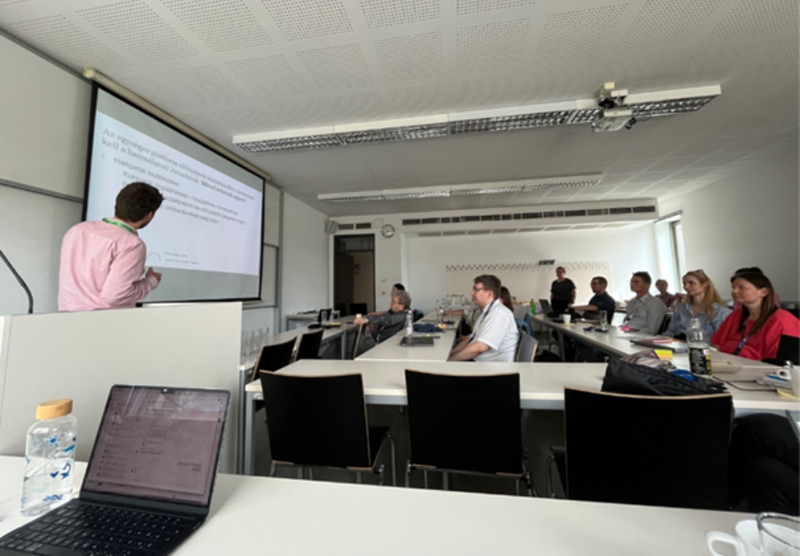
This is especially important in interior architecture and fit-out projects. The United Kingdom has set ambitious emissions reduction targets, while landfill taxes continue to rise. As a result, there is growing pressure to reuse materials instead of discarding them. The “Too Good to Waste” approach puts this principle into practice by giving materials recovered during strip-outs a second life in new projects or through donations to charities.
According to Professor Maqbool, a “green” fit-out primarily focuses on environmentally friendly materials and energy efficiency. A “sustainable” fit-out, however, goes much further by embracing life-cycle thinking, circularity, social value and health considerations. It is not only about reducing environmental harm but also about preserving the value of materials by keeping them in use for as long as possible.
In the end, the question is simple: how can we close the gap between promises and reality? Perhaps by treating interior fit-out not as temporary decoration, but as a long-term responsibility—ensuring that the materials we install today will not become tomorrow’s waste.
The well-attended lecture was part of Gellért Green’s summer semester closing programme.