“The EMBA Gave Me Not Only Knowledge but Also Leadership Confidence” – Interview with Ágnes Lammel
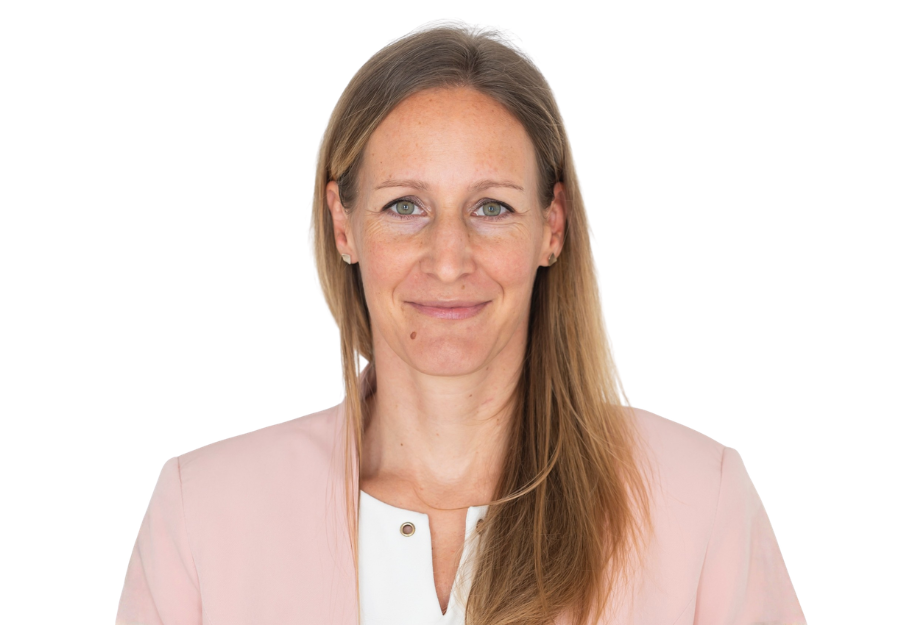
Most of your career has been connected to aviation, and you are currently Head of Stakeholder Management at Budapest Airport. What are your responsibilities in this role?
Over the past 15 years, I have worked primarily in the aviation industry in both Hungarian and international corporate environments, holding a variety of leadership positions. Throughout my career, I have worked in business development, strategic sustainability, and public affairs, and in several roles I was responsible for leading international teams.
These experiences laid the foundation for my current position at Budapest Airport, where I am responsible for stakeholder management for the airport’s major capacity expansion project. Passenger traffic has now reached the limits of the airport’s current capacity, so the development of a new terminal complex is underway.
A project of this scale—one that will shape the airport for decades—is not only an engineering challenge but also requires highly complex collaboration among a wide range of stakeholders. My role is to maintain a holistic view of this ecosystem and coordinate the interests and cooperation of all parties involved.
The position is also closely linked to risk management, as one of our primary objectives is to ensure that the project progresses according to plan in every respect. What makes this role particularly exciting for me is that success is measured less by traditional KPIs and more by well-functioning relationships and collaborations, preventing problems before they arise, and successfully mitigating risks.
Aviation is not only your profession but also your hobby—you are a licensed pilot. Where does your passion for flying come from?
I was already drawing helicopters when I was four years old, and I have always been fascinated by aviation. My family background also played a role in this—my mother worked as a meteorologist and specialized in aviation meteorology.
I earned my private pilot’s license nearly ten years ago, after my son was born, while I was on maternity leave. It’s a license for single-engine aircraft, so it’s intended for recreational flying rather than commercial aviation.
Although I wasn’t able to fly much during my MBA because of time constraints, aviation remains an important part of my life, and my passion for it hasn’t changed. Interestingly, I eventually “infected” other members of my family with this hobby—my father and one of my siblings also earned their pilot’s licenses. Flying has since become something of a shared family passion.
What motivated you to enroll in the Executive MBA program?
The idea of pursuing an Executive MBA came to me after a career change. When I moved from Wizz Air to a global sustainability leadership position at SGS, I suddenly found myself facing challenges on an entirely different scale.
By then, I already had considerable leadership experience in international environments, both in business development and people management, but this new role represented another level altogether. I was responsible for a global product development portfolio, managing a substantial budget and leading the creation of a five-year strategy. We were even developing products that didn’t yet exist.
I wouldn’t say I was overwhelmed, but there were certainly moments when I felt I was wearing a jacket that was a little too big for me. Suddenly, I wasn’t just responsible for understanding individual functions—I needed to see the business as a whole and think strategically about its complexity.
In the end, we developed a very strong five-year strategy, but that period made me realize that I wanted to place the practical experience I had gained into a more structured business and leadership framework. That’s when I started seriously considering an Executive MBA.
Looking back, what do you see as the strengths of the Corvinus Executive MBA program, and in what ways did it help you develop personally?
For me, one of the greatest strengths of the EMBA was the mandatory in-person attendance.
We learned an incredible amount from one another. Looking back two years later, I believe we built an exceptionally high-caliber community within the program. Of course, we learned a great deal from the faculty, but the knowledge and experience of our classmates were just as valuable.
Everyone came from different industries and leadership backgrounds, and during discussions it was inspiring to see the different perspectives and solutions people brought to the table.
Another major strength was the faculty’s practical business experience. The EMBA wasn’t just about theory—we learned from professionals who are active participants in the business world.
I particularly appreciated the strong focus on case studies and real business situations. We didn’t simply learn frameworks and methodologies; we applied them immediately, and our professors demonstrated how they work in practice by drawing on their own professional experience.
What was the most challenging part of the program?
Without question, the greatest challenge was that the day still only had 24 hours.
Alongside the EMBA, I was working full-time while also balancing family life and everyday responsibilities. Throughout the program, there was a constant stream of new deadlines, projects, and assignments. It required a great deal of prioritization to decide what needed my attention at any given time, and I often had to plan several weeks ahead to ensure everything was completed on schedule.
The thesis period was especially intense. At the same time, looking back on the program as a whole, I can clearly see how much I developed.
My goal in pursuing the EMBA was to complement the practical leadership experience I had accumulated over the years with a more structured approach to business and strategic thinking. More than fifteen years after earning my first degree, I was looking for a modern mindset and practical toolkit that would help me navigate complex organizational challenges and make well-founded leadership decisions.
The EMBA gave me not only new knowledge but also the confidence to think more strategically, integrate different perspectives, and manage complex professional and interpersonal situations with greater awareness and effectiveness.