PUBSIC 2026: How can innovation succeed in public services?
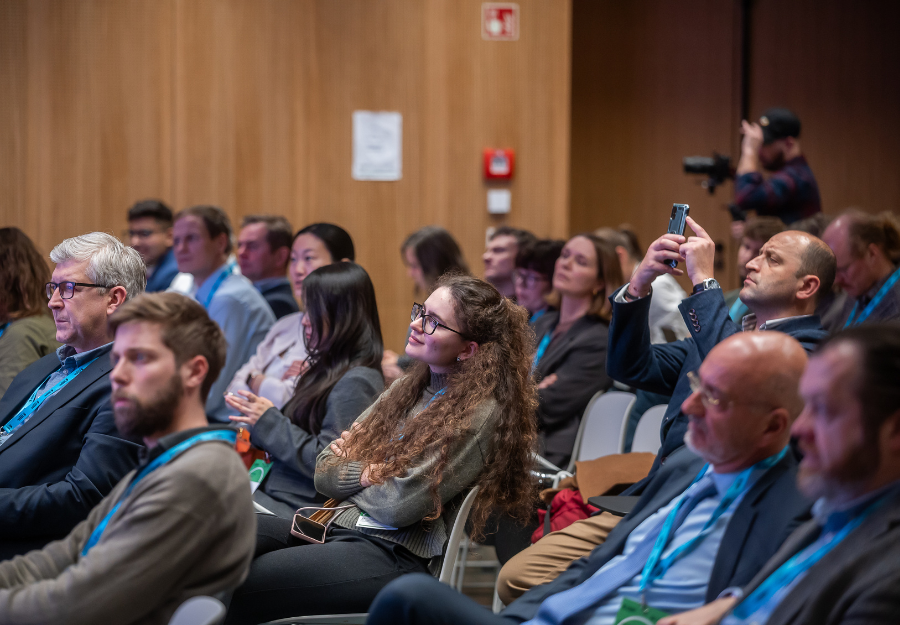
Held on 9–10 February at Corvinus University of Budapest, the event featured Stephen P. Osborne, Professor at Edinburgh Business School, one of the best-known scholars in the field of public administration and the founding chair of PUBSIC. On the second day, conference host Professor György Hajnal presented thought-provoking findings from a research project. This year’s PUBSIC theme was “Creating value for citizens and society through innovation in public services.” Participants explored how public administration and public services can move beyond traditional models and apply new approaches to support co-creation, collaboration, and sustainable development.
Taking the specific nature of public services into account
Innovation is often presented as a cure-all for today’s social and economic problems. Yet existing innovation models usually draw on private-sector experience, often without making important distinctions: they tend to mix up product manufacturing with service delivery, and they rarely take account of the characteristics of public services that clearly differentiate them from private services
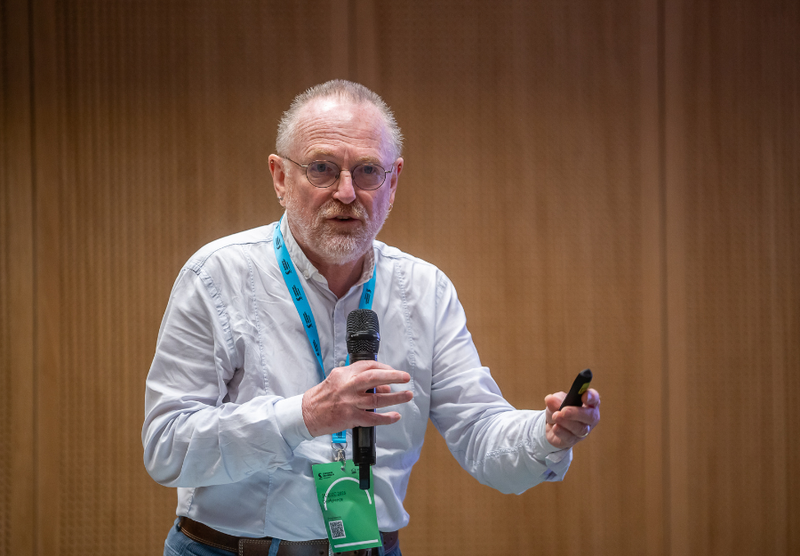
This was a key point in Stephen P. Osborne’s opening-day talk. Osborne—also the founding chair of IRSPM (International Research Society for Public Management)—argued that while public services can certainly learn from the private sector, their distinctive features mean lessons cannot simply be transferred from one sector to the other.
Value creation can be measured in different ways
Osborne stressed that in order to understand the challenges of innovation, we first need to define what we mean by the term. Innovation is not a synonym for “good change”, nor simply the organic development of something that already exists. Instead, it is a sudden, discontinuous shift, often involving a change in mindset and an element of uncertainty.
He also noted that innovations can differ radically from one another, and these differences strongly influence how willing public-sector actors are to pursue them. Innovation is often risky, expensive, and disruptive to the status quo. This makes it a particularly difficult path for public-sector leaders and politicians, for whom admitting “failure” can carry especially high costs.
Public services ultimately aim to add value to citizens’ lives—whether those citizens are service users, carers, families, volunteers, or other members of the wider community. Success can be measured through citizens’ satisfaction, which can be felt in the short term. But it can also be assessed in terms of how well a service responds to citizens’ and communities’ needs—how effectively it fulfils its concrete purpose. More broadly, it may improve quality of life as reflected in lived experience, and it can strengthen people’s capacity to shape the future by increasing personal and social capital.
Research the innovation process, too
Among his conclusions, Osborne emphasised that creating a new form of public service should not be confused with actual value creation. Innovation only opens up the possibility of value creation. We need to define what kind of value the renewed service is meant to create, for whom, and how we will know whether it succeeded. The metrics used to evaluate success should measure value for people—not only organisational performance.
Because public service innovation takes place within a wider public service ecosystem, it affects more than just the provider and the service user. For an innovation to succeed, the whole ecosystem must become involved. Even then, innovation may still conflict with existing values, fail, or prove to be a poor response to the challenge it was meant to address.
Osborne closed by arguing that better innovation and stronger outcomes require more research into innovation processes—especially into the negative side of innovation—and into how innovation can be made sustainable over time.
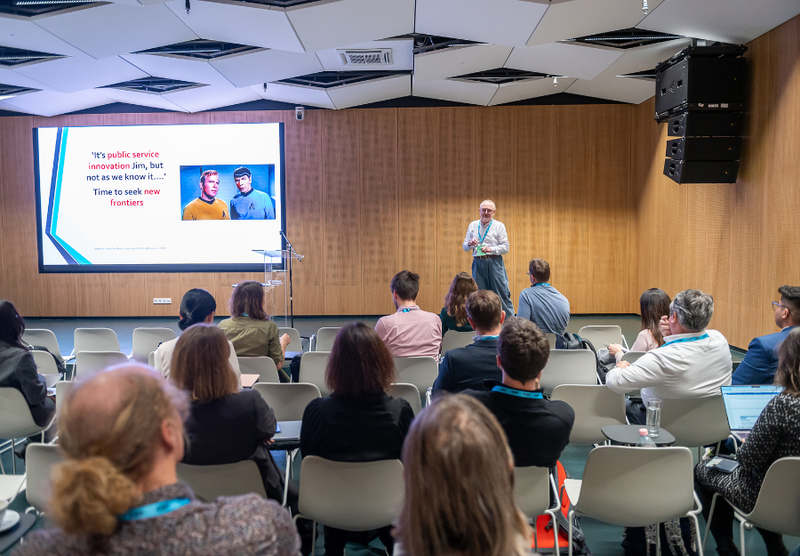
Trust can accelerate innovation
On the second day of PUBSIC, Professor György Hajnal, head of the local organising committee at Corvinus, used a specific research project to show why strong government and innovation capacity matter in crisis situations, what role local municipalities play, and how trust shapes people’s behaviour. The project analysed how local communities—especially municipalities—supported children and young people during the Covid-19 crisis, using Danish and Hungarian examples. In such circumstances, robust, “crisis-proof” governance is crucial—and successful robust governance often requires a significant dose of innovation.
The research started from the observation that we still have limited information on how innovation and trust between people and institutions influence each other during crises. The project examined both trust between specific local actors involved in innovation, and “generalised trust” in society more broadly, focusing on how these affect innovation capacity.
The findings suggest that radical innovation is possible in crisis situations even when generalised trust is low. Moreover, trust between individual actors is not a strict precondition for innovation either. However, based on the cases studied, the presence of both types of trust—although not necessary in a strict sense—can typically increase the likelihood of radical innovation or make such innovations more frequent. Hajnal also noted that a centrally positioned actor in a stakeholder network can significantly help radical innovations emerge, and that diversity is another factor that positively affects the chances of radical innovation.
Editors’ panel for researchers of public services and innovation
One of the conference’s most memorable sessions was an editors’ panel discussion. Alongside Professor Osborne, founding co-editor-in-chief of Public Management Review, editors from several leading international journals also took part, including Public Administration Review, Government Information Quarterly, Nordic Journal of Innovation in the Public Sector, and International Review of Administrative Sciences. Representing top journals in the field, the editors shared first-hand advice with Corvinus researchers on how to approach these outlets with academic papers, what editors look for, and which common pitfalls to avoid during the publication process.