Pioneering AI centre to be established at Corvinus in collaboration with a visiting US professor
The Hungarian Academy of Sciences (HAS) has launched an academic programme designed to strengthen the international competitiveness of Hungarian research groups. With the programme’s support, ten internationally renowned visiting professors will be able to join the work of research groups operating at Hungarian research centres, institutes and higher education institutions this year, including at Corvinus, as reported on the HAS website.
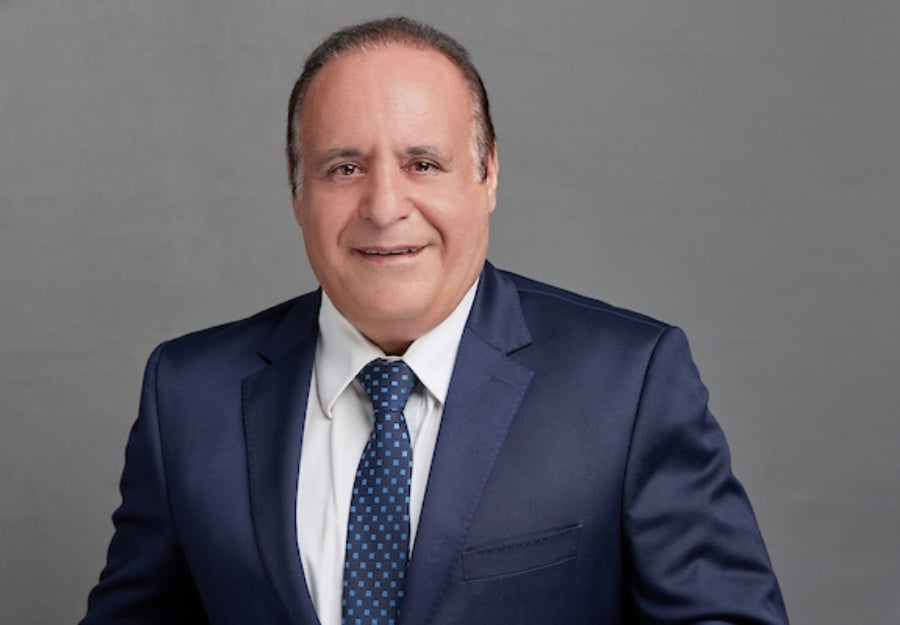
Among the successful applicants is Zabihollah Rezaee of the University of Memphis, awarded the maximum grant of HUF 15 million. At the invitation of Zoltán Oszkár Szántó, Dean of the Corvinus Institute for Advanced Studies, he will work with researchers from various institutes at Corvinus. Their aim is to establish a pioneering education and research centre to be based at Corvinus CIAS. The mission of the Artificial Intelligence, Business Sustainability, and Corporate Governance (AIBSCG) Center is to prepare current and future leaders for responsible, innovative and sustainable decision-making.
Within the AIBSCG’s multidisciplinary environment, education, research and opportunities for industry collaboration will all have a place. The centre will promote sustainable business practices, integrate AI, the Internet of Things (IoT) and blockchain technologies, and advance the ethical use of artificial intelligence. The project will contribute to sustainable economic development and may become a key knowledge base for a responsible, technologically advanced and sustainable future.
Thanks to the HAS programme, researchers will arrive from Norway, Canada, the United Kingdom, the Netherlands, China, India, the United States, and Estonia. Applications were submitted across all three major scientific domains – the humanities and social sciences, the life sciences, and the mathematical and natural sciences. Submitted proposals were evaluated by an eleven-member panel of experts from the respective fields, which made recommendations to the HAS Secretary-General on the excellence ranking of applications. From the total funding envelope of HUF 100 million, the Secretary-General’s decision resulted in ten applicants receiving grants ranging from HUF 6 million to HUF 15 million. With the programme’s support, they will conduct research in Hungary for 3–6 months at institutions including Corvinus, ELTE, HUN-REN, BME, PTE and SZTE. The research topics are wide-ranging, from religious innovation to learning processes, from the study of black holes to estimating the brain age gap, and from Roma music to the development of a new type of catalyst material.
On the cover photo: Rezaee Zabihollah. Photo credit: Memphis.edu
Source: MTI, HAS