“I enjoy tasks that require complex knowledge” An actuary on her profession, Corvinus’ postgraduate specialist training program
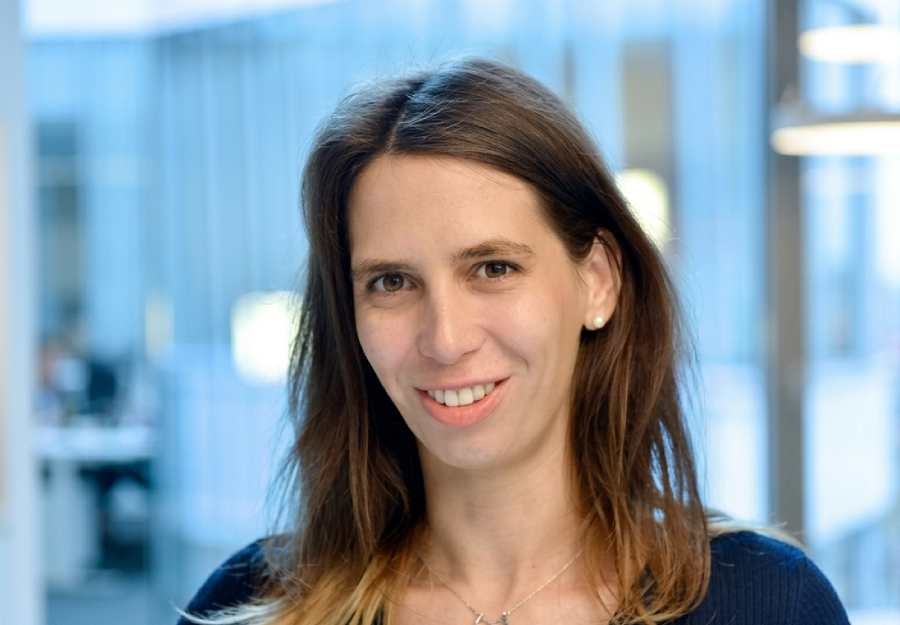
What motivated you to apply for the postgraduate specialist training programme at Corvinus?
I completed my undergraduate degree in mathematics at the University of Pécs, then earned a master’s degree in applied mathematics at Óbuda University. I taught mathematics for a few years, and then I genuinely “fell in love” with the actuarial profession. I started working at PricewaterhouseCoopers, PwC, and wanted to deepen my knowledge.
What do you enjoy about your work?
What first captured my interest was its complexity. Mathematical knowledge alone is not enough here; you also need an understanding of finance, accounting and economics, since the essence of the profession is the quantification of financial risks. Almost any phenomenon can be examined using statistical methods, as events occur in every area of life that affect the operation of insurers, whether in pensions, health insurance or property insurance.
It was also very interesting and exciting that I started working in this field during Covid, and I was able to see first-hand how a pandemic affects the profession. Many things changed: fewer cars were on the roads, and handling inflation was also an interesting issue, so I was able to gain experience right away. In a way, this was fortunate for me, because at PwC I first encountered the practice, real life and actual events.
I mainly work in audit, so I examine insurers through several different “lenses”. This includes, for example, the application of the IFRS 17 accounting standard, which came into effect at the beginning of 2023, as well as the requirements of the Solvency II framework. These are particularly interesting to me because they provide an opportunity to gain a comprehensive understanding of how a company operates. After all this, I applied for the two-year postgraduate specialist training programme at Corvinus.
Why did you consider it a good decision?
As I mentioned, I already had some familiarity with the practical side through my work at PwC, and the programme was very useful because it allowed me to deepen my knowledge. I can apply what I learned there in my everyday work. For example, when I visit a company for an audit, I am able to ask better questions. Another aspect is that I made many friends and good acquaintances in my year group, and I am still in touch with some of them today. Although the actuarial profession is relatively small, the Hungarian Actuarial Society provides an active community and organises high-quality programmes.
The postgraduate specialist training programme is fee-paying. Was that an issue?
Not at all, because PwC covered the costs. We signed a study contract, and I was always able to attend classes on Friday afternoons during working hours. The only condition of the contract was that I had to continue working here for at least one year after graduation. That period has already passed, but leaving has not even crossed my mind. I feel good in my workplace.
Among those I studied with at the university, quite a few paid for the programme themselves and became actuaries through it. I also had a fellow student who was already a chief financial officer somewhere and came here to gain a deeper understanding of the processes.
What positive memory or experience would you highlight from the Corvinus programme?
I particularly enjoyed Dr Péter Vékás’ lectures, because he presented the material in an exceptionally clear and engaging way. I would also like to highlight the work of Dr Erzsébet Kovács, who has done, and continues to do, a great deal for the development of actuarial education, and has always supported the students.
Who would you recommend your profession to? It requires learning quite a lot of different things.
The person should be good at mathematics, have a strong understanding of economics-related subjects, know and understand data analysis and AI, and, above all, be open to change.
Is there any other activity outside your profession that interests you?
Yes, I started synchronised swimming when I was twelve, and I still do it with Honvéd, both in duet and solo. In 2027, the Masters World Championships will be held in Budapest… Thinking about it, I probably like synchronised swimming for the same reason: it is such a complex activity. It requires strength, flexibility and artistic movement as well.
Would you like to study anything else in the future?
Definitely. I have not decided what yet.
Katalin Török