From classroom to climate summit: Corvinus students step into global negotiations with CEMS
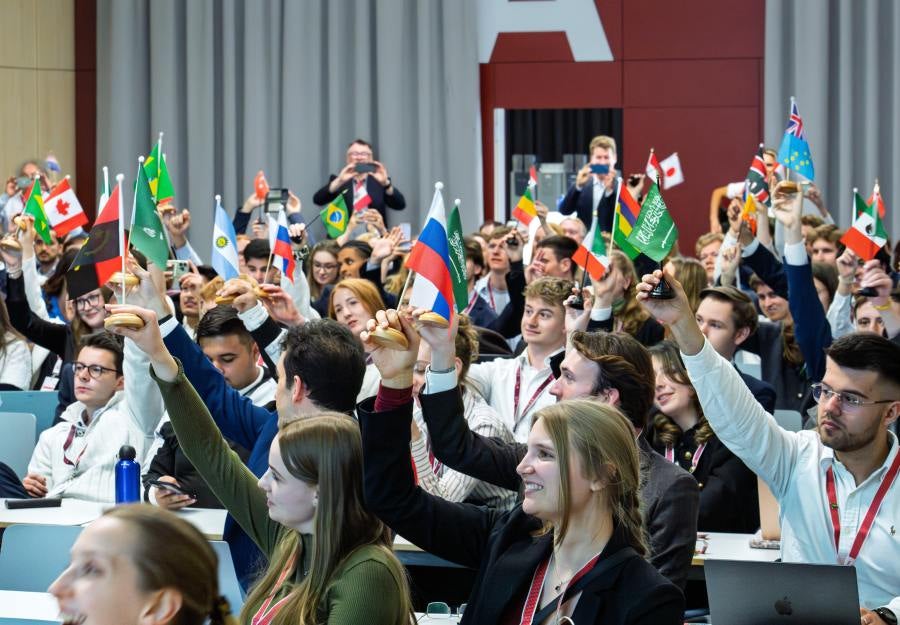
What is the CEMS Model UNFCCC?
Corvinus University is one of 11 schools that offer the course Model UNFCCC (United Nations Framework Convention on Climate Change) within the CEMS curriculum and global network, focusing on theoretical and practical knowledge about climate policymaking and environmental strategies. At the end of the course, the cherry on top is a simulation conference (this year in Switzerland) where about 150 students represent countries and observer groups, playing out the real COP (Conference of the Parties) of the UNFCCC, trying to reach a multilateral agreement to tackle climate change. Both Csenge and Chiara represented Brazil, since it is a rule that every student is assigned a different country than their own.
“Becoming a good global citizen is a core mission of CEMS. It helps students become open-minded, capable of managing complexity, and elaborating different, appropriate solutions” – Ágnes explained the main goals of CEMS. “CEMS is all about international management and cooperation, and this course translates that onto a governmental, multilateral policy level. It’s a great playground to try out different negotiation styles” – Chiara concluded.
Becoming best negotiators
Both Chiara and Csenge were named best negotiators based on their performance in the conference – altogether 4 students were awarded from the 150. So, what are the key ingredients of successful negotiation? “First, you need to be really engaged and play an active part. Success depends heavily on communication. Technical preparation helps you stay secure in your argumentation, but then you must actively listen to understand underlying interests, not just the positions written on paper” – Chiara mentioned. “During the event, swimming between parties and forming coalitions with a personal touch was also crucial” – added Csenge about the debate itself. Ágnes also highlighted how important it is to be able “to change perspective and see through the eyes of others”, meaning to be well-prepared, about one’s and others’ countries, and to think of creative, innovative ideas in advance. “Preparation isn’t just about your own country’s goals. We actually looked deep into other countries’ interests to find our allies and opposition” – Csenge also emphasised.
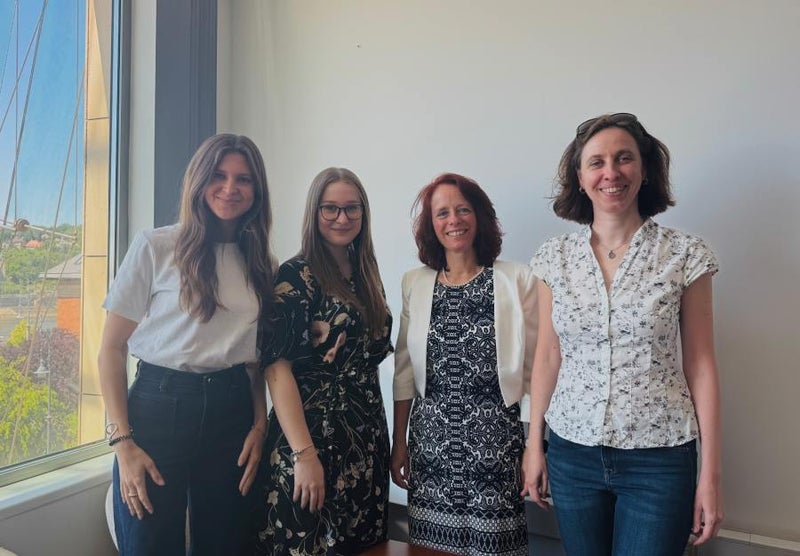
An elective class worth choosing
“It broadens students’ skill set and mobilises competencies outside traditional programs. By trying themselves out in this complex structure, students gain immense confidence and are better prepared for the complexity of the outside world” – Ágnes highlighted as mentor and professor. From the student perspective, Csenge mentioned she really liked CEMS, “because it provides the opportunity to not just learn about climate change and environmental challenges, but to take courses that broaden your perspective”. Chiara also mentioned how one can transfer this soft-skill knowledge back to the business side afterwards. She then talked about how the conference felt like a sneak peek into real-world climate diplomacy: “It provides a realistic insight into negotiations at a COP while still offering a safe environment for students, as there are no real-world consequences. This gives participants the freedom to experiment with different negotiation tactics and evaluate their effectiveness in practice. Furthermore, the role-play broadened my understanding of countries I had previously had little exposure to, particularly their unique circumstances, motivations, and capabilities in the context of climate change mitigation and adaptation. ”
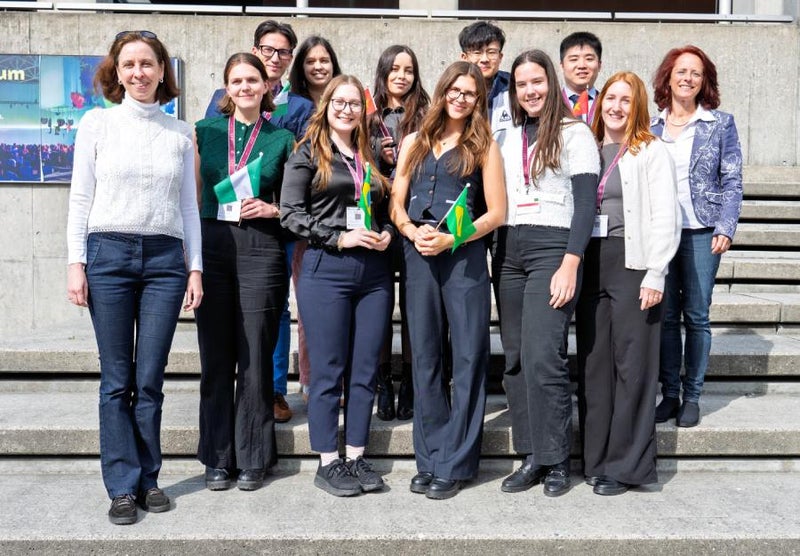
Lastly, Anna stressed the importance of adopting a comprehensive approach to climate change, a cause that Corvinus actively supports. She believes Corvinus takes sustainability very seriously. Next year for example, a basic sustainability course, Global Sustainability Challenges, will be mandatory for all bachelor students. There is also a possibility to go much deeper into the topic, with specialisation options in Sustainability Management and master programmes in Sustainability Management and Entrepreneurship and Climate Policy and Regional Development. Lastly, the students offered advice to future participants: “Have fun. Enjoy the learning process. Stay optimistic and have faith that progress is possible.”
Author: Efi Bekiarisz, Cover photo: HSG University in St. Gallen