CIAS Inn: Who Shapes Europe’s Sustainability Rules?
When the European Union drafted its new sustainability reporting standards, more than 600 organisations, companies, professional associations and individual experts submitted comments that helped shape the final rules.
Behind this consultation lies an intriguing question: who, and in what ways, influences one of the European Union’s most important regulatory processes?
This is the question Dr Erekle Pirveli explored during his fellowship at the Corvinus Institute for Advanced Studies (CIAS). His research examines how the characteristics of lobbyists, including their nationality, organisational type, organisational size, gender, education and professional background, influence the development of European sustainability reporting standards. The project has already resulted in publications in Sustainability Accounting, Management and Policy Journal (Emerald, Scopus Q1) and Social Responsibility Journal (Emerald, Scopus Q1), while a related study is currently under review at Corporate Social Responsibility and Environmental Management (Wiley, Scopus Q1).
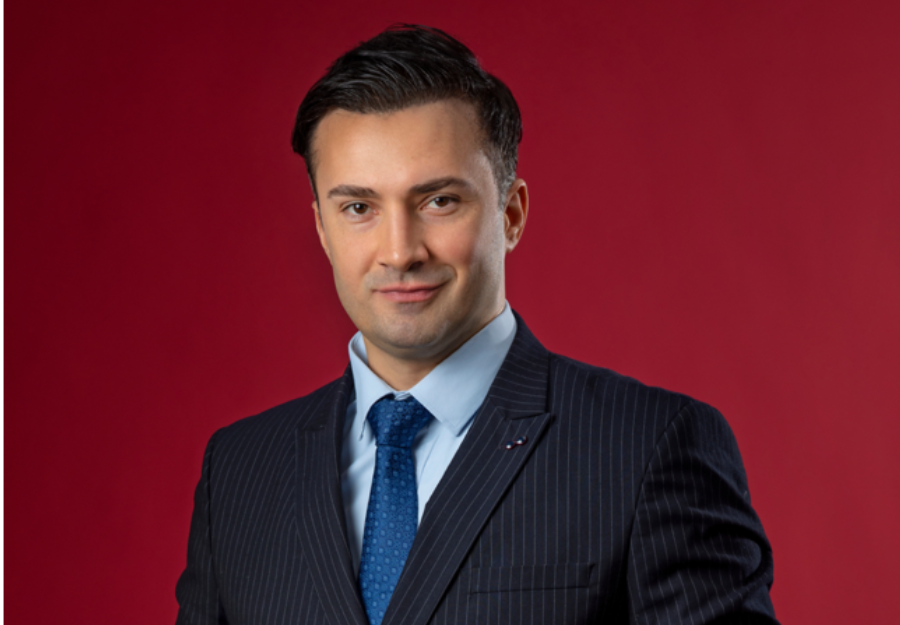
Dr Pirveli is a full professor of accounting and finance at Caucasus University in Georgia. His research focuses on financial reporting, sustainability reporting, corporate governance, and the application of artificial intelligence in corporate disclosures. He previously completed postdoctoral fellowships at MIT Sloan School of Management and Ludwig Maximilian University of Munich. Before arriving in Budapest, however, Corvinus University was completely new to him.
“I simply applied for the fellowship without knowing anyone at the university,” he recalls. “Now, fortunately, I know many of them. I got very well integrated. The time has been excellent,” he says.
The ten-month fellowship proved exceptionally productive. During his stay, Dr Pirveli published three research papers, presented his works at five international conferences, and prepared a proposal for a European Research Council Consolidator Grant.
The research builds on one of the European Union’s most ambitious recent reforms: the introduction of the European Sustainability Reporting Standards (ESRS), which require companies to disclose information about their environmental, social and governance performance.
“With climate change and everything else happening today, sustainability reporting has become one of the most topical issues in accounting, especially in Europe,” Dr Pirveli explains.
To prepare the standards, the European Commission invited stakeholders to comment on draft proposals. Every submitted opinion is publicly available, creating a unique opportunity to observe how different groups attempt to influence regulation. “All stakeholders have the opportunity to comment on the draft standards and explain what they like, what they dislike, and what they would change,” he says.
Together with collaborators from Spain and the United States, Dr Pirveli analysed hundreds of these public comment letters. His first studies investigated how organisational characteristics, such as the type, size and country of origin of lobbyists, influence the positions they take during the consultation process. The research later expanded to examine whether the personal characteristics of lobbyists, particularly gender, also shape the content and style of lobbying.
The findings reveal that sustainability reporting is changing the very nature of lobbying. Traditionally, lobbying on accounting regulation has been dominated by preparers and users of financial statements. Sustainability regulation, however, attracts a much broader coalition of participants, including business associations, companies, environmental organisations, NGOs, professional bodies, academics and individual citizens.
The gender balance has also changed dramatically.
“Traditionally, women represented only a relatively small proportion of lobbyists. For the first time in the lobbying literature, we observe that women are almost as active as men. Sustainability has really changed the process,” Dr Pirveli says.
Beyond representation, the research demonstrates that different groups also lobby differently. NGOs express stronger support for sustainability standard-setting than business organisations. Smaller lobbyists tend to favour simplified disclosure requirements, while French organisations emerge as the strongest supporters of advancing the European sustainability reporting framework. The later stages of the project further show that women generally express stronger support for the standards, particularly within non-governmental organisations, whereas men more frequently adopt a technical and critical perspective. The current study extends this line of research by examining how education, qualifications and professional background may further explain differences in lobbying behaviour.
Yet the story does not end there.
Following the European Union’s recent Omnibus simplification package, which substantially relaxed parts of the sustainability reporting framework, Dr Pirveli has already turned his attention to the next research question: why did policymakers reverse course?
“Europe had a very strong sustainability agenda. Then we suddenly saw a 180-degree turn. Why did it happen? Who influenced this change? These are the questions I want to answer next.”