Building an International Startup from University
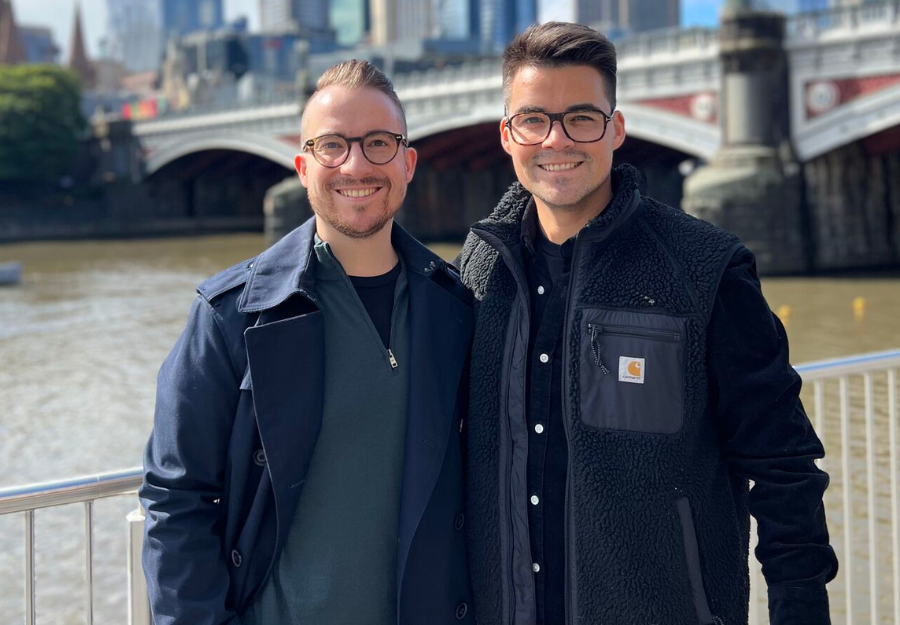
You started building your company while still at university, with little prior work experience. Where did you find the courage and confidence for this, and what foundations did Corvinus provide for starting an own business?
Iván Muck: We didn’t consciously prepare to become entrepreneurs, but looking back, I think we made the right decision by choosing this path. In 2016, while we were still master’s students, we took part in a fintech incubator program. At that time, we were mainly driven by competitiveness—putting together a good presentation to showcase a good idea. Along the way, we realized that we could actually build a real business out of it, and we felt that alongside our university studies we could do this without taking on too much risk.
Ferenc Muck: We both studied Management and Leadership at Corvinus. At the same time, I was working at Prezi in visual design, and Iván was working as a fintech analyst at McKinsey. At university, we enjoyed courses on strategic planning and case studies the most, which is probably why we joined several fintech accelerator programs. Then, in 2019, when we managed to raise a larger round of capital for ff.next, it quickly became clear that this would be our sole focus going forward.
With ff.next, you develop design-driven banking solutions, interfaces, and products. You have already worked on redesigning mobile banking applications for three leading financial institutions in Central Europe. How did your path lead to digital development?
Ferenc: I think Corvinus gave us very solid foundations for starting and managing a business. We come from a family of musicians, and our parents were essentially always entrepreneurs, so the motivation for entrepreneurship also came from home. In addition to Corvinus, I completed a Digital Product Design course and had the chance to try myself out in this field at Prezi. It became increasingly clear that this was what I wanted to do. Iván already had strong fintech knowledge, so it made perfect sense to team up and build something together.
Iván: When I think back on our years at Corvinus, I would definitely highlight the many opportunities outside of regular classes—student organizations and colleges for advanced studies—which I think are outstanding even by international standards. Ferenc and I were involved in the work of several student organizations, and we also edited sections of the Közgazdász newspaper. These were great opportunities to try ourselves in different areas and to start building our company with more confidence. During my bachelor’s studies, I was a member of DSG, which I consider one of Corvinus’s hidden gems, and I also had the opportunity to spend half a year in Passau.
Another very important experience for us was joining SG (Studium Generale). SG brought not only professional development, but also lasting friendships and real leadership experience. The experiences we gained there greatly developed both our soft and hard skills: I served as financial director and president of the organization, while Ferenc was head of the professional history section.
So the university gave us strong foundations for entrepreneurship, but it couldn’t prepare us for everything—we learned many things later, in real-life situations. Initially, our company didn’t start as a digital studio; we were developing our own digital product, focusing on family banking. At that time, however, this area was still in its infancy in Hungary. Over the years, responding to market needs, we pivoted several times and tried to narrow our focus more and more. Along the way, we saw that under Ferenc’s leadership, an incredibly strong design team had formed, which brought with it a new direction: today, we sell digital design services.
You took part in several domestic and international incubator and accelerator programs while still students. What did you gain from these challenges?
Iván: Yes, we participated in Swiss, Polish, and Portuguese programs, as well as in the incubator programs of several Hungarian banks, including OTP. These programs were especially excellent for networking and business development.
You also founded your own school, UI Academy, where you train UX/UI designers. What motivated you to launch this program?
Ferenc: We have two main goals with the program. On the one hand, we want to train a reliable pipeline of designers for our own agency; on the other hand, we want to provide the profession with well-trained specialists. Many people apply to our Academy with plans to change careers—among our graduates there have been new mothers, many economists, and developers as well. One of our biggest success stories is a former midwife who is now working as a junior designer at a large insurance company. Today, ten graduates of the Academy already work at ff.next. The Academy is also an important network for us in terms of ff.next’s future growth.
What advice would you give to Corvinus students who are currently thinking about fintech, startups, or product development? Which skills do you think are unavoidable?
Ferenc: I think the most important skill is enthusiasm for learning new things. Even in 2026, the “winners” will be those who are at the forefront of experimenting with AI and any new technologies, and who know how to apply them in practice. It’s not enough to read about these things—you have to start using them, make mistakes, and learn from them.
Iván: It’s no coincidence that we’re twins—I would have started with exactly the same points. I would also add that perseverance and patience are extremely important in this very fast-changing and often highly uncertain sector.
What is always worth preserving, in any situation, is our value system—whether it is spiritual, Christian, or simply a decent, humane attitude. That is what truly works in the long run, in any workplace environment.