Corvinus All-University Forum
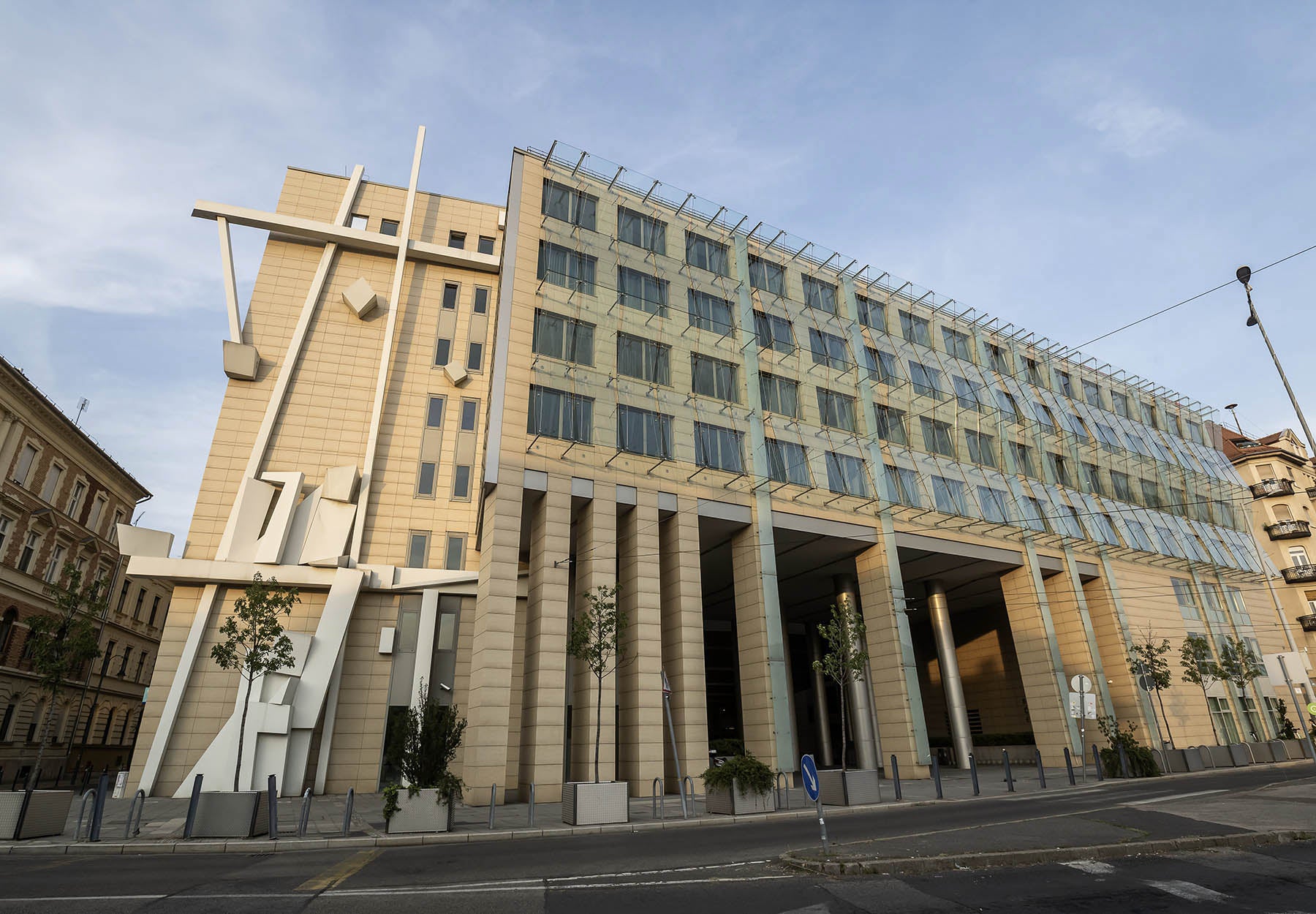
Date: 1 June 2026, 5:15–8:45 p.m.
Location: Corvinus University of Budapest, Building C, V-VI.
Language of the event: Hungarian – simultaneous English interpretation will be provided
Since the parliamentary elections, numerous ideas, visions, and forward-looking initiatives have emerged at our university, all of which are intended to improve the current situation and move Corvinus toward a competitive, modern university that is also more livable for students, faculty/researchers, and supporting staff.
The proposal sent by the president-rector to all employees suggests changes to the operations of the KEKVA-foundation model—which has been widely criticized as a condition for accessing EU funds—and the author himself has provided information on the details of this proposal on numerous occasions. The other initiatives are either the results of bottom-up brainstorming by small groups or thought experiments that apply the insights of recognized experts in a particular field, based on their previous scholarly work. Although the university community does not decide on many aspects of the restructuring—such as the reorganization or dissolution of foundations, the recovery of state assets, the form of financing, and ownership oversight— nor even the president-rector, it is still worth discussing these issues so that we can have a clearer picture of the decision points and alternatives before us.
Many employees are concerned about whether the shift to a civil service employment model will automatically result in pay cuts for all our staff, or what guarantees a state-funded university would need to ensure predictable operations, if it were able to request such guarantees.
There appears to be broad consensus that changes are needed in the composition and operation of the Senate, but it is worth clarifying the details and considering the issues surrounding the transition.
The purpose of this forum discussion is to talk about these issues that are important to us. We don’t have to solve everything immediately, but in order to move forward, we must begin gathering facts, keep our assessment of the situation up to date in this rapidly changing environment, and be prepared to ensure that we do not miss the opportunities arising from this new situation to benefit our university.
In the first part of the planned forum, in two sessions, we will hear short, focused presentations of up to 10 minutes, followed by a second part, where there will be an opportunity to discuss the topics and for audience members to contribute and ask questions.
PROGRAM
Opening Remarks: Gábor Toronyai, President of FDSZ-BCE: Trade Union statement on the regime transition of Corvinus University and status report on cooperation with other higher education trade unions (10 minutes)
Bruno van Pottelsbergh: Key elements of the Rector’s concept (10 min)
Keynote: Tamás Varga, attorney: Public foundations that have become private interests, the KEKVA model (10 minutes)
Session one: Situation Analysis (50 minutes)
Barbara Dömötör, Institute of Finance, Chair of the FDSZ Board of Representatives: What did the Romans give us? The period of the KEKVA-model at Corvinus, by the numbers.
Márton Katona, CAT Member of the Corvinus Employees’ Council (CAT): Report on the results of the CAT employee questionnaire survey
Zsolt Valastyán, CAT: What does it mean for us to work at a university? How do we see our situation, and what do we expect from the regime transition?
Dialogue Project: First experiences of the Dialogue project group interviews and future expansion of the dialogue
Gergely Mészner, President of the Hungarian Higher Education Council: Seat at the table? – Student participation in the renewal of higher education
Takács Hanna Lili, student PPE, CS20: Community participation and ideal higher education through the eyes of students
Session two: A Clash of Visions (50 minutes)
Gergely Kováts, Institute of Management Science: University autonomy, higher education models, and university democracy in practice
Miklós Rosta, Institute of Economics: What kind of university do we want? A potential vision
Eszter Kirs, Institute of Global Studies: Civil society and regime change, university autonomy in practice at Corvinus
József Veress, Institute of Data Analysis and Informatics: The hybrid model and our university’s responsibility regarding social mobility, dialogue, and cooperation, respectively
Attila Melegh, Institute of Social and Political Sciences: The importance and role of institutional and departmental self-governance
Mária Dunavölgyi, President of CAT: Proposal for a new governance model at Corvinus
BREAK (10 minutes)
Session three: comments, audience questions, discussion (45–70 minutes)
Bruno van Pottelsberghe: Reflections on the presentations (10 minues)
Gábor Toronyai: Final remarks (5 minutes)