







Summer University 2026
Choose from 5 engaging courses covering 3 relevant topics. We’ve made sure there’s something for everyone, whether you’re interested in social sciences, business, or economics.
All our courses are worth 6 credits (ECTS)
Innovative applications for the future of marketing
Course leader: Ákos Varga
Business for ecological and human flourishing
Course leader: László Zsolnai
Basic finance knowledge and some familiarity with Excel are recommended, but not essential.
Course leader: Kata Váradi
Don’t just learn economics – experiment with it.
Course leader: Hubert János Kiss
Work shapes our lives — and the politics behind them
Course leader: Imre Szabó
Course leader: Imre Gergely Szabó
Strucuture: 3 days, 3 blocks per day
Credits:
Course leader: Alexa Rudolf
Structure: 5 days, 2 blocks per day
Credits:
Course leader: László Zsolnai
Structure: 5 days, 3 blocks per day
Credits:
Course leader: Kata Váradi in collaboration with Nóra Felföldi-Szűcs, János Száz
Strucutre: 4 days, 3 blocks per day
Credits:
Corvinus University of Budapest has secured a remarkable position in the QS World University Rankings by Subject in the field of Social Sciences and Management, and maintains its status as Hungary’s leading university in social sciences and management.
Corvinus University of Budapest is the only university in the field of economic sciences in Hungary that has two international institutional accreditations (AMBA, AACSB). This places us among the top 2% of business schools worldwide.
CEMS is an elite organisation of 33 of the world's leading business schools that we are proud to be part of.
Budapest is one of the most affordable university cities in Europe. It scored 92 out of 100 in the Economist Intelligence Unit’s 2024 ranking, making it the 32nd most liveable city in the world. Typically, the monthly cost of a university dormitory room in Budapest is between €100-200 per month, while renting a flat costs €250-750 per month. Food and other expenses amount to approximately €250-350 per month, so the total monthly cost of living is around €500-1100. You can get an overview of detailed living costs here.
László Zsolnai is a Professor and Director of the Business Ethics Center of Corvinus University of Budapest. He is the President of the European SPES Institute in Leuven, Belgium and Associate Member of Blackfriars Hall, University of Oxford in the UK. His research fields include business ethics, sustainability management, and spirituality in economics and business.

Hubert János Kiss is a senior research fellow at the ELTE KRTK, and an associate professor at Corvinus University of Budapest. He received his PhD in Economics from the University of Alicante in 2009. His research focuses on experimental and behavioral economics, with applications to bank runs, social dilemmas, and the role of individual preferences in education and financial decisions.
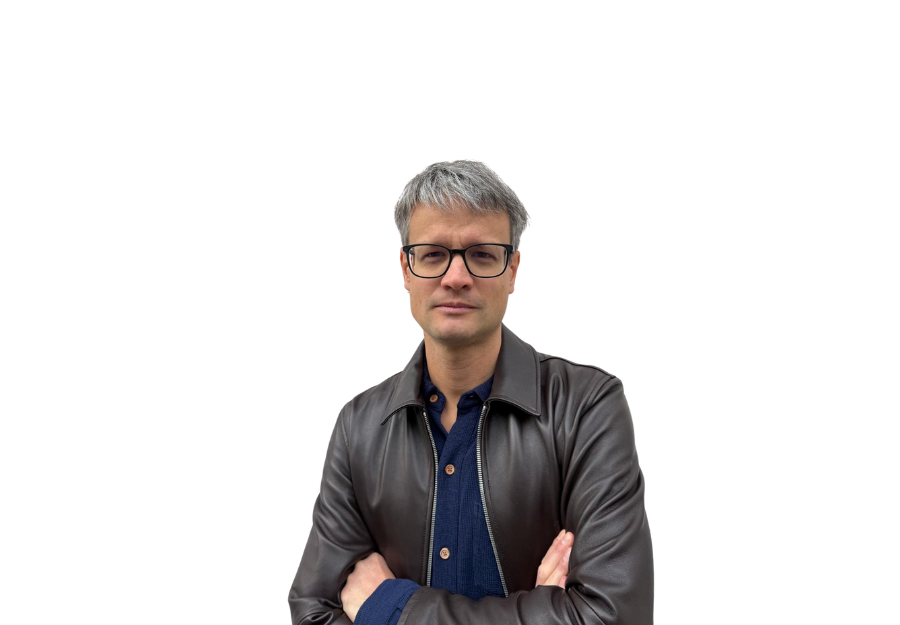
Dr. Imre Szabó is assistant professor at the Institute of Social and Political Sciences at Corvinus University Budapest. He is a comparative political economist, researching recent trends in employment relations in essential services. He is the author of the book "The transformation of discontent: Labor protest in healthcare and education across Europe" (Routledge 2025).

Alexa Rudolf is a 2nd year PhD student at Corvinus University of Budapest, currently working as a research assistant in the eye tracking laboratory. Besides having a master degree in Marketing, she completed a Management degree at Catholic Business School of Porto, Portugal. Her research work is mainly focused on neuromarketing, including digital marketing and user experience, but her projects also include other cultural and retail topics. She is also in contact with several international and domestic research centers, increasing research cooperation opportunities at the university.
Dr. Habil. Ákos Varga, Ph.D., is the head of the Digital Marketing Department at Corvinus University of Budapest and has been conducting research on neuromarketing for 15 years. Since 2004, he has been teaching, researching, and publishing at various domestic and international universities from Canada to Vietnam. In 2025, he founded the NEDIMARC (Neuro-and Digital Marketing Research Center) research lab, where eye-tracking cameras and other tools that measure implicit reactions are used to explore the mysteries of consumer neuroscience.

Kata Váradi, PhD is an associate professor at Corvinus University of Budapest, where she serves as the Head of the Institute of Finance. In her work, she emphasizes linking academic research with financial practice, with a special focus on market liquidity in stock exchange trading, risk management in central clearing, and more recently, the analysis of market fragmentation in the European Union. In both her research and advisory activities, she frequently employs tools from numerical finance and simulations to explain complex market processes.

Antal Ertl is a researcher at Eötvös Lóránd Science University KRTK Institute of Economics, and a Postdoctoral Researcher at the University of Iceland. He received his PhD in Economics from Corvinus University of Budapest in 2025, focusing in his dissertation on issues in behavioral and experimental economics. His research areas include behavioral and experimental economics and the economics of education.
László Zsolnai
László Zsolnai is a Professor and Director of the Business Ethics Center of Corvinus University of Budapest. He is the President of the European SPES Institute in Leuven, Belgium and Associate Member of Blackfriars Hall, University of Oxford in the UK. His research fields include business ethics, sustainability management, and spirituality in economics and business.
Find out more by clicking here
Hubert János Kiss
Hubert János Kiss is a senior research fellow at the ELTE KRTK, and an associate professor at Corvinus University of Budapest. He received his PhD in Economics from the University of Alicante in 2009. His research focuses on experimental and behavioral economics, with applications to bank runs, social dilemmas, and the role of individual preferences in education and financial decisions.
Find out more by clicking here
STEP 1: Sign up on DreamApply
STEP 2: Fill out the online application form below.*
Please note: To be eligible to submit the form, you need to fulfill the following criterias:
What is included?
What is included?
If you are a Corvinus Alumni, you can get a 30% discount when you apply through DreamApply!
*Guidelines and Data Protection: By completing this form, the applicant accepts the Privacy Policy.
**The participation fee is due upon acceptance of the application. Please note that the participation fee does not include the following: travel costs, transportation cost in Budapest, airport pick-up, visa support.
***For the first 50 applicants, while places last. Until 15 February.
****We can offer accommodation for 6 or 7 nights (different prices for more nights).
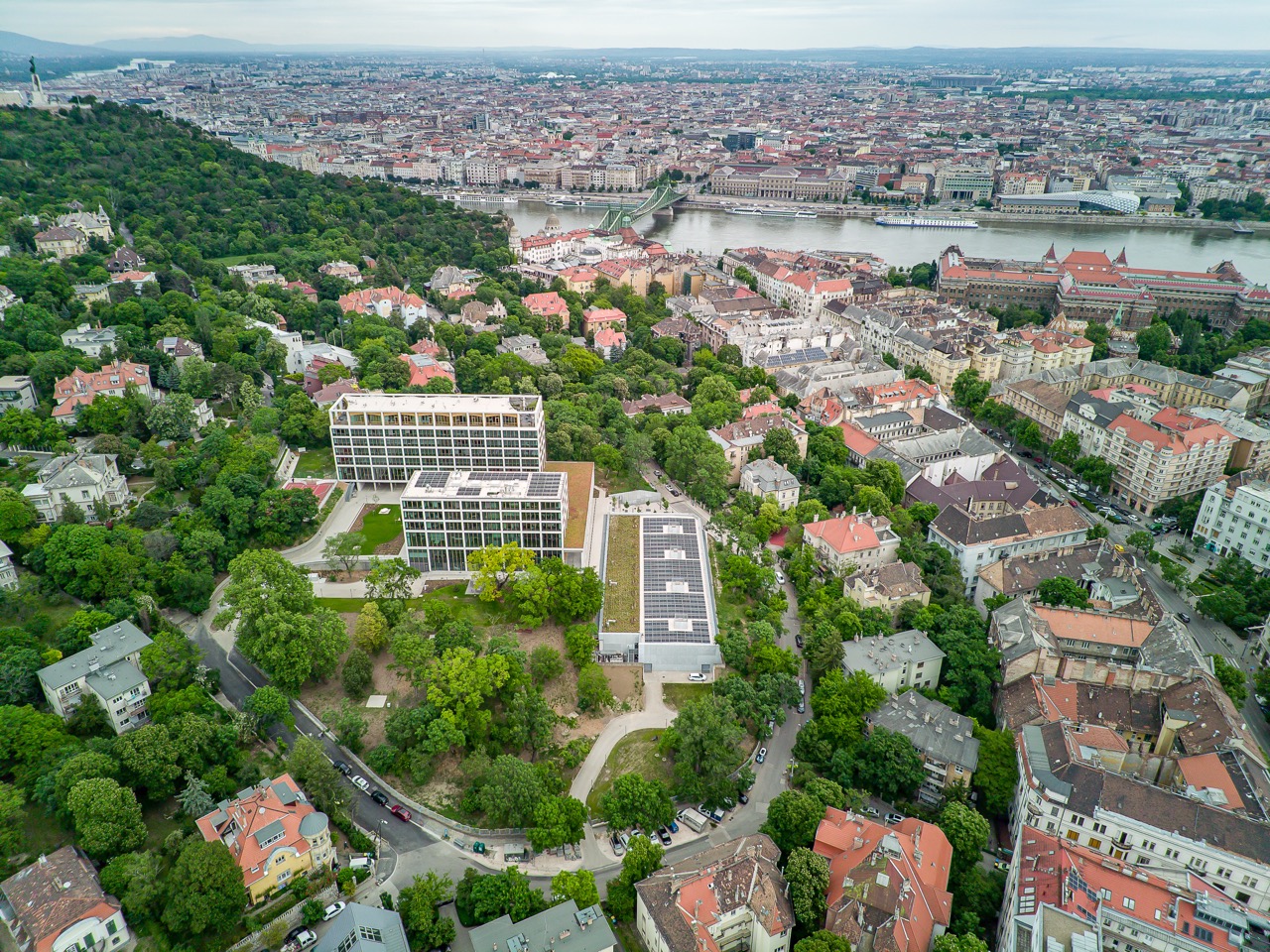
About the Gellért Campus Dormitory:


Our Summer University programme operates on a first-come, first-served basis. This means that the earlier you register, the more likely you are to secure your chances. Application deadline is 25 June 2025.
After your registration, we will review your documents and get back to you shortly to let you know whether you can participate in the summer university. To finalise your participation, you will need to pay the tuition fee by the billing deadline. Once the payment is received, we can proceed with your enrolment and complete the registration process.
Applications can only be submitted via the online form Dreamapply.
A further admission requirement for pursuing English language studies at another higher education institution, supplementary studies shall be intermediate complex English language proficiency which may be proven if the applicant has graduated from an English-language bachelor-level or master-level study programme or if he/she completed all the subjects included in the secondary school leaving certificate in English or if the applicant can provide a certificate issued and certified by the higher education institution issuing the diploma that he/she has English language proficiency certified by one the following language examinations:
Name of language examination |
| Intermediate level (minimum) |
CEFR | B2 | |
Cambridge | FCE | |
IELTS | 6.0 | |
TOEFL | 65 | |
TOEFL iBT | 72 | |
TOEIC | 785 | |
Duo-lingo | min. 100 points |
At present, we do not offer scholarships. However, participants can choose from a standard and premium package to suit their needs and preferences.
Your passport information is needed to register you in our university system and for administrative purposes, such as verifying your identity and facilitating any necessary travel arrangements or visa processing. Rest assured, your personal details will be handled securely and in compliance with data protection regulations.
Yes, you can stay for 6 or 7 nights, starting July 6th.
If you choose a package that includes accommodation, you will be housed at the Gellért Campus. However, please note that participants may be accommodated in double rooms, so you may be sharing with another student. The dormitory offers air-conditioned rooms with private bathrooms, a fully equipped kitchen, and several communal spaces, including a reading room, rooftop terrace, and a sports centre.
The accommodation is on the Gellért Campus of Corvinus University. The address: Budapest, Ménesi út 5, 1118. The Campus is a 5-minute walk from Gárdonyi Square and a 7-minute walk from Móricz Zsigmond Square, where several public transportation options are available (from Fővám Square, trams 47/49, and metro line 4).
If you are accepted to the summer university and you know your exact arrival time, we will confirm where and from whom you can pick up your key. The dormitory has a 24-hour reception desk.
The program ends with a farewell dinner on 11 July. Check-out is possible on 12 July or optionally on 13 July.
The program starts with a get-together on 6 July. The earliest possible move-in date at the Campus is on the 6th of July with check-in available from 12:00 noon.
Corvinus University does not provide other accommodation options, than the Gellért Campus dormitory, but you are welcome to arrange your own housing in Budapest. You may consider alternatives such as hostels, Airbnb, or hotels.
Yes, please let us know if you have such a request, and we will take it into account when assigning rooms.
Yes, internet access is available throughout the campus
If you choose the premium package, accommodation is included for the whole stay. If you choose the standard package, you will have to find a place to stay on your own.
If you do not need accommodation, just choose the standard package.
The dormitory offers 2- and 3-person air-conditioned rooms with private bathrooms, providing students with a beautiful panoramic view due to the building’s location. The Campus also includes several communal areas, gardens. The floors have a fully equipped kitchen with modern appliances and furniture, a common dining area, a communal area, and a laundry room (with industrial washing and drying machines). The building also has a collaboration and data space, and a reading room. There is a Fresh Corner buffet on the ground floor of the J wing and a community space called Rooftop Café on the 7th floor of the K wing with an open terrace.
Yes, both packages include breakfast, lunch, and the get-together and farewell dinners.
Yes, depending on the information you provide during registration, we can issue the invoice either to an individual or to an institution.
During registration, you will need to provide your billing details. If you are accepted to the summer university, we will send you an invoice with the necessary information.
You can cancel your registration up to 4 weeks before the event. In this case, a non-refundable fee of 50 EUR will apply.
Yes, you will receive an invoice from us.
You can receive 6 ECTS credits for completing the Summer University.
The Summer University is organized as part of a short-term academic program, which means you will receive an official credit certificate upon completion.
The Hungarian education system is structured into several distinct stages. Preschool education is compulsory for children aged 3 to 6, this stage focuses on early childhood development and preparation for primary education, that is spanning eight years, primary education is divided into two cycles , lower primary aimed at children aged 6 to 10 and upper primary, catering to students aged 10 to 14. After completing primary education, students can choose from various types of secondary schools, like gymnasiums, that prepares students for university studies, vocational schools, that offer specialized training in various trades and technical schools, that provide technical education and prepare students for specific careers. Hungary’s higher education system includes universities and colleges that offer bachelor’s, master’s, and doctoral programs. The curriculum is based on the Bologna Process, ensuring compatibility with European standards.
Hungary is located in the centre of Europe, its roughly 10 million inhabitants speak Hungarian.
Hungary has a temperate climate, with temperatures rising over 30 °C during the hottest days of summer and dropping just below the freezing point during winter.
The currency in Hungary is the Hungarian Forint (HUF)
In Hungary, the standard voltage is 230V and the frequency is 50Hz. The power plugs used are typically Type C and Type F (two round pins). If you’re traveling from a country with a different plug type or voltage, you may need an adapter or voltage converter.
Budapest is the capital city of Hungary, its political, economic and cultural centre, owing to its unique natural and architectural factors it is one of the most popular European tourist destinations.
As opposed to many big cities in the world, it is not an issue to get from one venue to another. Within the inner districts of the city, any point can be reached in a matter of 15 minutes on foot, by bike or scooter. Public transport secures fast connections to the outer districts, it is easy to find a bus even at 3 am owing to night services.
We have several activities planned for the participants: there will be a get-together and farewell dinner, a sightseeing tour, a visit to a community garden, and a sports session. In addition, we will organise optional evening programmes with the involvement of the students.
You can check in to the dormitory from July 6. If you are accepted, we will contact you to confirm your exact arrival time and provide details on how to collect your room key.
Please bring weather-appropriate clothing. As we will also have a sports activity, make sure to bring sportswear as well. Bed linen will be provided at the dormitory.
Most airlines operate direct flights to Budapest, therefore it can be reached easily and without a stopover from most parts of the world.
There will be no pick-up service from the airport, but if you have any questions, we are happy to assist you and help ensure you get to the campus without any issues.
If you arrive at Liszt Ferenc International Airport, you can reach the Gellért Campus by public transport as follows: From the city centre you can take bus 100E or bus 200E to the city centre. From Kálvin tér you can take the tram 47/49 to Gárdonyi tér. From there, you can walk up to the Campus (you will need to climb a few steps to get there).
Most of the classes will take place at the Gellért Campus, but there will also be company visits, a community garden tour, and other activities.
You can find the detailed programme under the ‘Programme’ section. We will update it regularly.
There will be no traditional exam, but there will be a task to complete both before and after your arrival.
We will send you recommended reading materials.