Rewilding and Water Retention: Why Nature-Based Solutions Matter
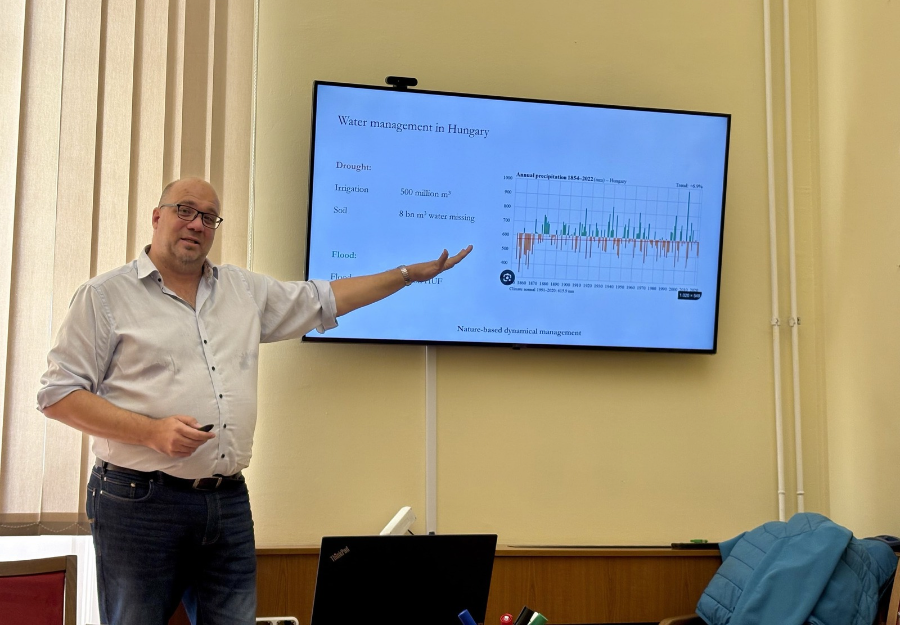
The Institute of Finance at Corvinus University of Budapest hosted Ferenc Jordán, researcher at the University of Parma and associated researcher at the Stazione Zoologica Anton Dohrn, for a research seminar titled “Rewilding and water retention”, exploring how nature-based solutions can address growing environmental and economic challenges.
Rather than treating droughts and floods solely as engineering problems, Jordán introduced a systems perspective emphasizing the interconnected relationships between human activities and natural ecosystems. He explained how rewilding, particularly the restoration of wetlands, forests, and river systems, can improve water retention, reduce environmental extremes, and strengthen long-term ecological resilience.
The presentation also highlighted the broader economic implications of environmental change. Water scarcity and flooding pose significant risks to agriculture, industry, energy, and transportation, making effective water management essential for economic stability. Drawing attention to challenges in Hungary, Jordán emphasized the importance of integrated, long-term strategies that connect ecological sustainability with economic development.
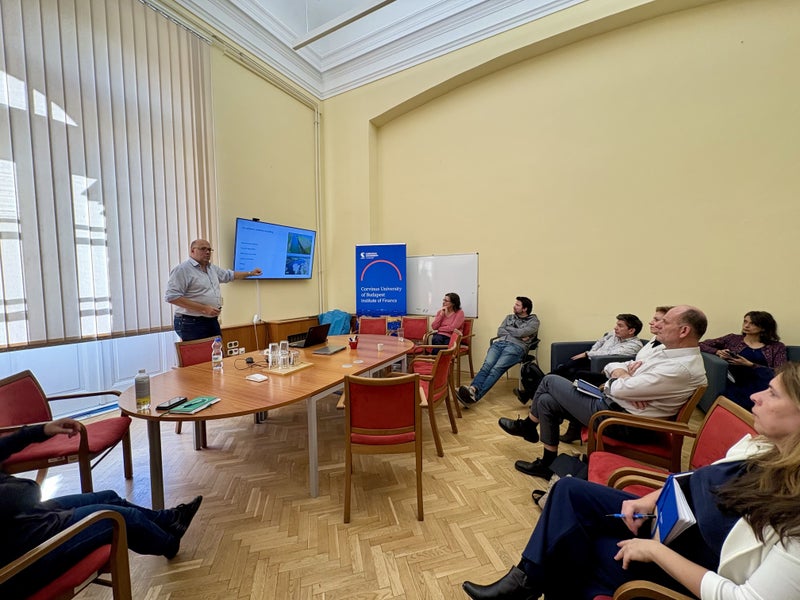
The seminar attracted considerable interest from colleagues across different institutes, including special guest Tamás Bartus, Vice-Rector for Faculty and Research. The presentation was followed by a lively and highly interactive discussion, with participants exchanging questions, insights, and perspectives. The enthusiastic engagement demonstrated the interdisciplinary relevance of the topic and the value of bringing together researchers from different fields.
A key takeaway was that science, technology, financial tools, and legislation must be complemented by a broader culture of adaptation and systems thinking. The seminar provided an opportunity for interdisciplinary knowledge exchange while highlighting how working with nature can contribute to a more resilient and sustainable future.