Community Partners, Soil Health, and the SDGs — 250 students learned about our sustainability goals
Soil Health, SDG Game, and Community Partners: Science Shop and the Office of the Dean for Sustainability started the semester with joint programs.
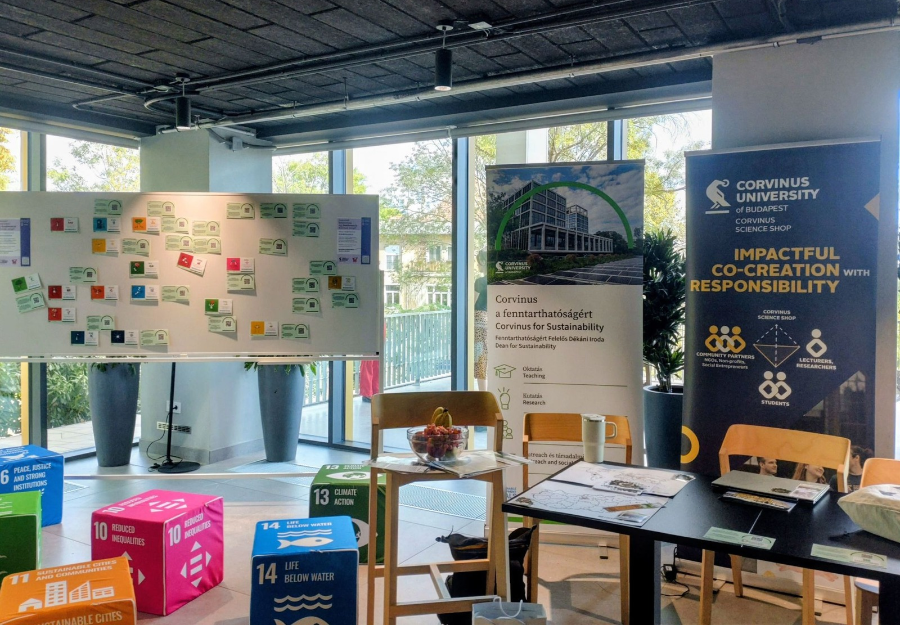
Nearly 250 students participated in our sustainability programs and games during Freshman Camp and Welcome Week in August and early September. At the end of the month, a few participants also joined us for Researchers’ Night, where we examined environmental parameters and our relationship with the soil. The last two programs took place on the Gellért Campus, where the AI and Sustainability Transition Lab—which launched earlier this year—has become an integral part of the activities.
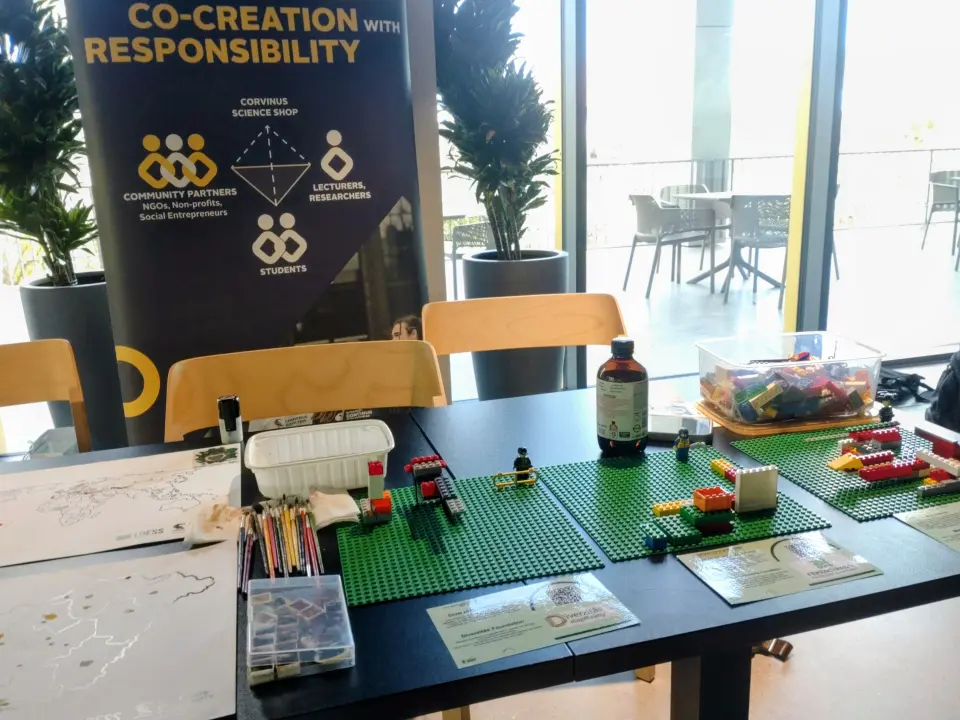
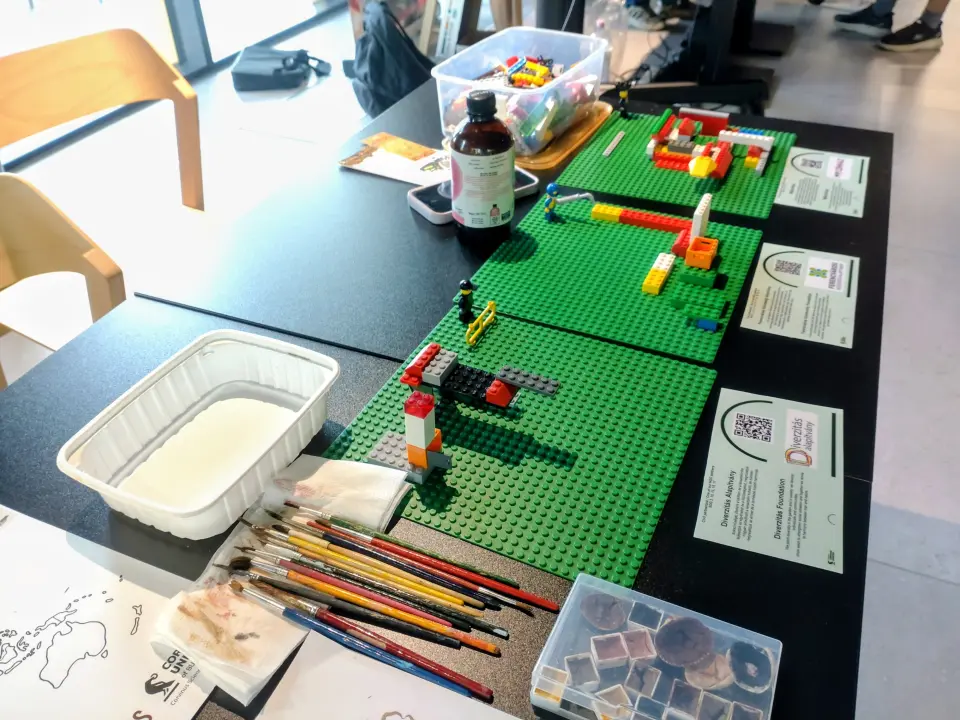
We welcomed our newly enrolled students with games and a showcase of our sustainability initiatives. Our goal was to introduce our diverse activities in the areas of education, research, operations, and community partnerships, highlighting our institutional best practices, the opportunities available to our students and colleagues, and our collaborations with civil society organizations. Students could also use LEGO bricks to vote on which social initiative among our community partners should receive the most support.
From among more than 80 community partners, we highlighted the diversity of these relationships through three selected examples. MáSzínház took first place with 91 votes, described as “an inclusive theater community where people with diverse abilities work together to shape a more open and accepting future for society through encounter, shared growth, and self-expression.” In second place, with 77 votes, was the Diverzitás Foundation, whose goal is “to build an inclusive society that lives in harmony with our natural environment, where those starting from a disadvantaged position receive support for personal development, the realization of their potential, engaging in value-creating work, and joining the community.” With 65 votes, the Ferencváros Community Foundation took third place on the podium; the organization implements civic initiatives in Ferencváros and district development projects by promoting local philanthropy.
While the nostalgia of building with LEGO was memorable, the greatest success was manifested in the students’ collaboration. As they built together, unique shapes began to take form, demonstrating that major changes can often come about through small individual contributions. Throughout the semester, all three organizations will receive funding, distributed based on student votes.
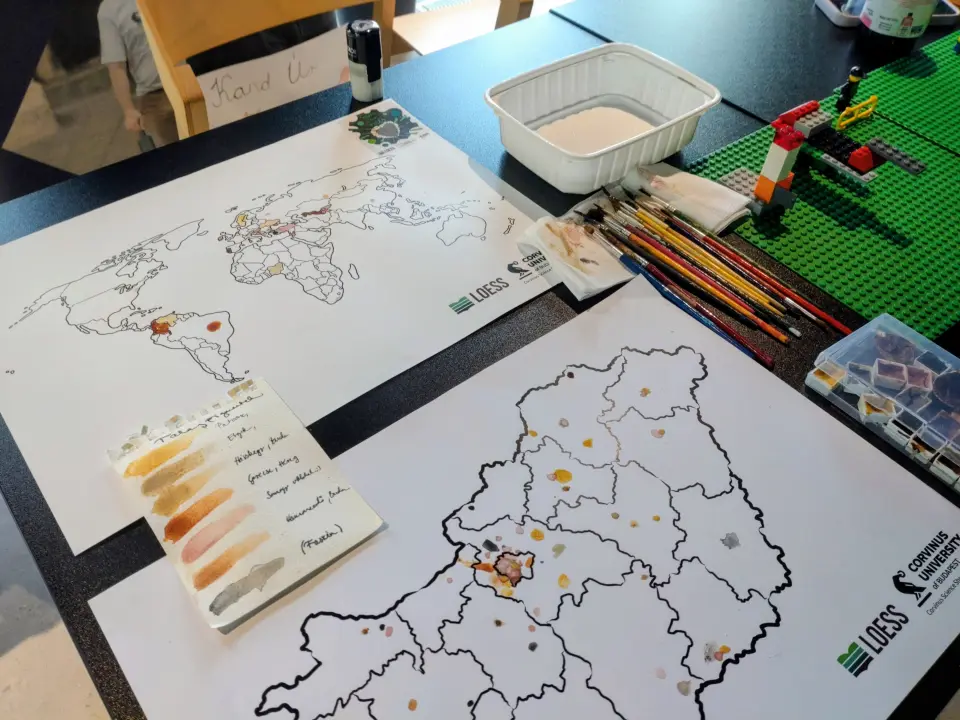
In addition to our community partners, we also presented our LOESS research project on soil health. Using paint made from soil pigments, the students were able to mark their places of origin on a map of Hungary and a world map. Both maps quickly filled with different types of soils, which clearly illustrates the diversity of our soils and cultural diversity of our students. The soil pigments were also prepared by our community partner, Tünde Udvarnoki, using various types of Hungarian soil.
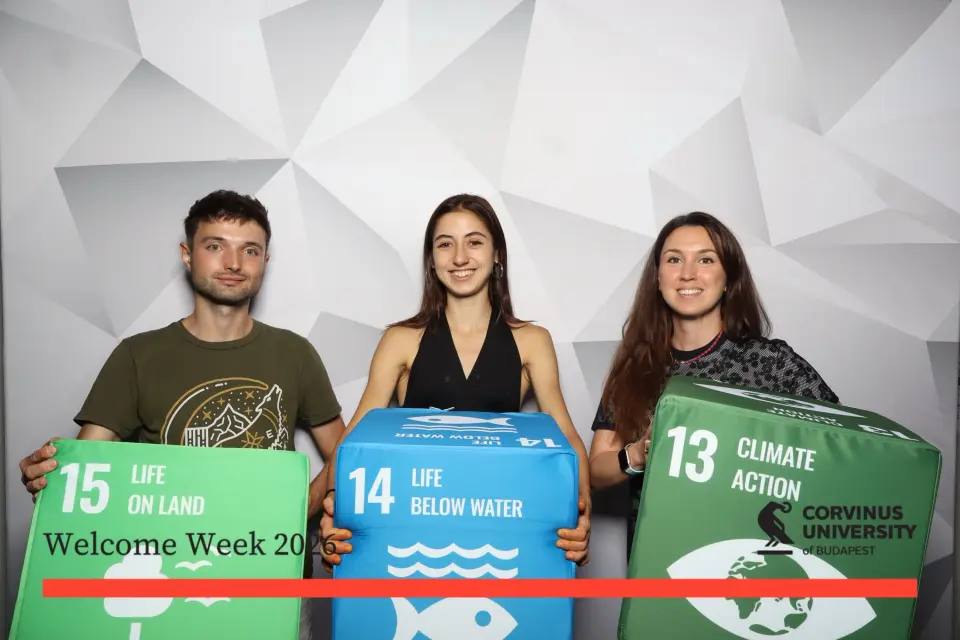
Students also had the opportunity to learn about our sustainability measures and initiatives, as well as their connection to the United Nations Sustainable Development Goals (SDGs). Cards provided descriptions of the projects, each of which was linked to a specific SDG. Through this matching activity, participants not only learned about the goals but also about how we, together with our university community, strive to contribute to sustainability. We continue to welcome ideas, project proposals, and suggestions for collaboration at dean.sustainability@uni-corvinus.hu.
After our introductory session at the beginning of the year, the focus shifted to our relationship with our environment and our soil. Our month of September concluded with Researchers’ Night, where we welcomed everyone interested in a joint program organized by Corvinus Makerspace, the Science Shop, the Gellért Green project, and the Office of the Dean for Sustainability. During the evening, through three interconnected workshops, we explored how we perceive our environment, how the characteristics of the spaces around us can be measured, and what we can do to create a healthier, more sustainable environment—especially for our soils.
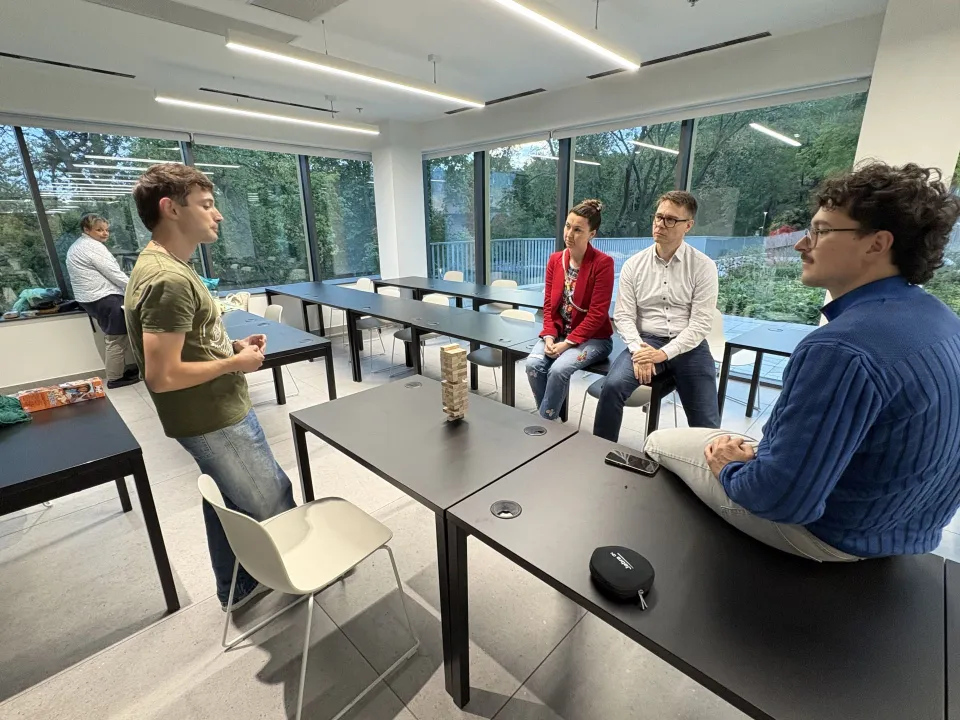
During the Makerspace session, we compared our own sensory experiences with the data collected by the sensors. Using Smart Citizen devices, we were able to measure noise levels, air quality, temperature, humidity, and lighting conditions at various locations on campus. At the same time, we paid attention to what we ourselves heard, saw, and felt at each location. Measurement, observation, and personal experience are all equally important starting points for data-driven thinking.
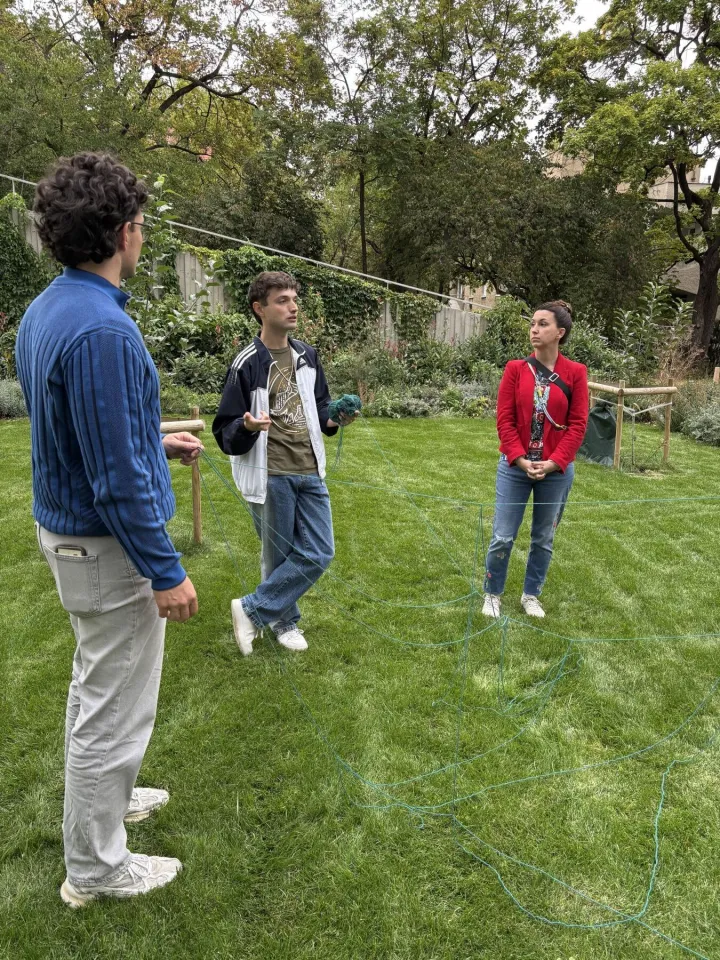
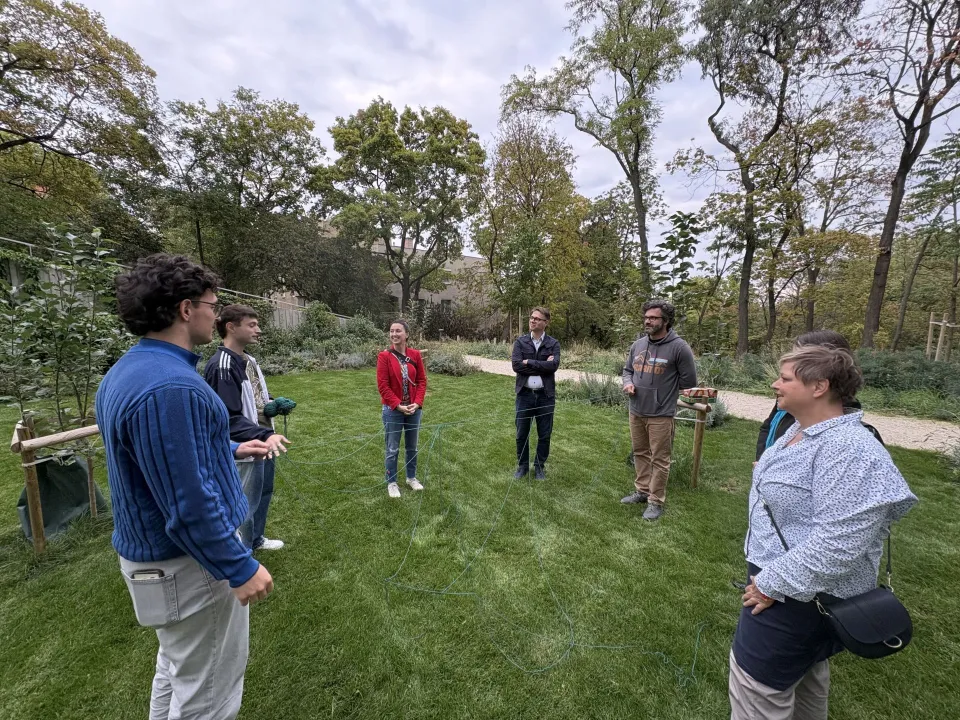
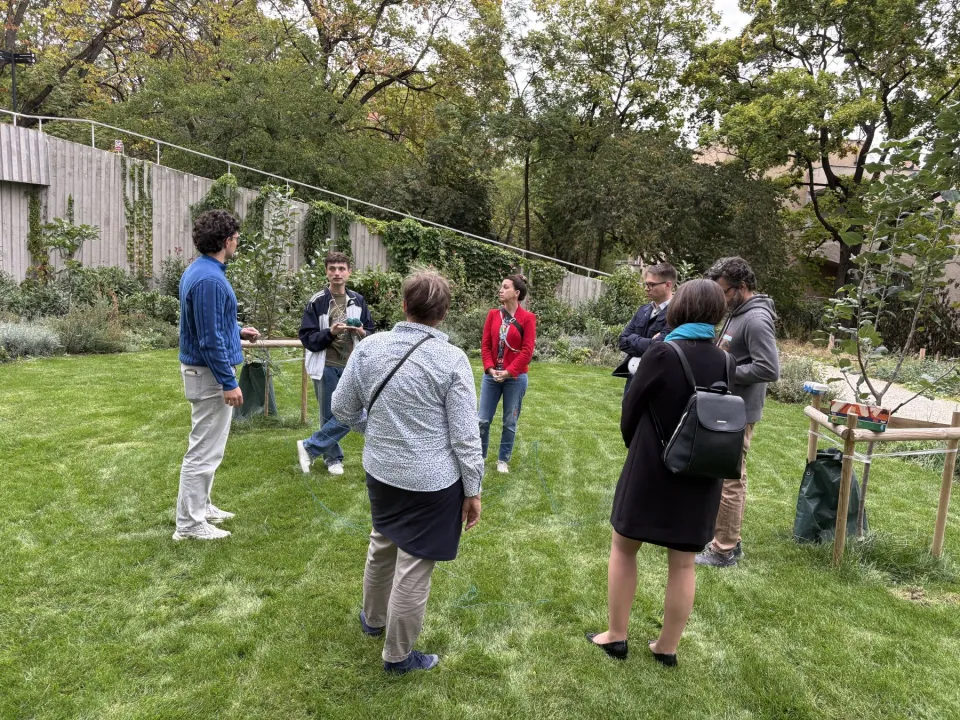
During the measurement, we took a regenerative garden tour to explore the Gellért Campus’s garden, which is being restored using nature-based solutions. During a short walk along the nature trail, we observed the kinds of living organisms that appear in a garden where natural processes are given more room to unfold. We also discussed what a regenerative approach means in practice, how it relates to sustainability, and how individual organisms come together to form an interconnected ecological system. Finally, we introduced the LOESS project’s citizen science tool, the LOESS Soil Map, to those interested—a platform where anyone can report local soil issues.
Personal experience, direct observation, and collectively compiled data, when taken together, can help us connect more deeply with our human and non-human environments and think more consciously about our shared future.