Hidalgo’s principles of knowledge: business success or failure isn’t always down to chance

What if scientists can work out the most logical decision in a company’s life before the company itself does? Could it be that some economic success stories aren’t quite as unique as we like to think? In his latest book, César A. Hidalgo, a physicist, researcher and data-visualisation expert — and a star professor at Corvinus University of Budapest — explains the underlying patterns of knowledge through real historical events. Regarding this, an interview with the author about it was published on 19 December on Telex.
“Our research suggests that there are certain universal regularities in the field of economic geography. When people ask whether there are economic laws, many think of macroeconomic relationships, such as the link between unemployment and inflation. We, however, focused on economic geography. A few basic principles determine how successful a location can be. These principles — based on the activities already taking place there — determine how likely it is that a given city or region will perform well,” Hidalgo explains.
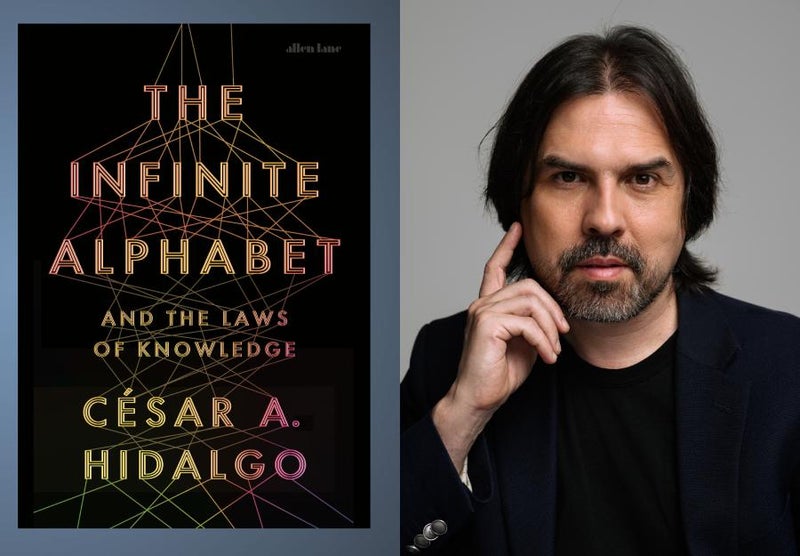
Hidalgo’s book The Infinite Alphabet brings together these kinds of “laws” of knowledge through a range of stories, touching, for example, on the origins of the Vespa and the future of smart cities. He recommends the book to both lay readers and professionals — anyone interested in knowledge management and how it grows.
The full interview can be read here (in Hungarian): https://telex.hu/tamogatott-tartalom/2025/12/19/a-tudas-torvenyei-az-uzleti-siker-vagy-kudarc-nem-mindig-a-veletlen-muve