Corvinus Educational Innovations at the International Forefront of Responsible Management Education
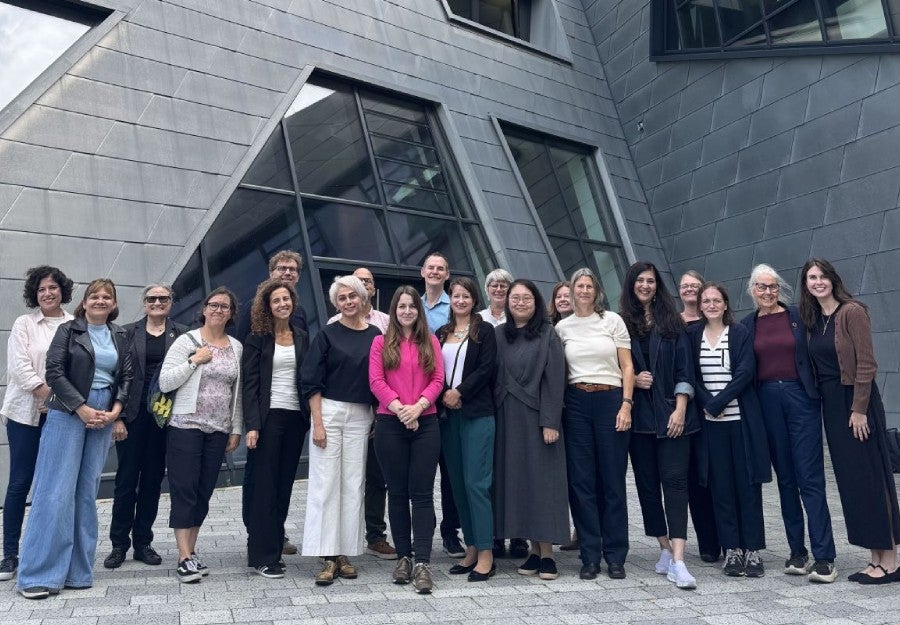
How should we rethink management education at a time when, alongside the growing social and economic importance of sustainability, resistance to it is also intensifying? This was among the questions explored by participants at the 13th Responsible Management Education Research (RMER) Conference. Between 31 August and 4 September 2026, Leuphana University in Germany became an international meeting point for responsible management education. During the first two days of the programme, representatives of Principles for Responsible Management Education (PRME) Champions institutions met, while from 2 to 4 September, the 13th Responsible Management Education Research Conference took place under the title “Reclaim, Resist, Reimagine: Sustainability and the Future of Responsible Management Education.”
The central question of the conference was how management education can be transformed so that future leaders not only understand sustainability challenges but are also capable of acting responsibly. The threefold message of Reclaim, Resist, Reimagine addressed the need to reaffirm the values of sustainability and social responsibility, respond to growing resistance to sustainability, and rethink the future of management education.
Corvinus in the PRME Champions Community
During the two-day programme preceding the conference, Corvinus joined the international community of PRME Champion institutions. At the second in-person meeting of the 2026–2027 Champion cycle, institutions not only shared good practices but also explored new opportunities for cooperation between PRME working groups and regional Chapters. Key topics included the further development of the annual reporting system for PRME signatories and the potential for institutional data and experiences to serve as a foundation for new international research.
Corvinus and the PRME Central and Eastern Europe (CEE) Chapter were represented by Katalin Ásványi, Dean for Sustainability at Corvinus and Chair of the Chapter, and Zsófia Nemes, Assistant Professor at the Institute of Sustainable Development and Secretary of the Chapter.
One of the highlights of the meeting was an interactive session led by David Steingard, Head of PRME. The discussion also looked ahead: PRME will celebrate its 20th anniversary in 2027, prompting participants to reflect collectively on the organisation’s long-term mission, strategic directions and the future of its cooperation with the UN Global Compact.
A visit to a local social enterprise brought the practical dimension of sustainability closer to participants. In the business model of Lüneburg-based HEYHO, granola production is combined with a social mission: the enterprise creates employment opportunities for people who face greater barriers to entering the labour market due to different circumstances in their lives. The visit thus provided a tangible example of how business operations can be combined with the creation of social values.
International Student Recognition for Corvinus
On 2 September, the three-day Responsible Management Education Research Conference began, bringing together researchers, educators, students and members of the international PRME community. The conference engaged the next generation from its opening day. During the Student Design Jam, students from different countries and academic disciplines worked on sustainability challenges based on future scenarios and developed potential solutions using design thinking methods.
Corvinus PhD student Rahma Ben Lazreg also took part in the programme. Her participation brought a special success for Corvinus: she was elected as a PRME European Student Leader. Through this international recognition, the Corvinus doctoral student will be able to contribute to the international work of the PRME student community and represent the student perspective at European level in discussions about the future of responsible management education.
Thursday’s professional programme opened with a panel discussion centred on the theme “Reclaim, Resist, Reimagine.” Among the invited panellists was Katalin Ásványi, Dean for Sustainability at Corvinus and Chair of the PRME CEE Chapter. The discussion, featuring international experts, explored how responsible management education needs to be rethought in the context of current social, economic and technological changes. Drawing on Corvinus’ experience as an institution as well as her own educational and research work, Katalin Ásványi emphasised that sustainability should not appear in business education merely as another separate topic; rather, it should also reshape what we understand by good management education. The discussion also addressed how universities can move beyond teaching sustainability in isolation and help students translate the knowledge they acquire into real-world decisions and actions.
The conference’s parallel sessions subsequently explored a wide range of current issues in sustainability education, from the gap between education and action to transformative learning and futures thinking, as well as the role of generative artificial intelligence in responsible management education.
Two Corvinus Innovations on the International Stage
Corvinus was also represented through two academic presentations in the session dedicated to “Innovative pedagogies and impactful practice for responsible management education.” Katalin Ásványi, Zsuzsanna Marjainé Szerényi and Zsófia Nemes presented two educational approaches that had previously received both international and university-level professional recognition.
One of the presentations focused on the Corvinus Green Podcast. What makes the project distinctive is that students do not simply learn about sustainability: they themselves become active contributors to science communication. The podcast series has already launched, with its first episodes already available to listeners. Following a “from students to students” approach, the episodes make academic research and sustainability-related issues accessible and understandable to younger audiences. More information about the launch and the background of the initiative is available here. In 2026, the project received a Disciplinary Honorable Mention in the Communications and Media Studies category of the PRME Education Awards.
The second presentation introduced the challenge-based learning methodology. In this approach, students work on real-world sustainability challenges, connecting classroom knowledge with the solution of actual organisational and societal problems. The methodology also received the Spotlight on Teaching Award at Corvinus.
For Corvinus, the participation in Lüneburg provided an opportunity to present its research, share its experience in teaching methodology, build international relationships and achieve student success. All of this demonstrates that Corvinus is becoming increasingly involved, at various levels, in the international dialogue on the future of responsible management education.