Milán Gauder: “We won’t agree on everything, and there won’t be money for everything, but we will still create a better world”
As of 1 September, Milán Gauder has taken over as Chair of the Board of Trustees of the Maecenas Universitatis Corvini Foundation, which maintains Corvinus University of Budapest. Twenty-five years after graduating, the business executive and investor has returned to his alma mater to support the institution’s development with his knowledge and experience. In this interview, we discuss the foundation model, the stakes of the ongoing Senate elections, and the role higher education can play in the age of artificial intelligence.
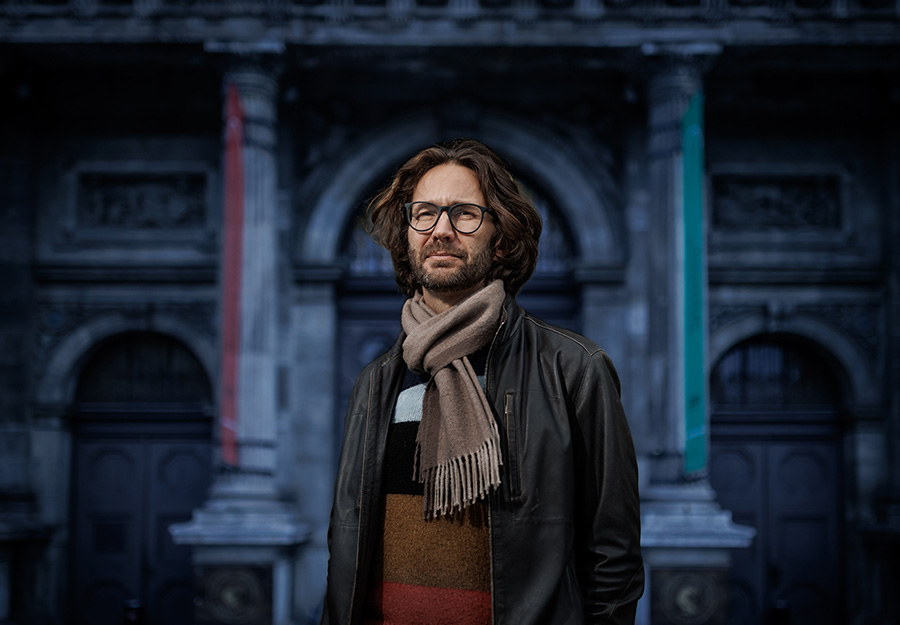
Why were you attracted to the opportunity to take part in the work of the foundation’s Board of Trustees, which oversees the university?
I have very fond memories of my years at Corvinus. After graduating, I worked with many colleagues who had studied at world-renowned institutions such as the Massachusetts Institute of Technology (MIT) and the Kellogg School of Management. At first, I felt somewhat intimidated, but then I realised that these were just labels. What really matters is your personal attitude and your desire to keep developing. I would like today’s Corvinus students to understand that their career paths ultimately depend on them. The university can provide a strong foundation, and the sky is the limit.
Over the past few years, I have led large organisations, recruited and worked with people who graduated from a wide variety of universities, and learned a great deal from these experiences. I believe this experience can be put to good use on the Board of Trustees. Since I am fortunate enough to have the time to devote to this, I would like to support the university’s development.
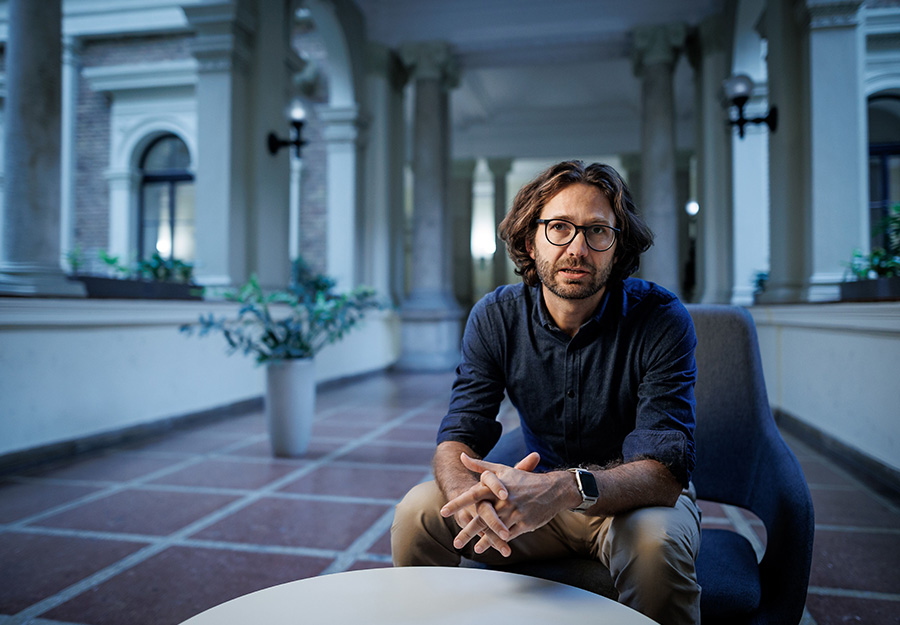
From the perspective of the institution maintaining it, how do you see Corvinus today?
Corvinus’s greatest strength is its exceptionally strong tradition. A significant proportion of Hungary’s broadly defined economic elite—including the financial, political, entrepreneurial, startup and social science communities—graduated from Corvinus. This provides enormous legitimacy and serves as a major source of inspiration for students, who can see how far they might go. I am part of this alumni community myself, as are most of the people I know, and as Chair of the Board of Trustees, I would like to involve this network as actively as possible.
Alongside its traditions, the university’s development is also striking. Although 25 years is a long time, my memories of the institution are still quite different from what I see today. Its infrastructure, campus, the diversity of its student community and its academic performance have all improved enormously. I believe we can build on these achievements to make Corvinus even better.
In your opening-of-the-academic-year speech, you compared the role of the new Board of Trustees to that of road-clearance workers who help the university’s leadership move towards its goals without obstacles. What does this understanding of the Board’s role mean in practice?
It is easy to confuse the role of the Board of Trustees with the university itself. I have observed this tendency both in ourselves and among other stakeholders. The Board has a transitional mandate defined in the foundation’s charter. Our job is not to plan the university’s day-to-day operations; our task is to secure its funding for this year. This involves reviewing the past and planning for the future together with the university, the ministry and other stakeholders.
The Senate elections are currently underway, marking another milestone in the renewal process. I do not think the key issue is exactly who will sit on the body, but rather whether we can create an atmosphere in which dialogue and differing opinions have genuine space. A new strategy will emerge through this process. For us, the university’s legitimate leadership at any given time is our partner in cooperation: the current Senate for now, and the new Senate from November onwards.
We will listen to the direction in which they want to move and support them with every means at our disposal: funding, which is our primary responsibility, as well as our networks, ideas, encouragement and a little prompting when needed. We won’t agree on everything, and there won’t be money for everything, but we will still create a better environment around the university than the one that existed before.
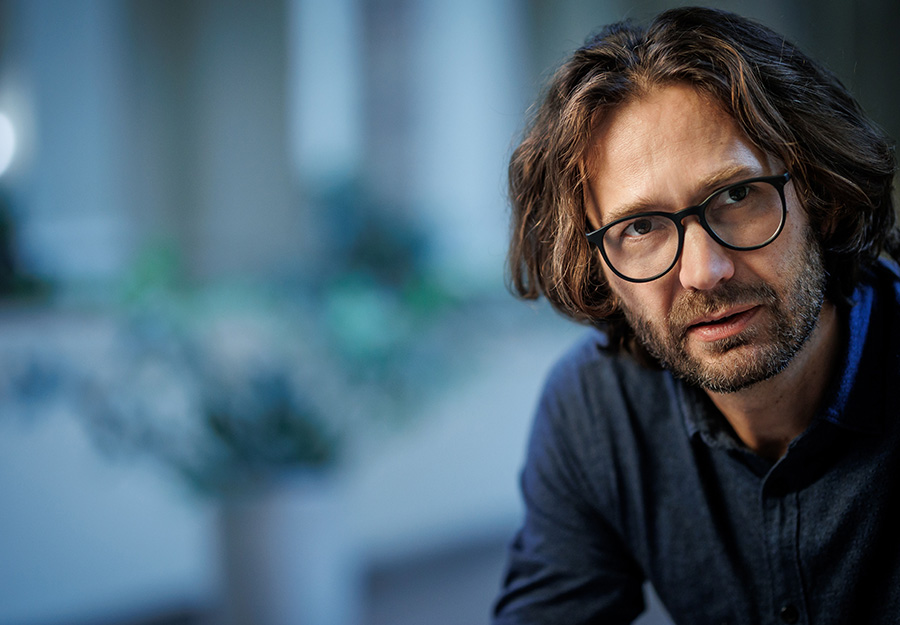
The future operating and funding models are key questions for all Hungarian universities that have undergone a change in their governance model. What solution do you think would best serve Corvinus’s long-term financial stability and development?
Fortunately, this is not a question I have to answer. We have elected a parliament for that purpose, and both citizens and the European Union expect it to bring about renewal. I believe we should not throw the baby out with the bathwater. I do not consider foundation-based governance inherently problematic, nor do I object to an institution receiving an endowment and financing its long-term operations from the returns it generates. However, I would also consider other funding arrangements acceptable. It is important, of course, that everyone has the opportunity to express what grievances they have experienced and how they feel. But then we need to take a deep breath and move forward.
We need to examine what has worked well so far and what we can learn from international examples, whether from the Nordic countries or elsewhere. We should then build on these lessons when shaping the future. A perfect system probably does not exist, but we must strive for the most stable and efficient solution possible.
As a business executive and investor, where do you see the balance between a market-oriented approach—such as fee-paying programmes and increasing revenue—and ensuring broad, equitable access to high-quality education?
I believe that a market-oriented approach and creating opportunities are not mutually exclusive. The lack of equal opportunities is a deeper, systemic problem. We have got many things wrong over the past decades, resulting in disadvantaged young people falling behind long before they reach higher education. Corvinus and its maintaining foundation can help them catch up through scholarships, additional admission points and other targeted initiatives, but the root causes of the problem must be addressed at the societal level.
At the same time, the university must remain competitive in a globalised world shaped by artificial intelligence. It also has many stakeholders whom we do not always think of in those terms: prospective students, the future employers of our graduates, and parents who want their children to continue their education in Hungary rather than abroad. We must take their perspectives into account as well if we are to maintain our market position.
Market-oriented tools can also indirectly help create opportunities. For example, revenue from tuition fees paid by a larger number of international students can enable the university to attract outstanding professors, who can then also teach Hungarian students, including those from disadvantaged backgrounds.
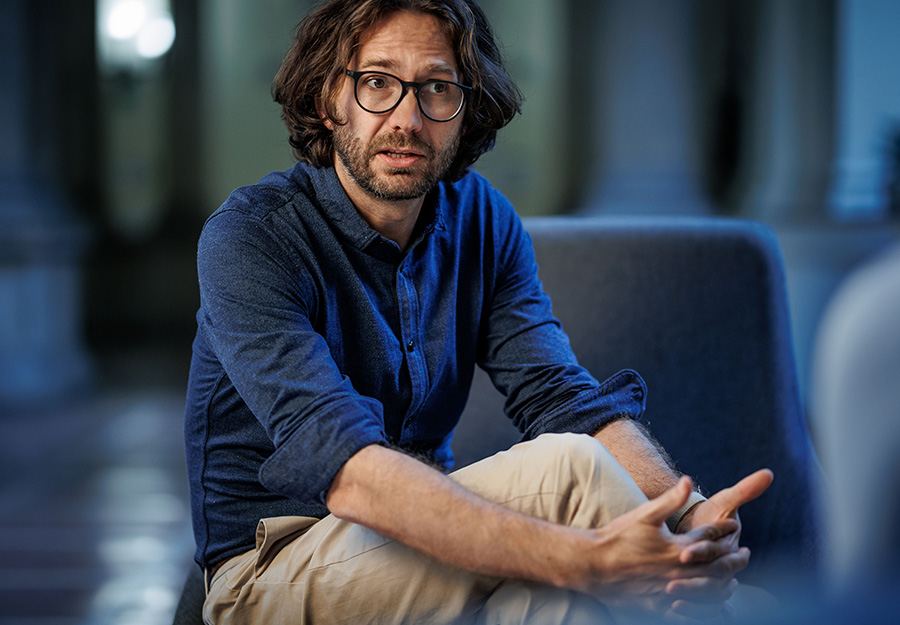
One of Corvinus’s key objectives is to become one of the leading institutions in European higher education. How can your international business experience help the university achieve this ambition?
It is not so much that universities have become international; the world itself has become international. When I applied to university in 1995, it never even occurred to me to study in English or apply to the University of Vienna or Bocconi. My only goal was to get into Corvinus, because in my own universe, within the Hungarian environment of the time stretching from Kőszeg to Záhony, it represented the pinnacle.
The world of today’s secondary school graduates, however, is much more open. There is far more noise, competition and temptation. Ensuring that Corvinus occupies the top spot on their mental map is a much more difficult task today, and the competition for talent is much fiercer. For Corvinus to hold its own in this competition, it had to become international—and it must continue to do so.
Today, in the age of AI, what matters after university is not which textbook you studied from, but how quickly you can adapt, absorb new information and collaborate with people from different cultures. It is an enormous advantage if students can experience during their university courses what it’s like to work together on a task with students from different linguistic and cultural backgrounds.
Drawing on my experience in international business, I would like to strengthen this mindset at the university, as well as reinforce the understanding that an entrepreneurial attitude, curiosity and the ability to adapt to constant change are essential in today’s world.
If you were to look back on the foundation’s work one year from now, when your term of office ends, what achievements would make you feel satisfied?
I would like us to launch supportive processes during these 11 months that make it easier for the university to move forward. I hope we can contribute to shaping its strategy and strengthening its new leadership in moral, intellectual and professional terms.
I would also be pleased if Corvinus became the dream university for as many future 18-year-olds as possible, and I want current students to be proud of their institution. What they take away from their experience, what they tell their siblings and friends, and what they share on social media all play an enormous role. This can trigger a positive, self-reinforcing cycle: where motivated students study and ask challenging questions, the teaching staff also develops, and the best professors want to teach there.
If we can set the university firmly on this path and contribute to that progress ourselves, I will be very proud to pass on the baton.
What message would you give to current Corvinus students and university employees?
My message to students is that they made the best possible decision by choosing this university. I gained an enormous amount from my own years here, and they contributed significantly to what I have achieved. For Hungary’s future, it is crucial that confident, creative and open-minded young people emerge from the university. It would be encouraging to see a stronger entrepreneurial spirit among this generation, rather than having a predictable career in management or employment be the only goal.
Students are in the right place, but I encourage them to keep exploring the opportunities available to them. And if something is holding them back, they should speak up, because we are here as “road-clearance workers” to remove the obstacles standing in the way of their development.
My message to university employees is to take an active part in the Senate elections. This is an important moment for university democracy and self-governance, when the institution’s nearly one thousand employees can directly shape both their own future and that of Corvinus. I encourage everyone to debate, think, talk and vote. This is how the Senate can receive a strong mandate and make decisions with the support of the university community, leading the institution towards further success.