Dog ownership creates a new form of caregiving
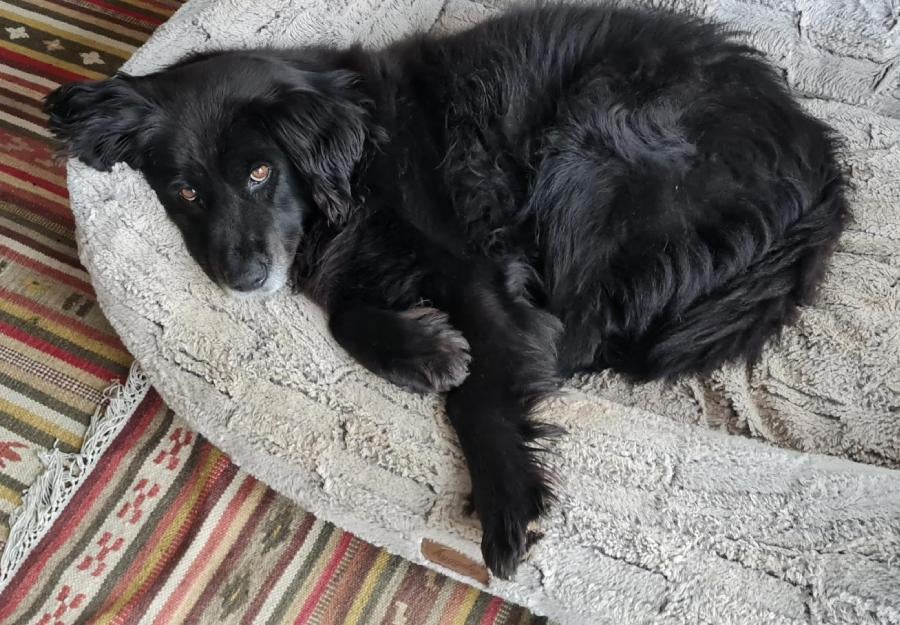
Morning walk, bedtime ritual in the evening, a birthday cake and a Christmas present. In many Hungarian households, these scenes are linked not to small children but to dogs. In an increasing number of Hungarian homes, dog ownership is no longer merely a leisure-time or emotional matter; it has become a factor that structures everyday life. A new study therefore set out to explore how dog care fits into daily routines, and how this relates to experiences of having children – or not having them – and to the parental role.
The study by researchers from ELTE, Corvinus University of Budapest, the Hungarian Central Statistical Office’s Population Research Institute (KSH KKI), and the London School of Hygiene and Tropical Medicine was based on in-depth interviews with 28 female dog owners. The paper summarising the findings was published in the international journal Animals. All participants had been living with a dog for at least a year. About half of the group had at least one child under the age of 14; the others had no children.
In many respects, the two groups spoke about their dogs in similar ways: they described them as companions, sources of emotional support and joy, and often as family members, and they reported that dogs shape their daily routines. Childless women, in particular, spoke about the dog providing a central role, continuity, a daily rhythm and emotional security in their lives.
In both groups, dogs elicited parental emotions and patterns of behaviour, but differences between species and roles remained important. Most owners clearly sense the boundary between a dog and a child, and those who have children unequivocally consider their children’s needs more important than their dog’s.
The responsibility of raising children comes first
Mothers emphasised that raising a young child involves a greater, lifelong responsibility, while dogs’ lives are shorter and they are more independent. They also spoke more often about balancing the needs of children and dogs. Childless women often describe the dog as someone that serves as a symbolic “trial run” for possible motherhood, or as one way of coping with involuntary childlessness, while being aware that this does not replace having a child.
“This is not an either-or question. The results suggest that caring for dogs and caring for children rest on the same emotional foundations, rooted in attachment, responsibility and social significance,” stresses Ivett Szalma, one of the authors of the study and an associate professor of sociology at Corvinus University. “Dogs and children play different roles, but both can be important in the life of the same person. And although a dog will not grow up, move out, or carry on the family name, for many people it still brings a sense of home, attachment and meaning to everyday life.”
Dogs provide care in return and create social connections
At the same time, dogs do not only require care: they also offer emotional support, for example during bereavement, illness or loneliness. This reciprocal caregiving further helps explain the important role dog ownership plays in owners’ emotional lives.
Dog ownership also often brings new acquaintances – at the park, at dog school, or in online groups. By contrast, life with young children tends for many people to narrow social life, mean less free time, and reduce spontaneity. Dog ownership involves responsibility and requires a daily routine, but it demands far less commitment than caring for a young child, while also leaving owners with more autonomy and freedom.
Not a substitute, but a new role
“All this does not mean that dogs ‘replace’ children. Rather, it suggests that the concept of care is expanding and becoming richer, and that new forms are emerging in a changing society. Dog ownership offers a relationship that involves deep emotional engagement, while leaving more freedom than parenthood,” says Ivett Szalma.
The research also highlights that a strong caregiving bond with dogs can trigger social reactions. According to participants’ accounts, some people respond with incomprehension or criticism when someone invests a lot of attention, time and emotional energy in their dog –especially if those around them would associate that kind of role with raising children. Several childless women reported receiving remarks because their dog played a central role in their lives, while mothers more often encountered comments that they were “spoiling” the animals too much, or that they were splitting their attention between dogs and children.
The authors of the paper are Kata Mária Udvarhelyi-Tóth (Department of Ethology, ELTE Faculty of Science), Ivett Szalma (Corvinus; ELTE Faculty of Social Sciences), Lóránt Pélyi (ELTE Faculty of Social Sciences), Orsolya Udvari (Corvinus; ELTE Faculty of Social Sciences; KSH KKI), Erika Kispeter (London School of Hygiene and Tropical Medicine), and Enikő Kubinyi (Department of Ethology, ELTE Faculty of Science).