Corporate Tax Avoidance and Investment in an International Perspective
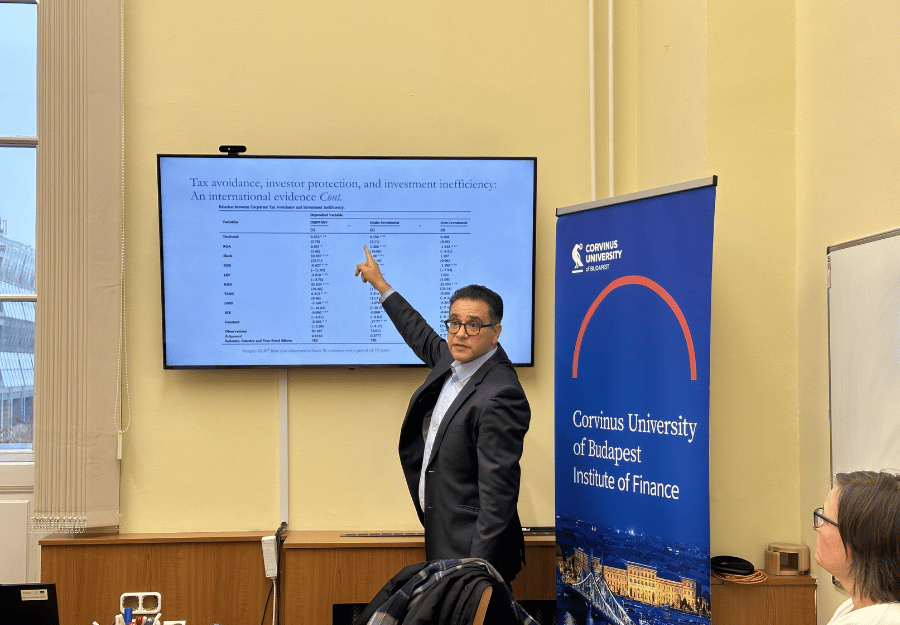
On 16 November 2026, the Institute of Finance at Corvinus University of Budapest welcomed Professor Ramzi Benkraiem of Audencia Business School for a research seminar titled “Another Side of Sustainability and Social Change: Fighting Tax Evasion in an Evolving Landscape.”
The seminar began by defining corporate tax avoidance and explaining why it matters. Aggressive tax practices can reduce firms’ tax liabilities within legal boundaries while eroding public revenues, raising concerns about fairness, and distorting competition.
Key takeaways from the seminar
• Tax avoidance and underinvestment. In a study spanning 38 countries, Benkraiem and his co-authors found that firms engaging in more tax avoidance tended to underinvest.
• What drives corporate tax avoidance. The seminar examined how conflicts of interest within firms, pressure from short-term investors, and difficulty accessing external finance can shape tax decisions. It also considered country-level conditions, including economic policy uncertainty and government debt.
• The role of ethics and oversight. Benkraiem’s cross-country research links stronger auditing standards and more ethical corporate behaviour to lower levels of tax evasion.
• Education and digitalisation. The seminar discussed how financial education can strengthen public accountability and how digital tools can improve transparency in tax administration.
For emerging economies modernizing their tax systems, Benkraiem made the case for pairing stronger tax administration with efforts to make compliance a shared norm. Tackling aggressive tax avoidance is part of the sustainable development agenda because it can help protect the public revenues that fund essential services and long-term investment.