Adél Pásztor Delivers Keynote on International Student Success at Tempus Foundation Conference
30 September 2026 | Budapest
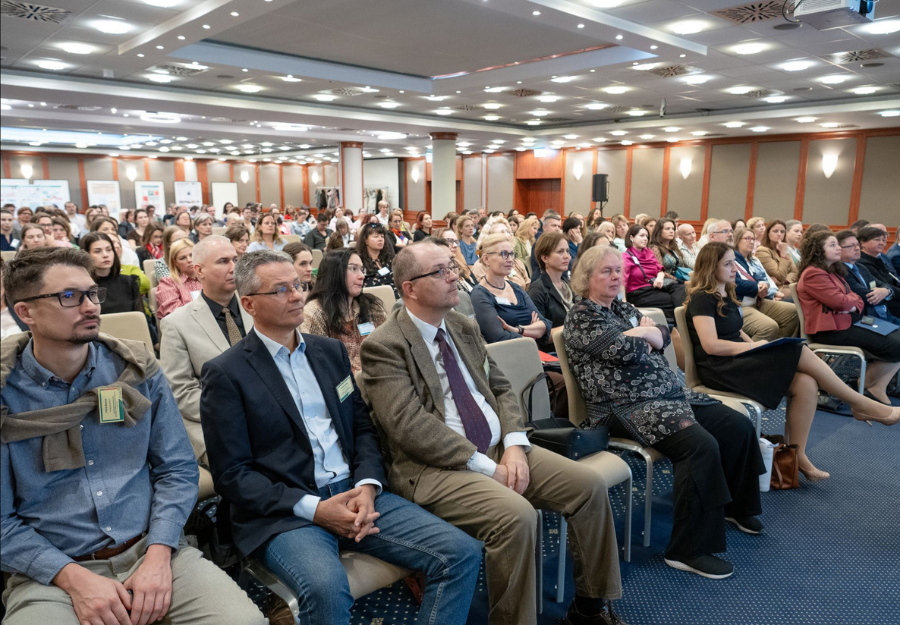
Dr Adél Pásztor, Associate Professor and Head of the Institute of Social and Political Sciences at Corvinus University of Budapest, delivered an invited keynote at a conference organised by the Tempus Public Foundation on 30 September 2026. The event brought together approximately 220 higher education professionals to discuss how universities can better support international students throughout their educational journeys.
Held at the Danubius Hotel Hungária in Budapest, the conference, Internationalisation of Higher Education: Opportunities to Support Student Success, brought together senior government representatives, university leaders, academics and students. Opening contributions included those from Katalin Kurucz, Deputy State Secretary for European Union and International Affairs at the Ministry of Education and Children; Zoltán Hernyes, Head of the Department for Scholarships at the Ministry of Foreign Affairs; and Balázs Vince Nagy, Chair of the Board of Trustees of the Tempus Public Foundation. Their contributions highlighted the growing importance of institutional support in strengthening the internationalisation of Hungarian higher education.
Rethinking student success: Beyond grades and graduation
Drawing on her sociological research on educational inequalities, international student mobility and institutional inclusion, Dr Pásztor argued that student success cannot be understood solely through academic performance or graduation rates. A broader understanding must also consider students’ academic progression, sense of belonging and opportunities to fulfil their potential.
Her presentation emphasised that international students are not a homogeneous group. Even those entering university through the same scholarship programme may have very different family backgrounds, educational experiences and resources, all of which shape their opportunities to succeed.
A particular focus was the unwritten rules of university life: academic expectations, institutional conventions and informal practices that may appear self-evident to established members of the academic community but remain unfamiliar to students from different educational and cultural backgrounds.
Dr Pásztor stressed that student success is not simply an individual responsibility. Universities must also examine how their own practices and support structures shape students’ experiences and opportunities.
She concluded her keynote by identifying four institutional priorities:
- Communicating academic expectations clearly, including assessment practices and institutional norms.
- Creating opportunities for meaningful interaction and collaboration between students and academic staff.
- Making academic and professional development pathways more visible so that students can recognise and pursue available opportunities.
- Providing a supportive institutional environment through accessible guidance, services and support structures.

Bringing student perspectives into the discussion
Following the plenary presentations, Dr Pásztor participated in a roundtable discussion moderated by Dr Márton Beke, alongside Dr Norbert Sipos from the University of Pécs and students Anqi Lai and Márk Tóth.
The discussion explored the linguistic, cultural and academic challenges international students encounter when adapting to a new educational environment. Student contributions highlighted the importance of supportive lecturers, mentoring, personal encouragement and opportunities to participate in university communities.
The exchange reinforced the importance of recognising students as active participants in shaping institutional approaches to internationalisation, rather than simply as recipients of university support.
Connecting research with higher education practice
The conference brought sociological research into dialogue with higher education policy and institutional practice. The wider programme followed the international student lifecycle from recruitment and integration to academic development, mobility and alumni engagement, drawing on examples and good practices from across Hungarian higher education.
A key theme running through the conference was that successful internationalisation extends well beyond attracting international students. It also requires creating the conditions in which students from diverse backgrounds can participate fully in university life, develop a sense of belonging and realise their academic potential.